
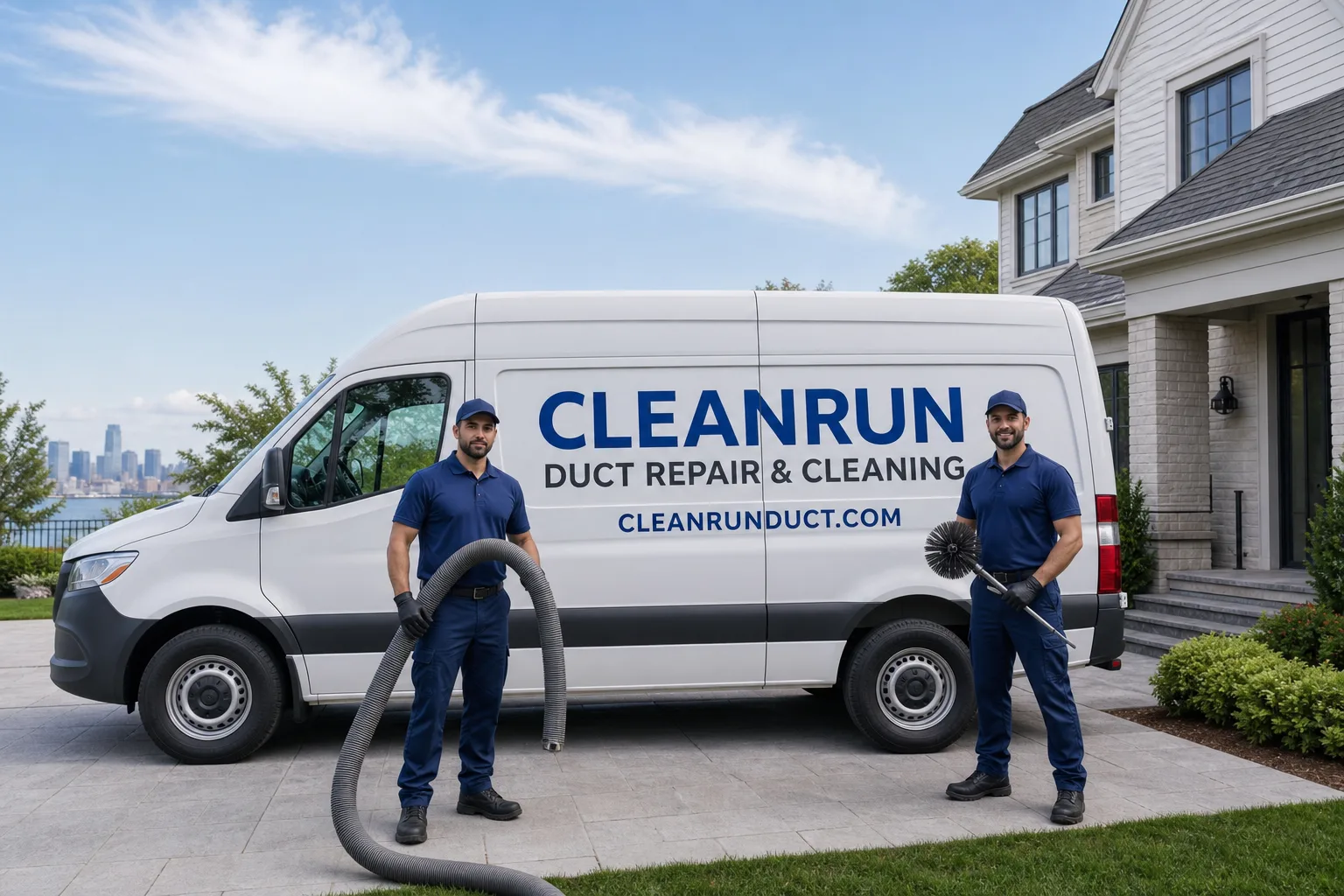
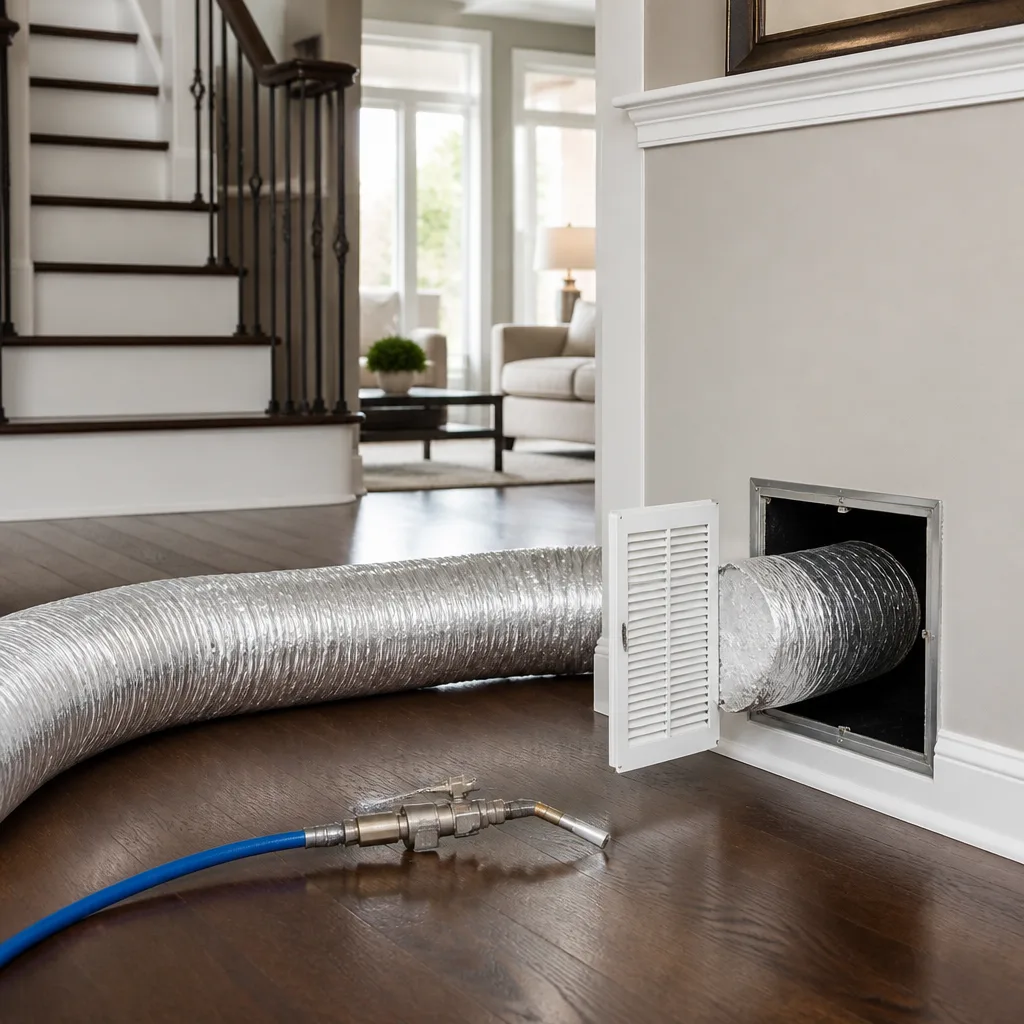
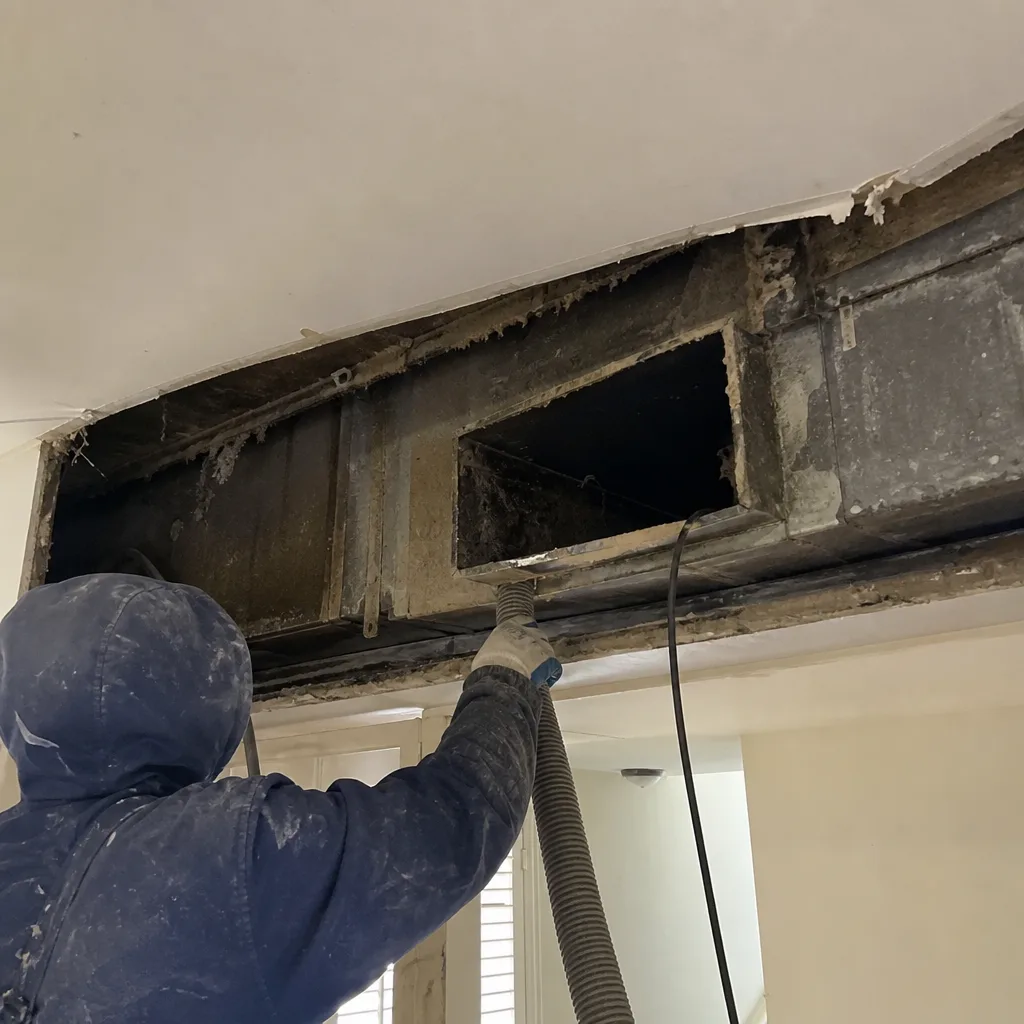
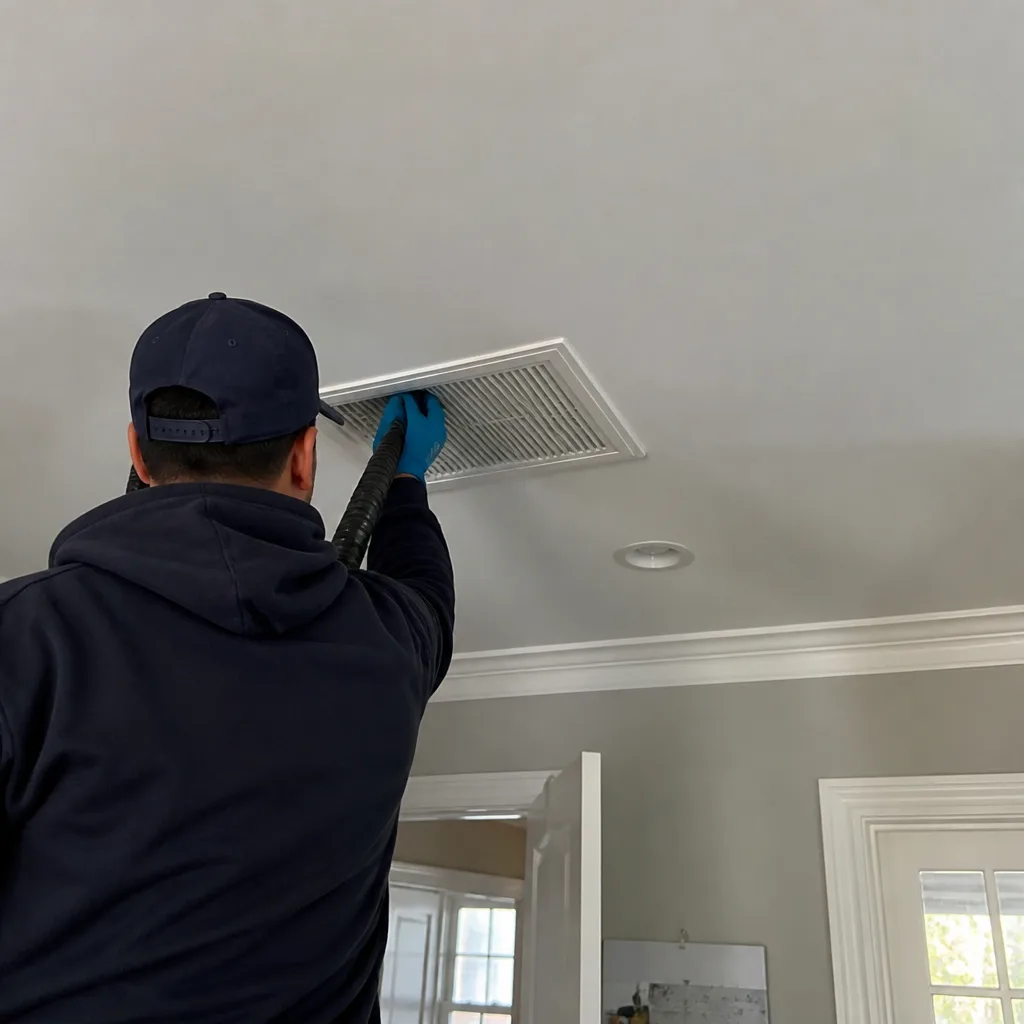
Whole-system duct and dryer vent check with before-and-after photos - you see exactly what came out of your vents
That "$99 whole-house special" is a bait ad - the real number appears once they are in your hallway, or the "clean" is a shop-vac at the register. We photograph the inside of your ducts before and after instead.
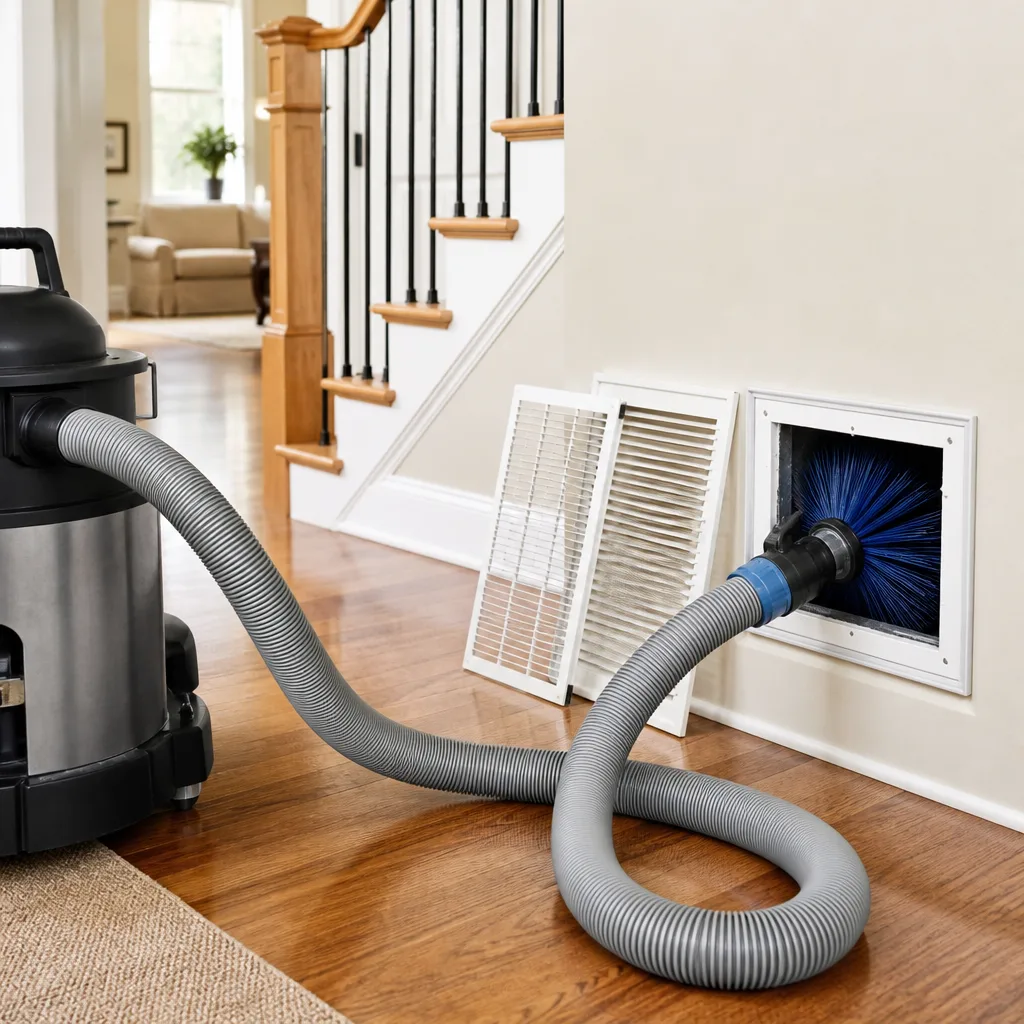
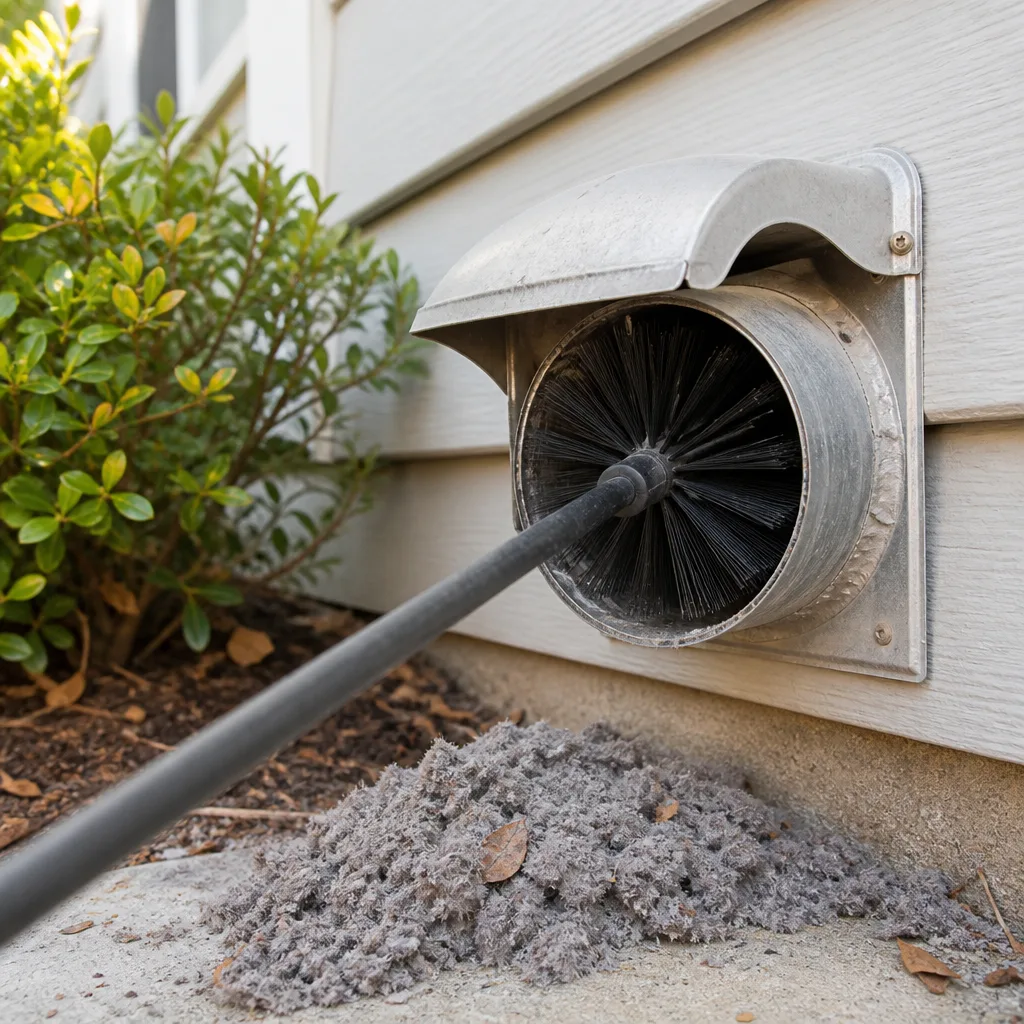
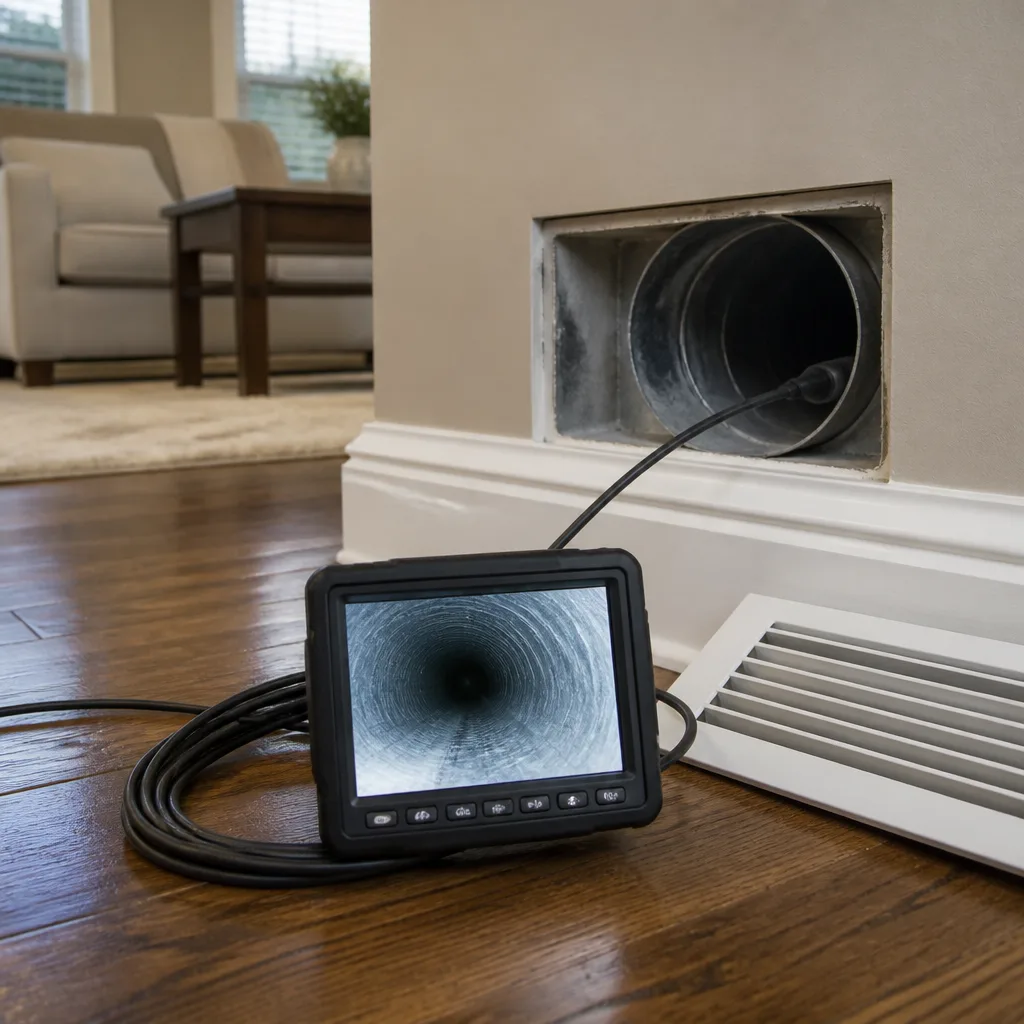
 Before
 After
After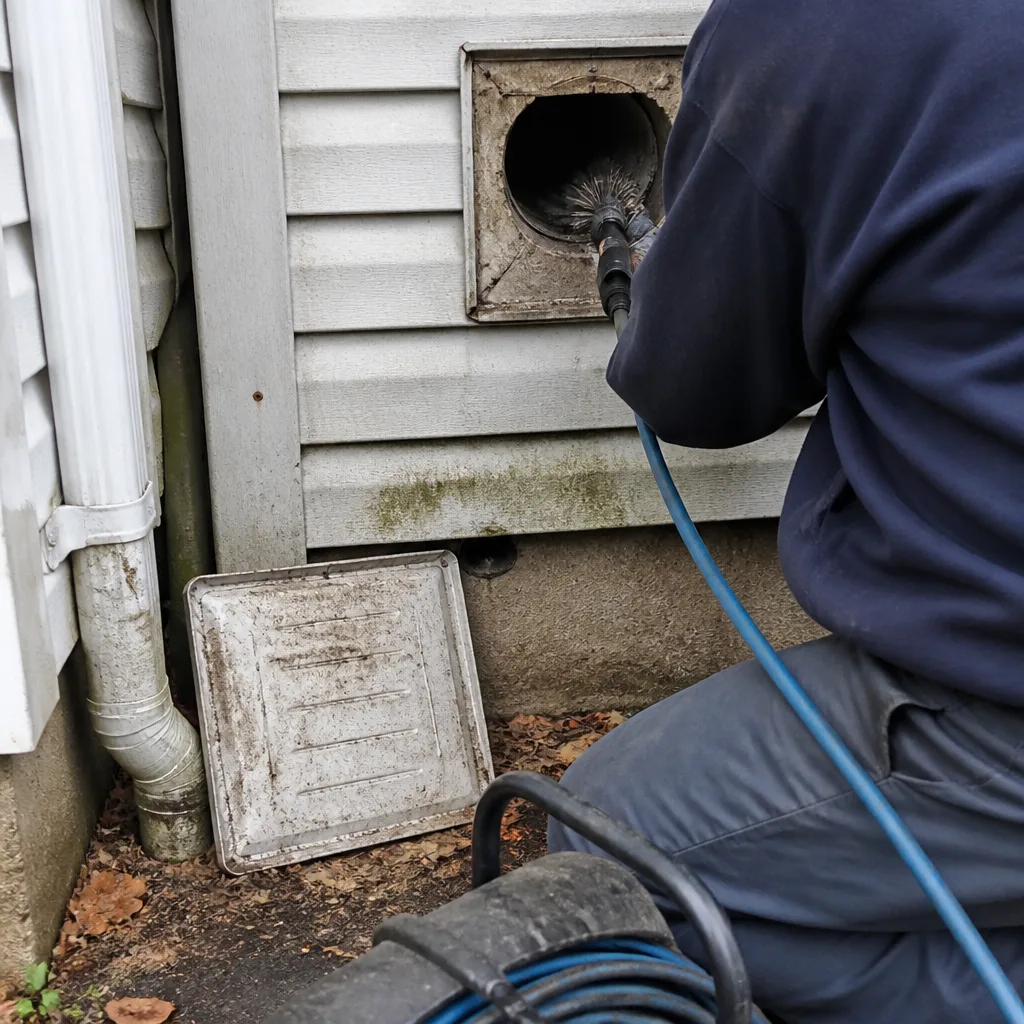 Before
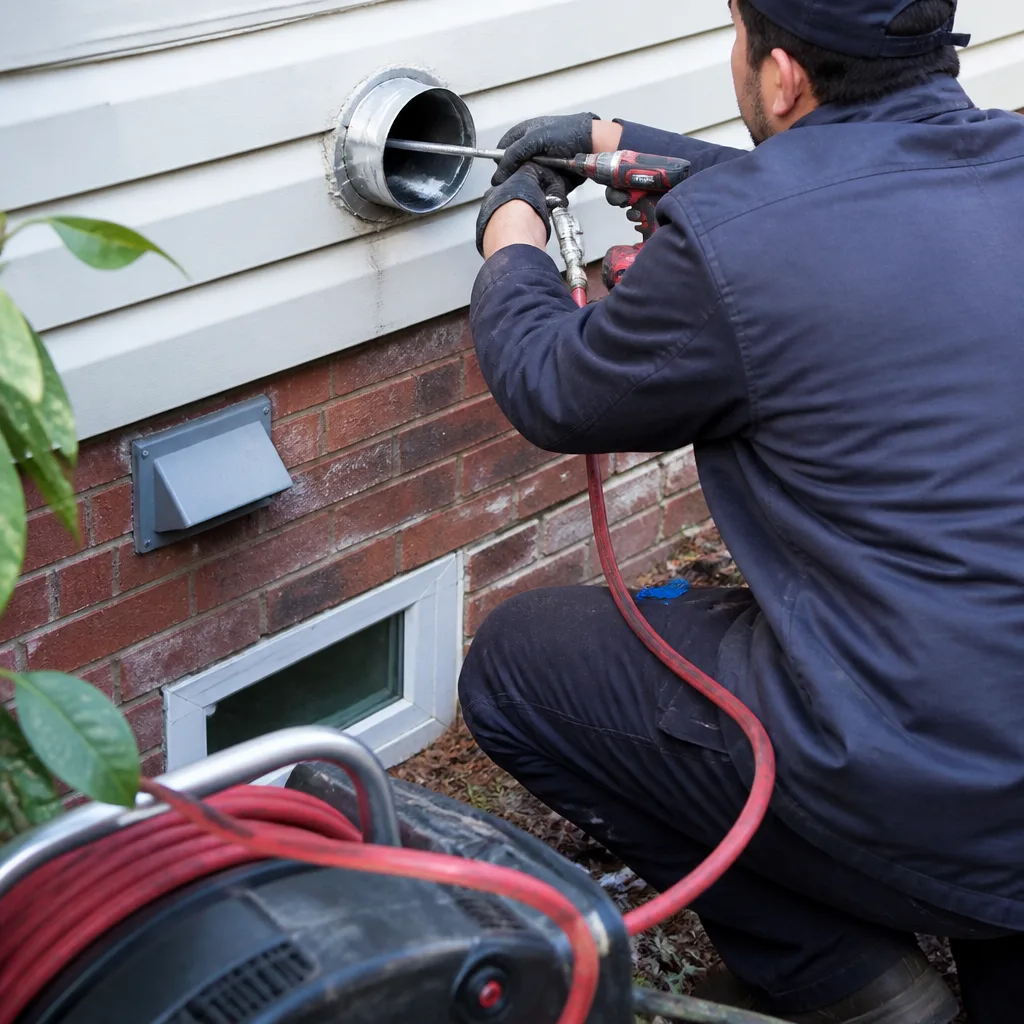 After
After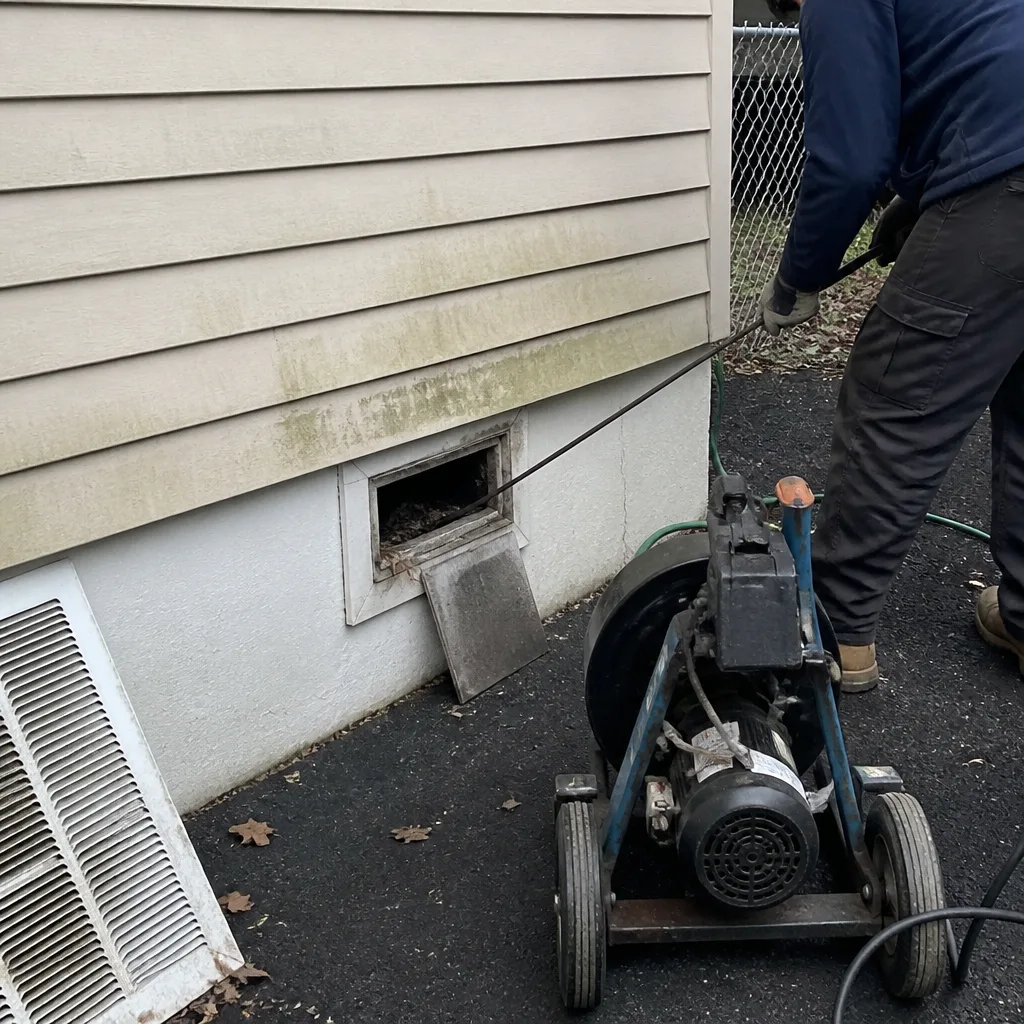 Before
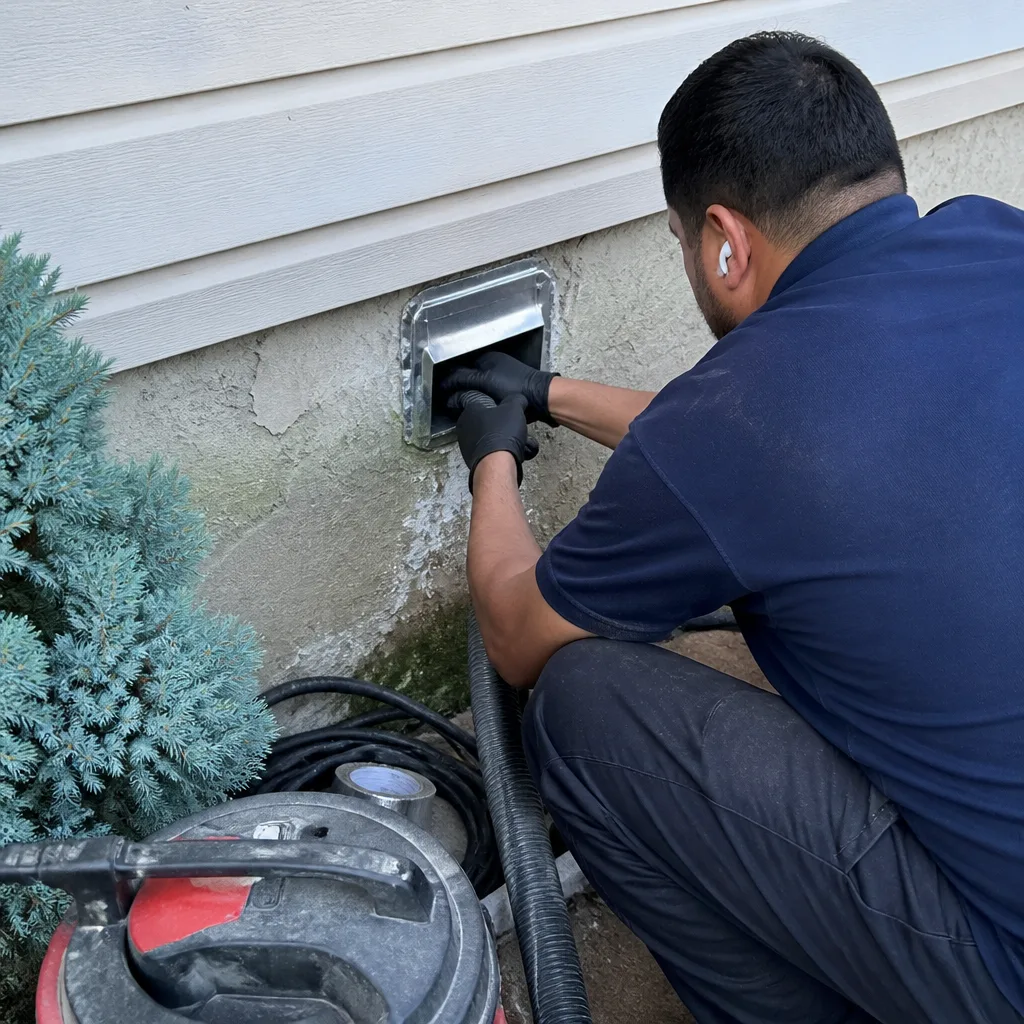 After
AfterFast, Reliable HVAC Cleaning Across Chicago
HVAC cleaning in Chicago typically costs between $450 and $900 for a full system clean on a single-family home, with the work completed in one visit. For Chicago’s older housing stock, particularly the pre-1940 bungalows and two-flats that dominate the Northwest and Southwest sides, the job is different from what you’d find in Schaumburg or Naperville. Those homes carry decades of coal-era residue, disconnected runs, and original duct materials that generic cleaning crews never touch. Our crews work these systems every week, and we document every duct run before and after so you can see what was actually done. If you’re in Chicago and want an exact price in writing before anything starts, call (806) 606-6902.
Why CleanRun Air Duct Cleaning Is Chicago’s Preferred HVAC Cleaning Company
We’ve been cleaning ductwork since 2013, and Chicago’s housing stock is unlike anything in the surrounding metro. A bungalow in Clearing or a three-flat in Logan Square presents duct configurations that no standard training manual covers. Our technicians know to look behind finished basement ceilings for crushed returns and disconnected trunk lines, because that’s what Chicago’s retrofitted systems actually look like. We don’t skip the camera inspection, and we don’t clean only the supply side and call it a day.
Every job in Chicago starts with a written price delivered before a single panel comes off. That’s Haven Standard Clause 1, and it’s how we’ve operated across 52,000+ homes since 2013. When our crew finishes, you receive a photo record of every duct run, inside, before and after. Not a summary, not a verbal reassurance. Photographs. For homeowners in neighborhoods like Portage Park, Jefferson Park, and Beverly who research every contractor before calling, that documentation is the difference between trusting the work and wondering if anything happened at all.
Our HVAC Cleaning Services in Chicago
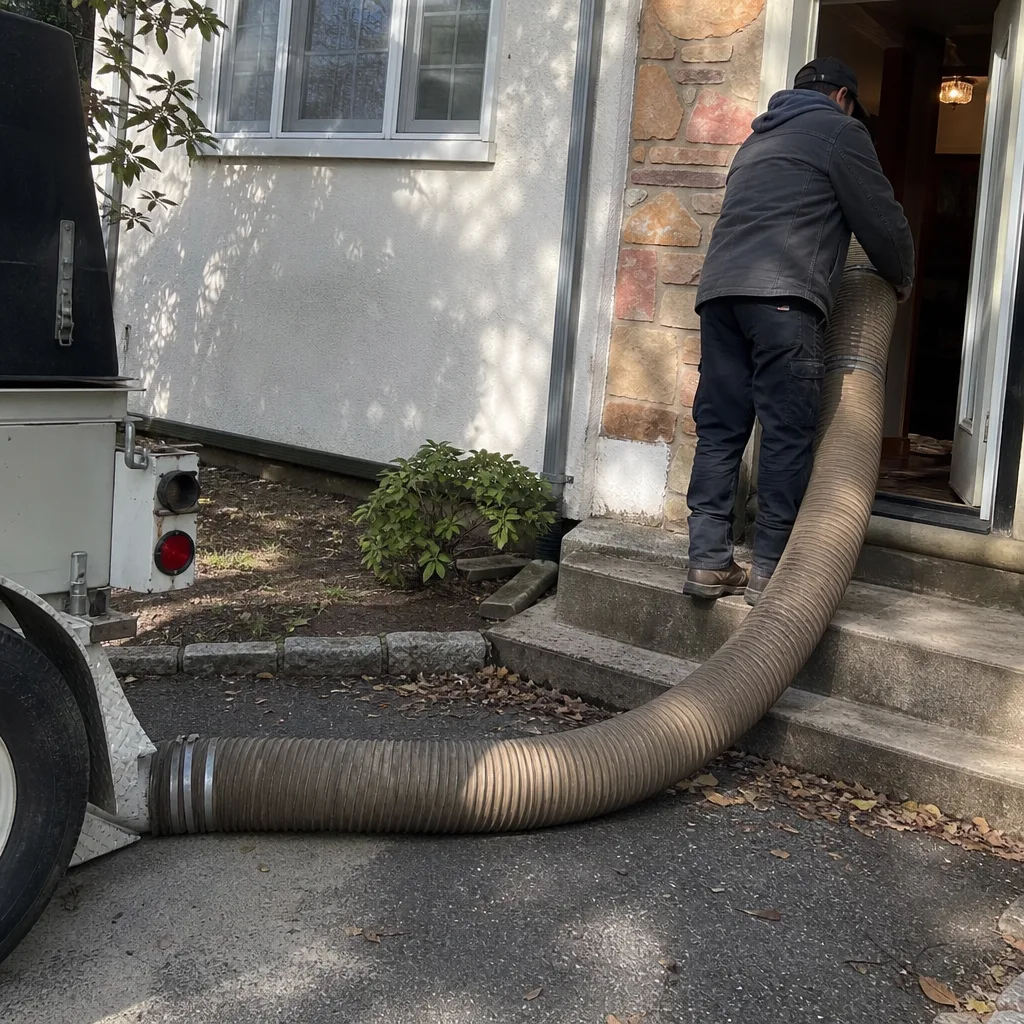
HVAC cleaning means more than vacuuming the vents. On Chicago systems, the real work happens in the coil, the blower, and the air handler, where years of recirculated winter air leaves a hard film of dust and debris. Here’s what we actually do on the systems we service across the city.
Evaporator Coil Cleaning
Your evaporator coil sits inside the air handler and pulls moisture out of the air every summer. In Chicago, where Lake Michigan humidity spikes through July and August, that coil becomes a damp, sticky surface that traps dust, pollen, and whatever else is moving through the return ducts. A coated coil loses cooling capacity and forces your system to run longer. We clean the coil with professional-grade equipment and document the before and after so you can see the difference in heat transfer. On coil-heavy jobs in neighborhoods like Lincoln Square and Rogers Park, this is often where the most measurable improvement comes from.
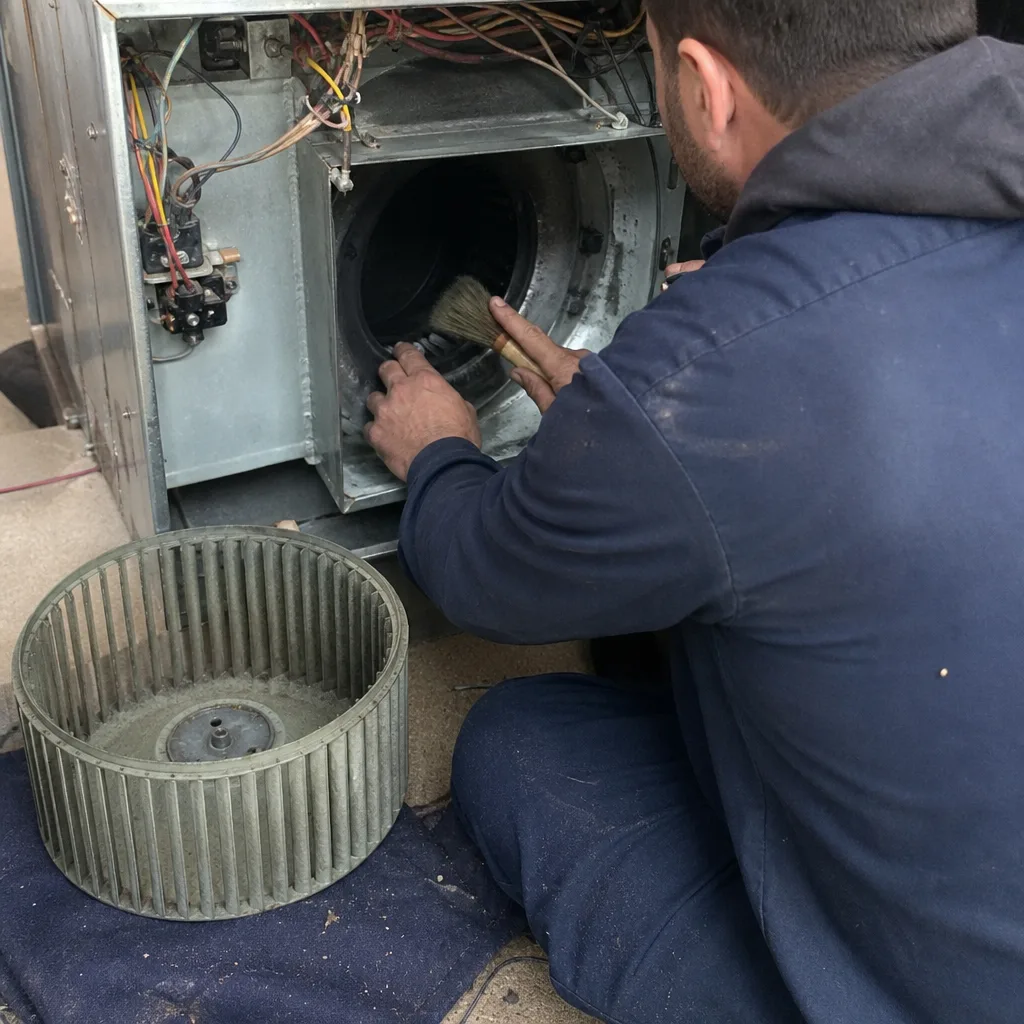
Blower Cleaning
The blower is the fan that pushes conditioned air through your ducts. In Chicago’s older homes, especially bungalows and two-flats with retrofitted systems, the blower often runs against higher static pressure than it was designed for, because the ductwork it serves was never laid out for forced air in the first place. That extra strain pulls more airborne dust across the blower wheel, where it cakes onto the fins and throws the wheel out of balance. We remove the blower assembly, clean the wheel and housing, and document the condition before reinstalling. A Chicago blower that hasn’t been cleaned in a decade is carrying a measurable amount of extra weight on the motor.
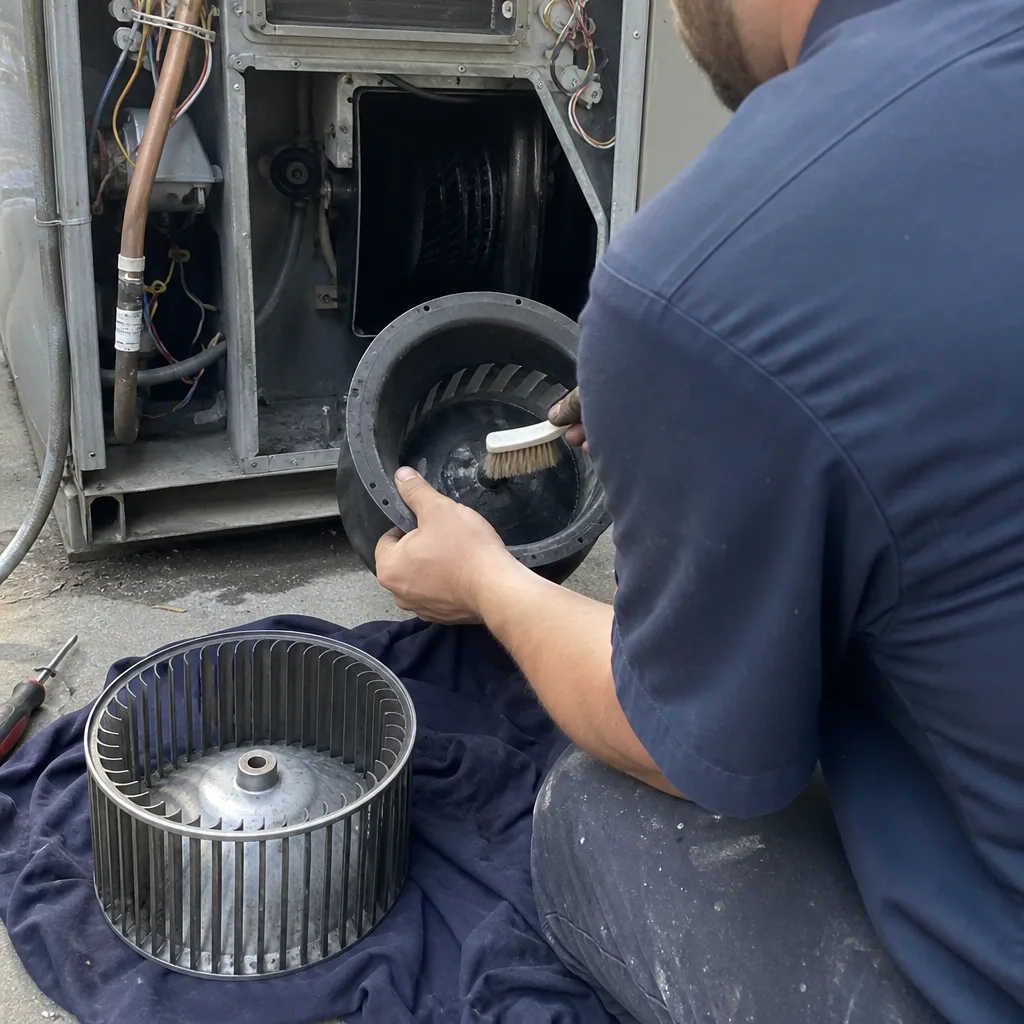
Condenser Cleaning
The condenser is the outdoor unit, and in Chicago it takes a beating. Cottonwood in late spring, construction dust during the building season, and the general grit of city air all settle into the fins and choke airflow. We clean the condenser coil with professional equipment and correct the fin alignment where debris has bent them over. A condenser that can’t shed heat in a Chicago July doesn’t just run inefficiently, it shortens the life of the compressor, and compressor replacement on a Chicago rooftop unit or cramped gangway installation is not a cheap conversation. For homes near the lake in Edgewater or Hyde Park, salt air adds another layer of corrosion we look for every time.
Air Handler Cleaning
The air handler is where everything comes together: blower, coil, filter rack, drain pan. On Chicago retrofits, these units are often shoehorned into basement corners or utility closets never designed for them, which means dust, debris, and sometimes construction material ends up inside the cabinet. We clean the interior surfaces, clear the drain line, and photograph what we find. For building types like courtyard apartments and six-flats on the North Side, access is often tight and the air handler shares space with years of accumulated household dust. That’s the job. We do it with the same documented process on every unit.
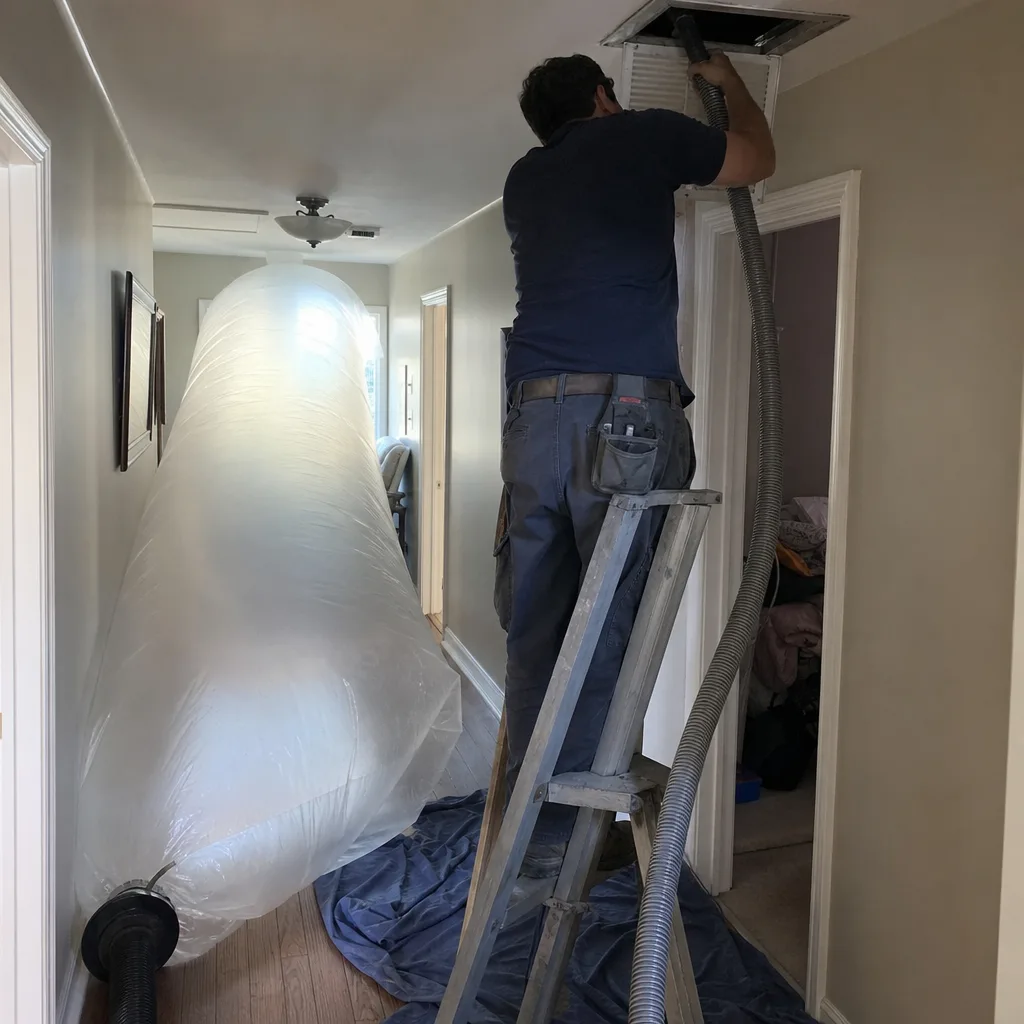
What happens when you call
- 1
A real person answersNo phone trees - you reach a local pro.
- 2
You get an upfront price rangeHonest numbers before anyone is dispatched.
- 3
A background-checked tech heads outLicensed & insured, dispatched right away.
- 4
You approve before work beginsNothing starts until you say go.
BeforeAfterTrusted Brands We Service in Chicago
We work on systems from every major manufacturer, and we use professional-grade equipment from Abatement Technologies, Honeywell, Aprilaire, and Guardsman on our jobs. That matters for a few reasons. First, it means the tools doing the work are the same tools used in commercial and restoration settings, not a shop vac attached to a flexible hose. Second, it means we can service your HVAC cleaning and your air quality components in the same visit. If you have a whole-home air cleaner or UV system installed by a previous owner, we clean and verify those components as part of the job. For Chicago customers, having one crew that understands the full system, not just the ductwork, saves a second appointment and a second written estimate.
Common HVAC Cleaning Problems We See in Chicago Homes
- Coal-era residue in the original trunk lines. Chicago bungalows built between 1910 and 1940 were originally heated by coal-fired gravity systems. So many of these homes were converted to forced-air gas furnaces in the 1950s and ’60s, using the same round galvanized trunk ducts. What we pull out of those runs is not ordinary household dust. It’s compacted soot and sediment that predates the gas conversion, stuck to the interior walls for 60-plus years. This is a condition you will not find in Arlington Heights or Evanston at anywhere near the same frequency.
- Crushed and disconnected return runs. When forced-air systems were retrofitted into Chicago basements, the original duct routes often ran through spaces that were never intended to carry them. Framing, plumbing, and electrical work done in the decades since has crushed return branches or knocked them loose from the main trunk. A cleaning crew that skips the camera inspection on a Portage Park or Clearing basement will miss this entirely, leaving your system pulling air from an unfinished crawlspace and recirculating dust that the cleaning was supposed to eliminate.
- Mold and must in condensation-prone basement ducts. Chicago’s closed-up winter runs from roughly November through late March. During those months, interior humidity stays trapped indoors with no dilution from outside air. Then comes summer, when Lake Michigan humidity sends indoor moisture levels up. Cold AC air moving through uninsulated basement ducts creates condensation on the exterior and sometimes interior of the duct walls. If the ducts were never cleaned, that moisture combines with decades of organic dust and the result is the musty, basement smell that comes through your registers every time the system cycles. We find this in Chicago two-flats and courtyard buildings more than anywhere else.
- Leaking joints in original trunk lines. The original sheet metal trunk lines in Chicago’s older homes were assembled with basic mechanical fasteners and no sealant, because air leakage was not a design concern in a gravity system. When those trunks were repurposed for forced air, they became pressurized and began leaking at every joint. In a Chicago winter, that means heated air spills into unfinished basement space while the system pulls harder to maintain temperature. The fix is sealing, not more cleaning, and we perform that sealing work as part of the job when the inspection shows it’s needed.
Pricing for HVAC Cleaning in Chicago, IL
A full HVAC cleaning on a single-family Chicago home typically runs between $450 and $700. That includes the evaporator coil, blower, air handler interior, supply and return ducts, and registers. For larger homes or systems with multiple air handlers, the range extends to $800 or $900. Condenser cleaning as a standalone service runs $150 to $250. What moves the price in Chicago is access and condition. A bungalow with a clean, open basement and original trunk lines is a straight job. A two-flat with retrofitted runs behind finished ceilings, or a greystone with the air handler in a tight utility closet, takes longer and costs more. You will know the exact number before work begins, because our written price comes before any panel comes off. Call (806) 606-6902 for a free estimate, and if you have another company’s written quote, bring it. We’ll put our number next to it and you decide.
We Also Serve Cities Near Chicago
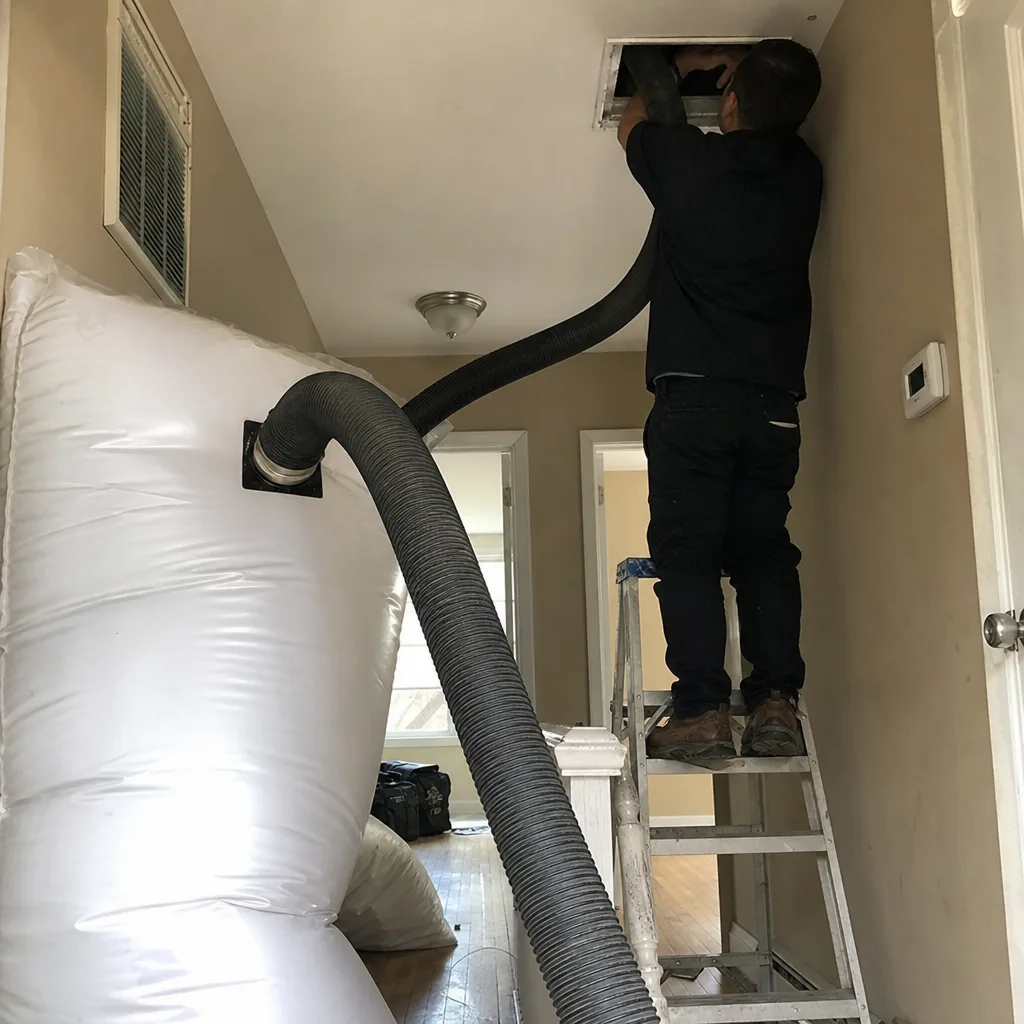
Our crews work throughout Chicago every week, from the bungalow belt on the Northwest Side to the older flats and courtyard buildings along the lakefront. The same HVAC Cleaning process and written pricing applies to the surrounding suburbs we serve, including Cicero, Evanston, Arlington Heights, and Schaumburg. If you’re in one of those communities and your home shares Chicago’s pre-war ductwork history, the same camera inspection and documented photo record comes with the job. This page covers Chicago specifically, but our service area extends to the full metro.
Serving Chicago, IL - Our Local Coverage Area
We’re based in the Chicago area and know this community well. Use the map below to see our service coverage - if you’re nearby, we can almost certainly help.
FAQs - HVAC Cleaning in Chicago
Because that residue predates the gas conversion. These bungalows were built with coal-fired gravity systems, often called octopus furnaces, that used oversized round ducts to let hot air rise naturally through the house. When the homes were converted to gas forced-air in the 1950s and ’60s, those same ducts were repurposed. The black coating you see is decades of coal soot that was never cleaned out at the time of conversion, and has been baked onto the duct walls ever since by decades of forced hot air. No amount of household dust collection explains that residue. It’s a Chicago-specific condition tied to the city’s roughly 80,000 pre-1940 bungalows. Our camera inspection documents it in photos, and our source removal process is designed to pull it out, not just loosen it. Call (806) 606-6902 for an exact written price.
No. Two-flats, three-flats, and courtyard buildings in Chicago almost always have per-unit ductwork retrofitted into spaces never designed for forced air. That means shorter trunk runs, sharper turns, uninsulated sheet metal through unconditioned spaces, and connections that have been adapted and re-adapted over decades of repairs. The building-by-building variations mean our inspection has to map each unit’s system individually before cleaning begins, which is why a written price comes only after we see the actual duct layout, not from a phone estimate based on square footage. Call (806) 606-6902 and we’ll schedule the inspection.
Because the dust is coming from inside your ductwork, not from outside air leaks around your windows. Chicago homes stay sealed for roughly five months from late November through March, which means indoor particulates recirculate continuously. If your ducts have never been professionally cleaned, or if they were cleaned without a camera inspection, the supply runs themselves become the dust source. In older Chicago homes, a crushed or disconnected return branch makes this worse by pulling air from inside walls or crawlspaces instead of from the living space. The solution is source removal from the full system, not just the supply ducts. After cleaning, we can seal the compromised sections. Call (806) 606-6902 for a free estimate with the price in writing before we start.
Yes, and in many Chicago bungalows the sealing is the real fix. The original galvanized trunk lines were never sealed at the joints because a gravity furnace doesn’t pressurize the ducts the way a forced-air system does. Once the home was converted to gas heat, every joint became a leak point. Those leaks pull dirty air into the system and push heated air into the basement. Our sealing work addresses the joints, the branch connections, and any sections the inspection shows are compromised. For a Portage Park bungalow with the original trunk still in place, that sealing work is often more important than the cleaning itself. Every sealing job is covered by our written price and documented in the photo record. Call (806) 606-6902.
Because cold air moving through uninsulated ducts in a humid Chicago basement creates condensation on the duct surfaces, and that moisture combines with dust that has accumulated inside the runs over years or decades. Chicago’s summer humidity from Lake Michigan raises indoor moisture levels, and the basement stays cooler than the rest of the house, which worsens the condensation. If the ducts were never cleaned, the interior dust load provides the organic material mold needs to establish. The fix is cleaning the full run to remove the accumulated material, then addressing the insulation and sealing so the condensation stops recurring. For homes with this pattern, we document the interior condition with photos and show you exactly what the moisture has been feeding. Call (806) 606-6902 and we’ll put the exact price in writing before any work begins.
Written by Tomas Reyes, Owner at CleanRun Air Duct Cleaning, serving Chicago with documented, written-price HVAC cleaning since 2013.