

Whole-system duct and dryer vent check with before-and-after photos - you see exactly what came out of your vents
That "$99 whole-house special" is a bait ad - the real number appears once they are in your hallway, or the "clean" is a shop-vac at the register. We photograph the inside of your ducts before and after instead.
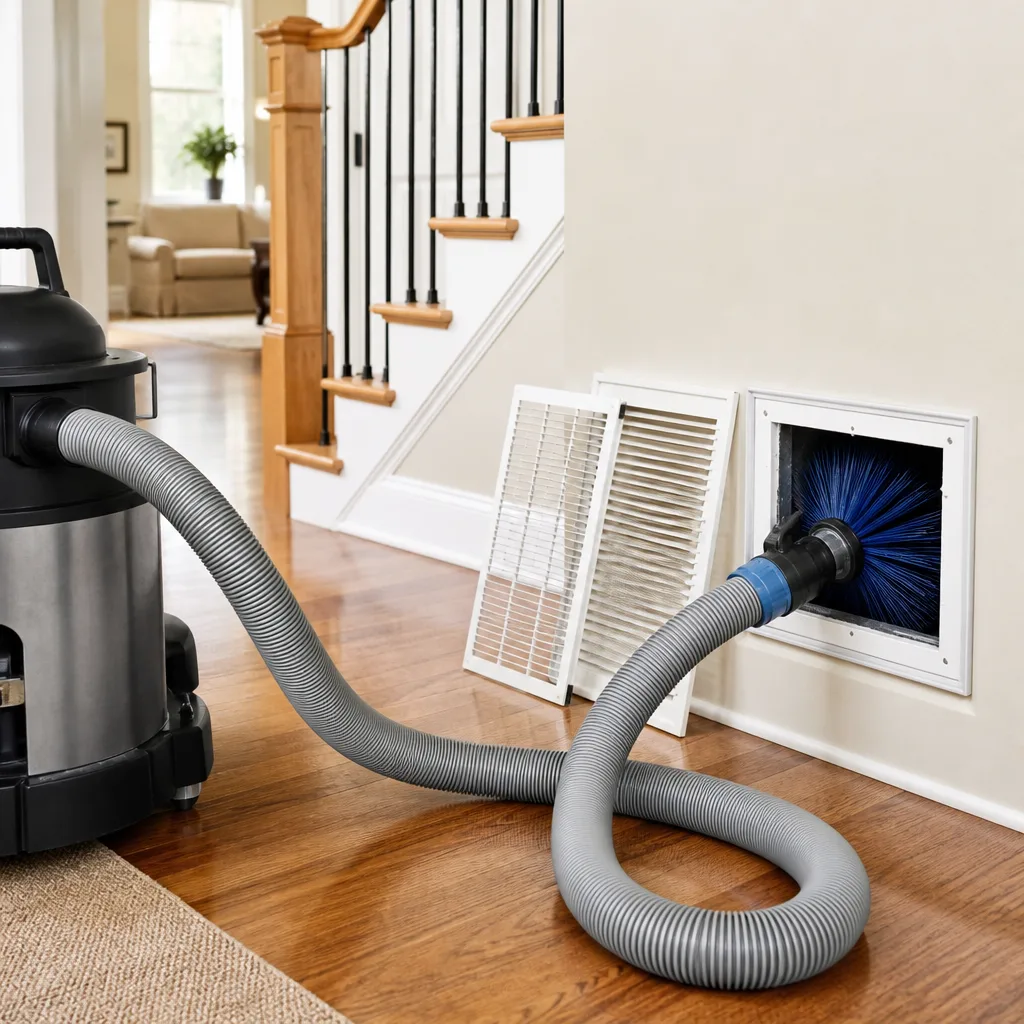
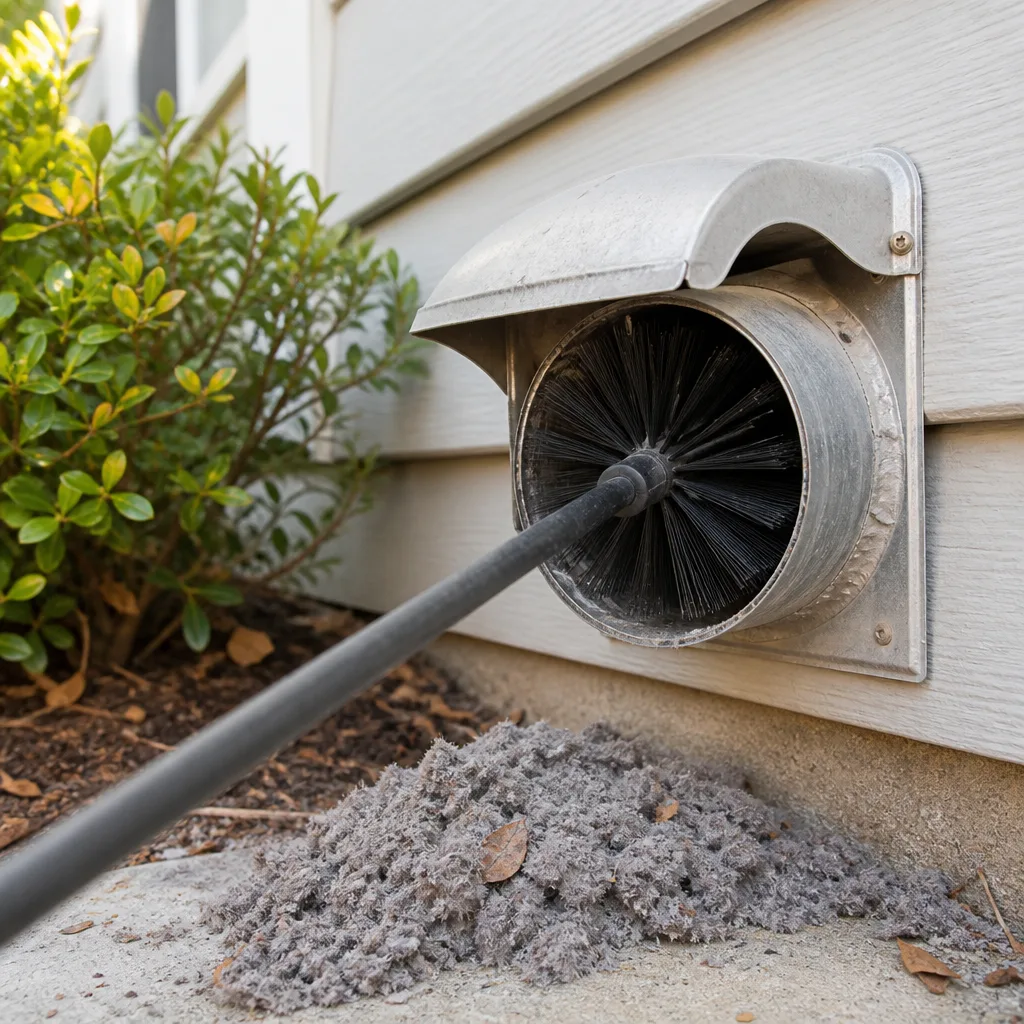
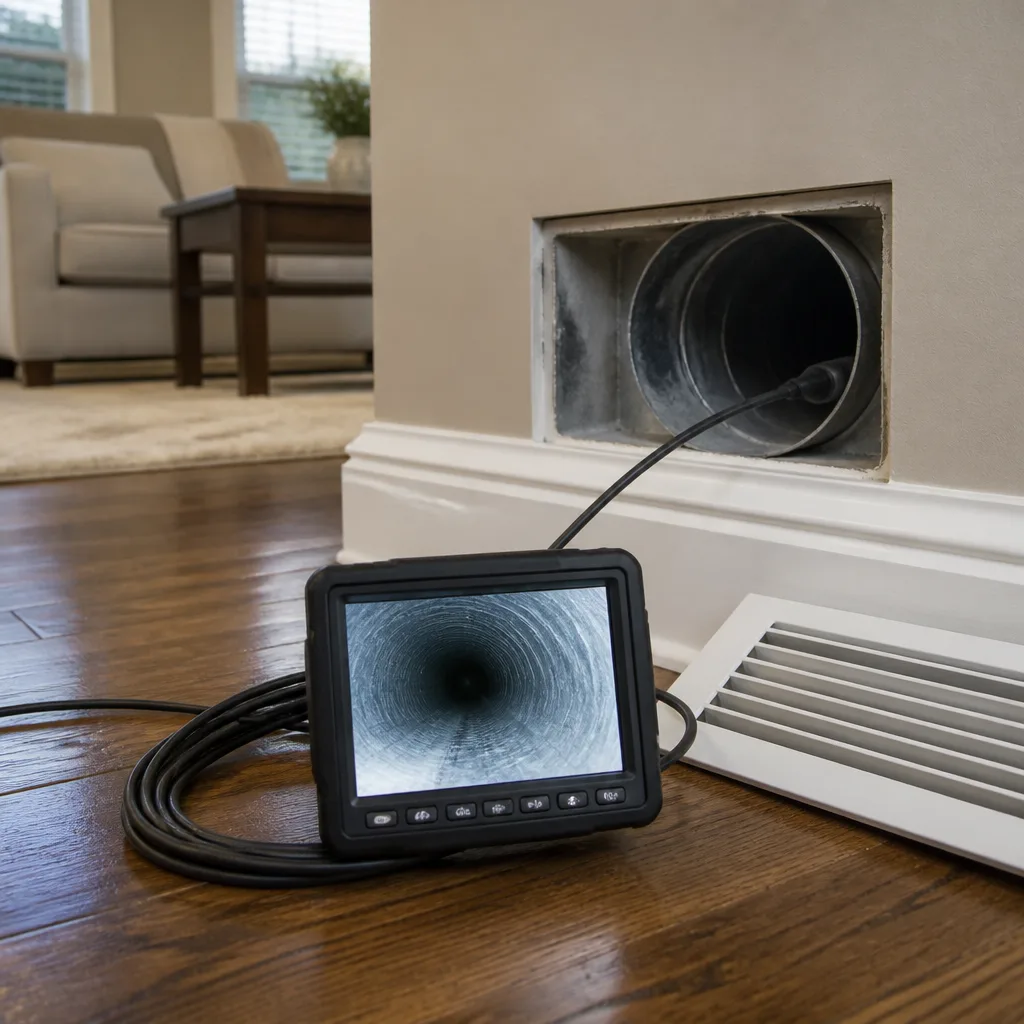
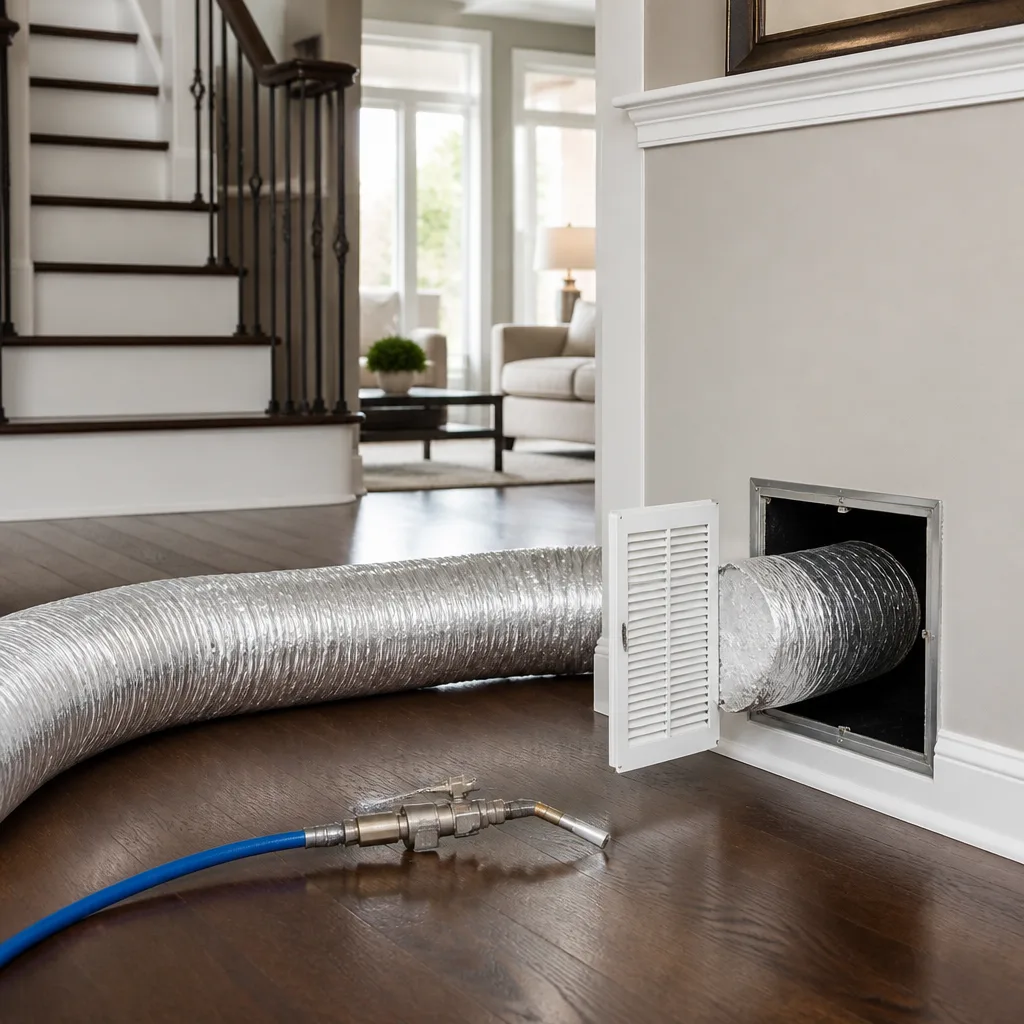
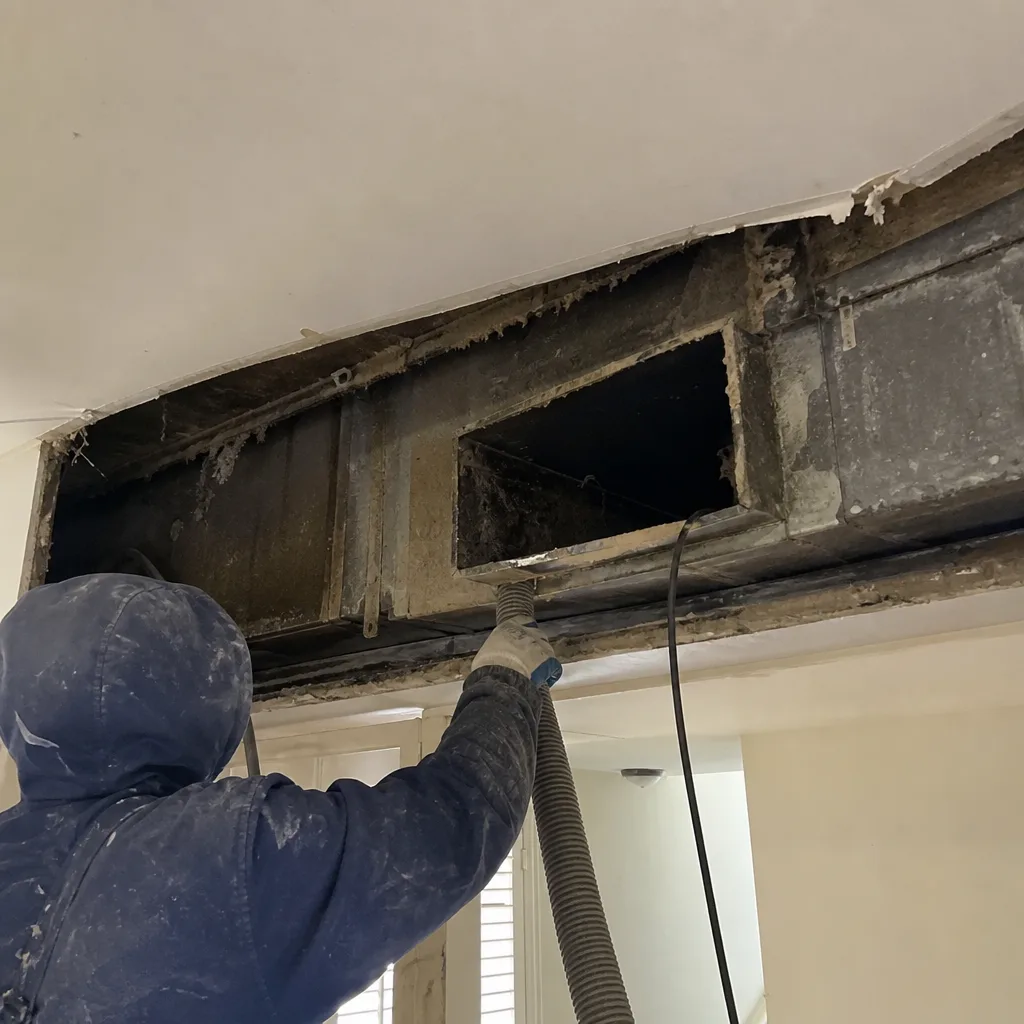 Before
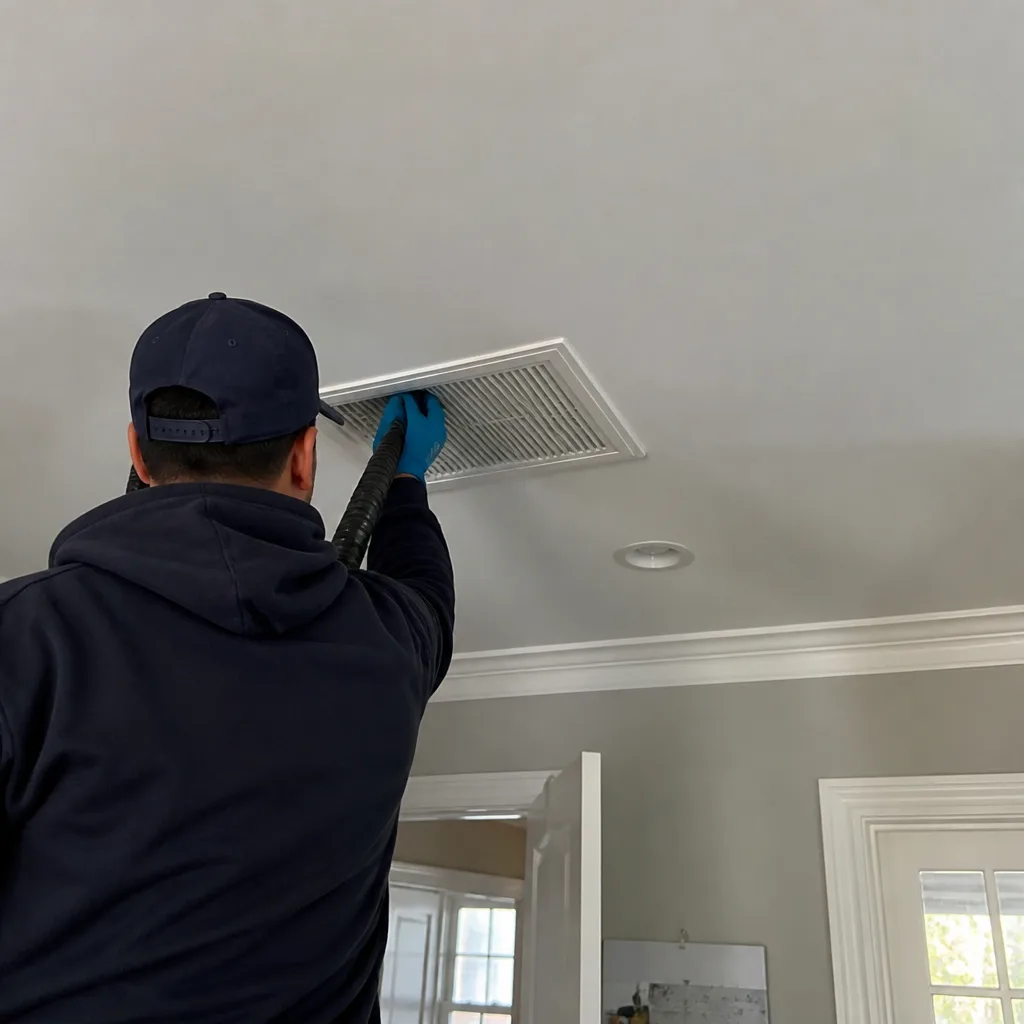 After
After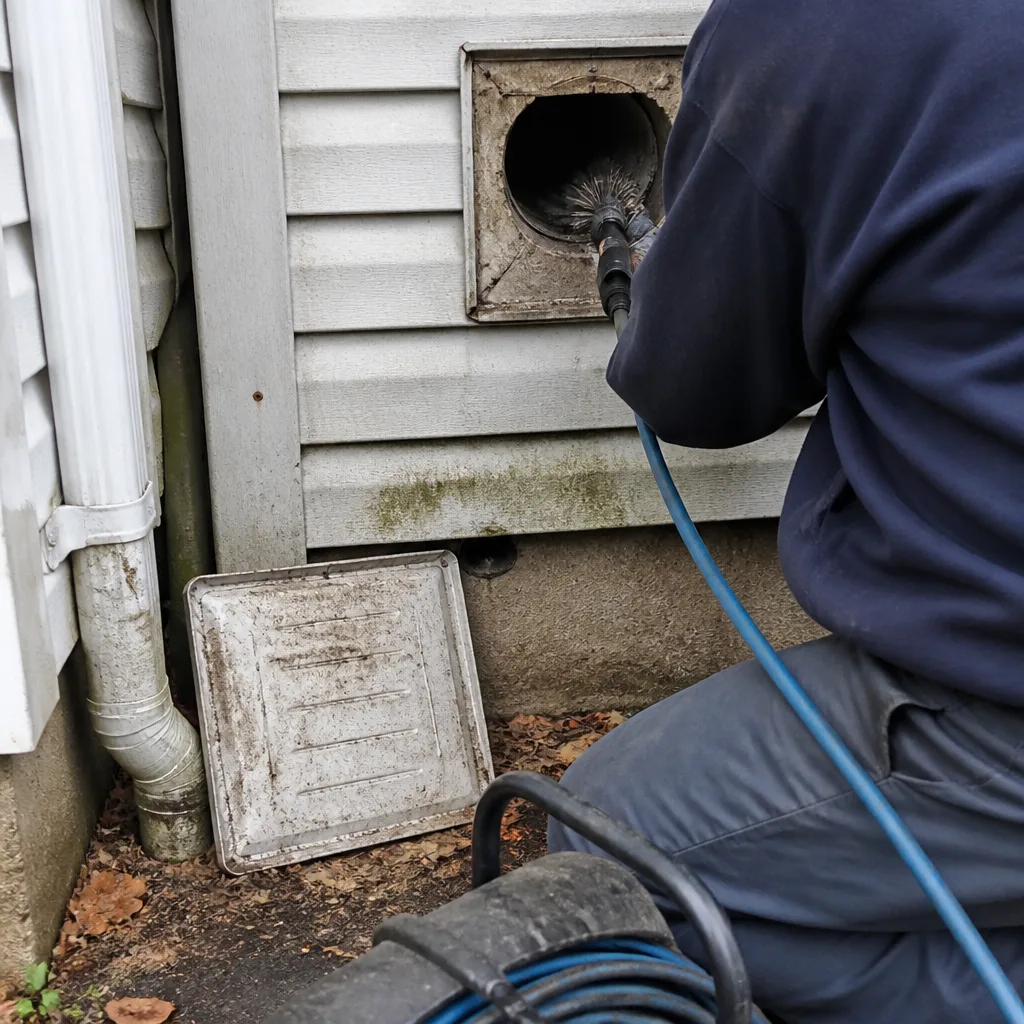 Before
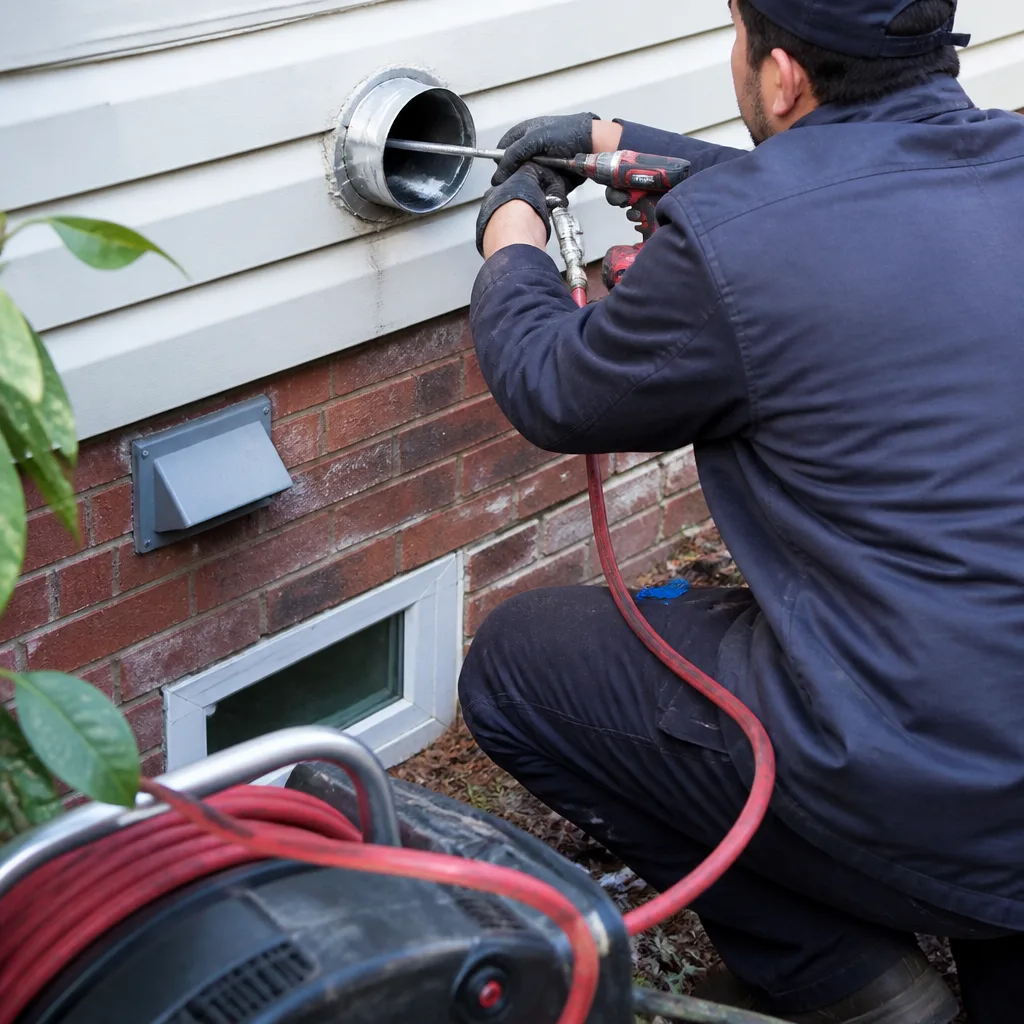 After
After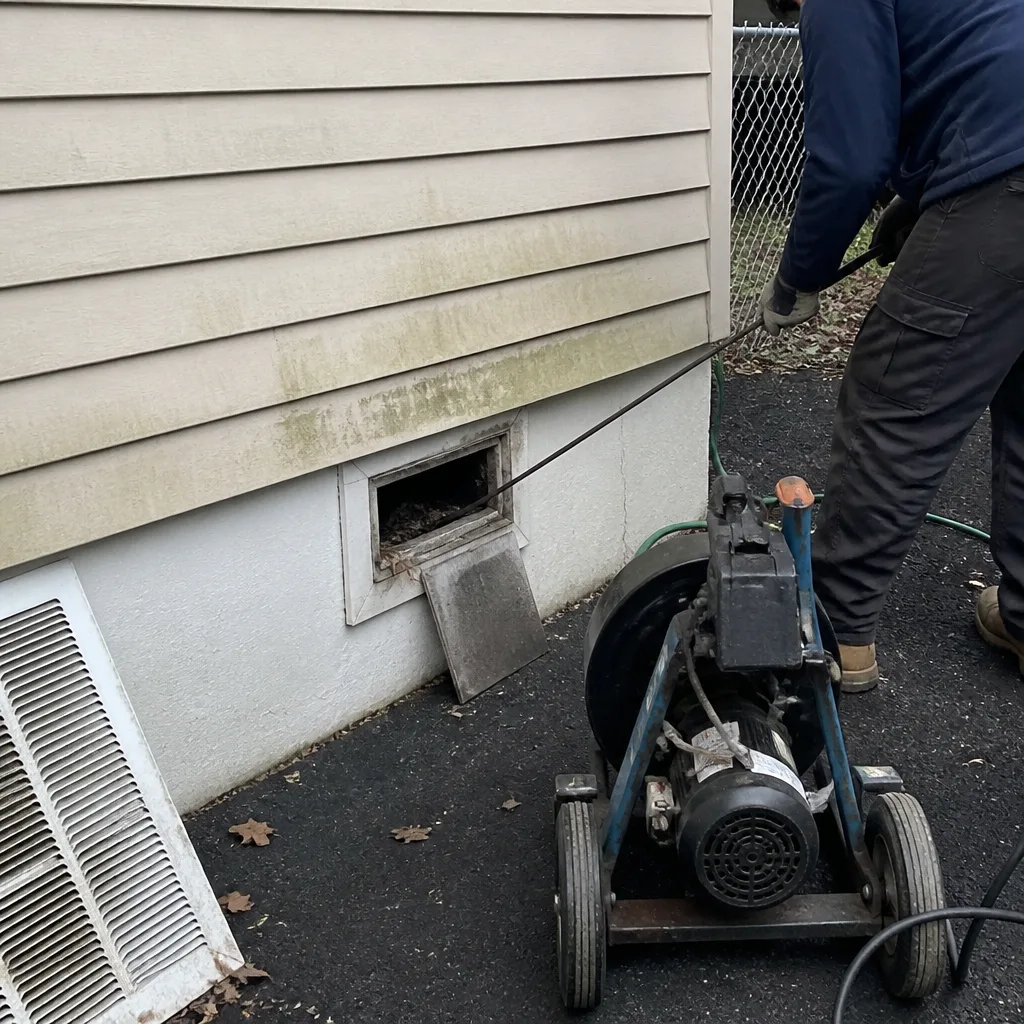 Before
 After
AfterSigns of a Clogged Dryer Vent
What’s Happening
A clogged dryer vent means lint, moisture, and heat have nowhere to go – so they back up into the duct, the drum, and eventually your laundry room. This is the single most common cause of house fires started by a dryer, and it almost always develops slowly enough that most people miss it until something obvious forces their attention.
What you’re seeing or smelling right now is the vent restriction expressing itself. Clothes that take two cycles to dry, a dryer cabinet that’s hot to the touch, a burning smell when the machine runs, or a laundry room that feels muggy and warm after a cycle – any one of those is the duct telling you airflow has been compromised. The restriction is physical: lint compresses over time into a dense plug that a standard exhaust fan can’t push through. The fix is mechanical removal of that obstruction, and it’s not a job a vacuum hose at the lint trap handles.
Why It Happens
Lint Accumulation at a Bend or Transition
Every dryer vent has at least one elbow where the duct changes direction. Lint is sticky when warm and humid, and that corner is where it parks first. Over months it compresses into a plug that narrows the duct opening progressively. You can often tell this is the cause when the dryer runs fine for the first ten minutes of a cycle, then the drum gets hot and clothes stop drying – that’s the exhaust temperature spiking because airflow has collapsed through the restriction point.
Damaged or Crushed Flexible Duct
Flexible foil or plastic duct – the accordion-style connector most often used in the few feet between the dryer and the wall – collapses and kinks easily if the dryer has been pushed back against the wall or if the duct was installed with too much slack. A kinked section traps lint on the upstream side and cuts exhaust flow the same way a clogged pipe does. If you can safely pull your dryer forward and see the flexible connector, look for any section that’s pinched, folded, or pressing against the back of the machine.
A Capped or Blocked Exterior Termination
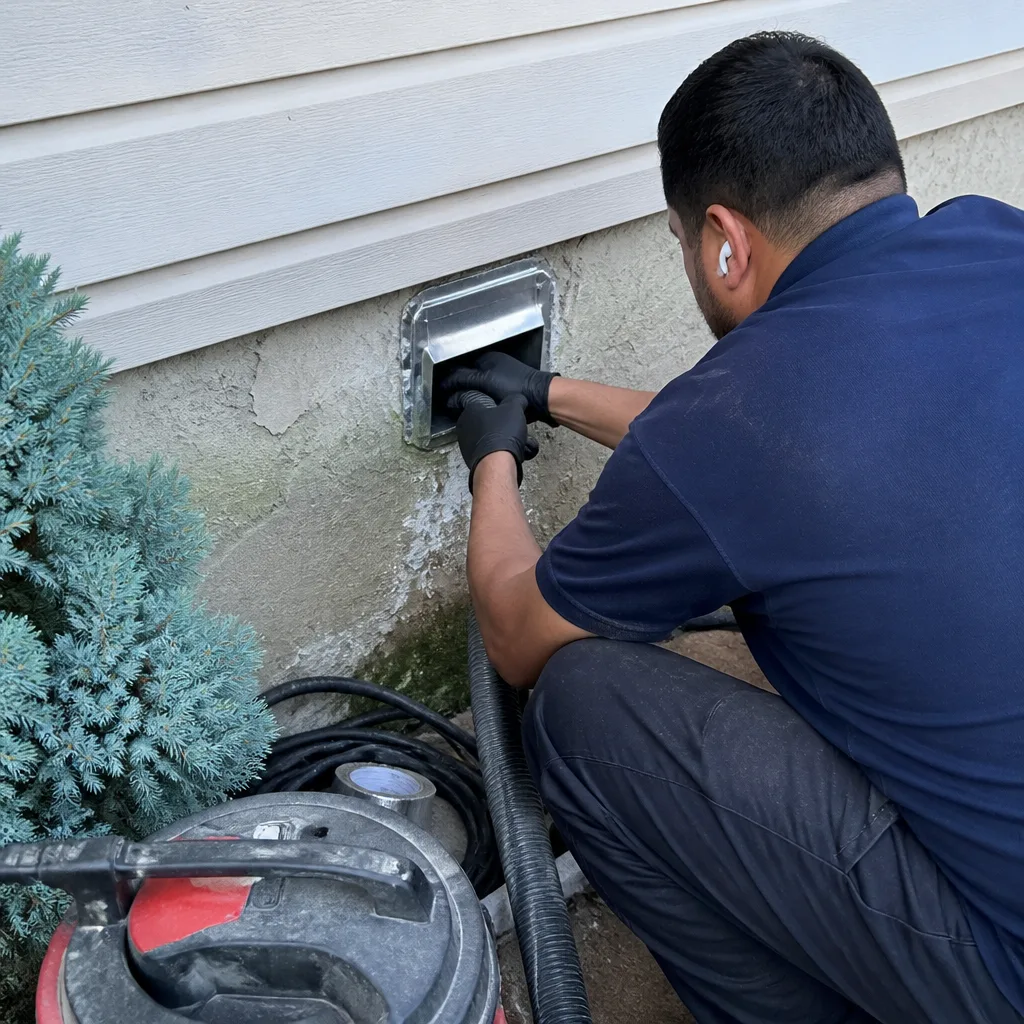
The vent terminates somewhere on the outside of your home – usually at a wall cap with a flap or louvered cover. Bird nests, wasp nests, and accumulated lint can seal that opening completely. When this happens, exhaust has literally nowhere to go and backs up the entire duct length. You can check the exterior cap yourself by running the dryer and holding your hand near the opening to feel for airflow – if you feel nothing, the termination is the likely culprit. Do not reach into the opening; just note the condition and photograph it.
A Duct Run That’s Too Long or Poorly Designed
Building codes specify maximum equivalent lengths for dryer vent runs – a run that’s too long, has too many elbows, or was routed through an unconditioned space loses so much static pressure that a residential dryer can’t push exhaust all the way to the exterior. This one is easy to overlook because the duct itself might be clean. The tell is that the problem has existed since the dryer was installed in this location, or got noticeably worse when a dryer was replaced with a newer, larger-capacity model that produces more exhaust volume than the duct can handle.
What to Do Right Now
- Stop running the dryer until the vent is cleared. This is not precautionary language. A restricted dryer vent traps heat that has no exit, and that is how dryer fires start. Finish the load you have in by hanging it or using a laundromat, and don’t run another cycle until the restriction is resolved.
- Check the exterior vent cap without touching the duct. Go outside, find the exhaust termination, and photograph it from a foot away. If you can see lint blocking the flap or anything packed into the opening, note it – your technician will want to know before they start. Don’t try to clear a packed termination from the outside without knowing what the rest of the duct looks like.
- Pull the dryer forward carefully and look at the flexible connector. With the dryer unplugged and the gas shutoff closed (if it’s a gas dryer), slide the machine away from the wall enough to see the flex duct. Gas dryers: do not disconnect or bend the gas supply line while doing this – the flexible duct inspection is a visual, not a hands-on task. Look for kinks, tears, or compression. Photograph what you see.
- Clean the lint trap and note what you find. A trap that fills faster than usual, or one that has lint bypassing the screen and accumulating on the frame around it, indicates a screen damage or alignment problem that a technician should see.
- Write down how long each symptom has been present. When the tech arrives, knowing whether the extended dry times started two weeks ago or two years ago changes the inspection approach significantly.
BeforeAfterHow We Fix It
When your local CleanRun Air Duct Cleaning team arrives, the first thing that happens is a written price delivered before a single panel comes off or a single tool comes out of the van. That’s Haven Standard Clause 1, and it applies to every job without exception.
The technician runs a full vent inspection from the interior connection point to the exterior termination, documenting what the camera finds at each section. The actual clearance uses rotary brush equipment – Rotobrush systems that mechanically dislodge packed lint rather than just vacuuming around it – combined with negative-pressure extraction. If the flexible connector is damaged or the rigid duct has a crushed section, that’s a Duct Repair job handled at the same visit under the same written price.
Most residential dryer vent cleanings take 45 minutes to an hour. More involved duct repairs take longer, and the technician tells you exactly how long before starting. The job ends with a Documented Photo Record of every section of the run – before and after – delivered to you as part of the standard job record, not as an optional add-on. The work is backed by the 365-Day Done Right Promise: if it’s not right, CleanRun makes it right, in writing.
Frequently Asked Questions
A clogged dryer vent is a genuine fire risk, not a performance inconvenience. Lint is highly combustible, and a restricted vent traps heat that would otherwise exhaust outside. The U.S. Fire Administration has documented dryer fires as a consistent residential fire source, and restricted venting is the leading contributing factor. If your dryer is hot to the touch, smells burnt during a cycle, or the laundry room is warming up while the machine runs, stop using the dryer and call (806) 606-6902 today.
It should not wait. A vent that’s partially restricted today will be more restricted after the next few loads because every cycle pushes more lint into the existing accumulation. More urgently, every load you run through a restricted vent operates at elevated heat levels. There’s no safe threshold for “how clogged is okay” – once you’re seeing symptoms, the appropriate step is to stop using the dryer and schedule the cleaning. Call (806) 606-6902 and your local CleanRun team will get you a written quote and an appointment.
CleanRun doesn’t publish a flat figure for dryer vent cleaning because the job price depends on the duct configuration, run length, number of elbows, and whether any section needs repair. What CleanRun does publish – and deliver on paper before anything starts – is the exact price for your specific job. Call (806) 606-6902 and your local team will provide a free written estimate. No “call for a quote” – the number you get in writing is the number on the invoice.
Call (806) 606-6902 and your local CleanRun Air Duct Cleaning team will tell you the first available appointment window directly – a real window, with a named technician and a text when they’re on the way. Dryer vent cleaning is a scheduled job, and CleanRun doesn’t manufacture urgency around availability. What they can tell you is exactly when they can be there and what it will cost, in writing, before the appointment is confirmed.
Get It Fixed
Your local CleanRun Air Duct Cleaning team handles dryer vent cleaning and duct repair with a written price before work starts and a documented photo record when they leave. Call (806) 606-6902 to get your free written estimate scheduled – or book online. Calls are answered by a live person, every time.
Written by Tomas Reyes, Owner & Lead Technician at CleanRun Air Duct Cleaning, serving homeowners nationwide since 2013.
What Our Customers Say
"Flat price agreed up front, no per-vent add-ons at the end. That was the whole reason I did not call the coupon company."
- Suzanne B."The dryer vent was almost completely blocked with lint. They showed me the photograph and I understood immediately why the dryer had been running twice."
- Lucia M."They found a disconnected duct in the crawl space that had been dumping conditioned air under the house for years. Photographed it, quoted the repair, fixed it."
- Devon A.