
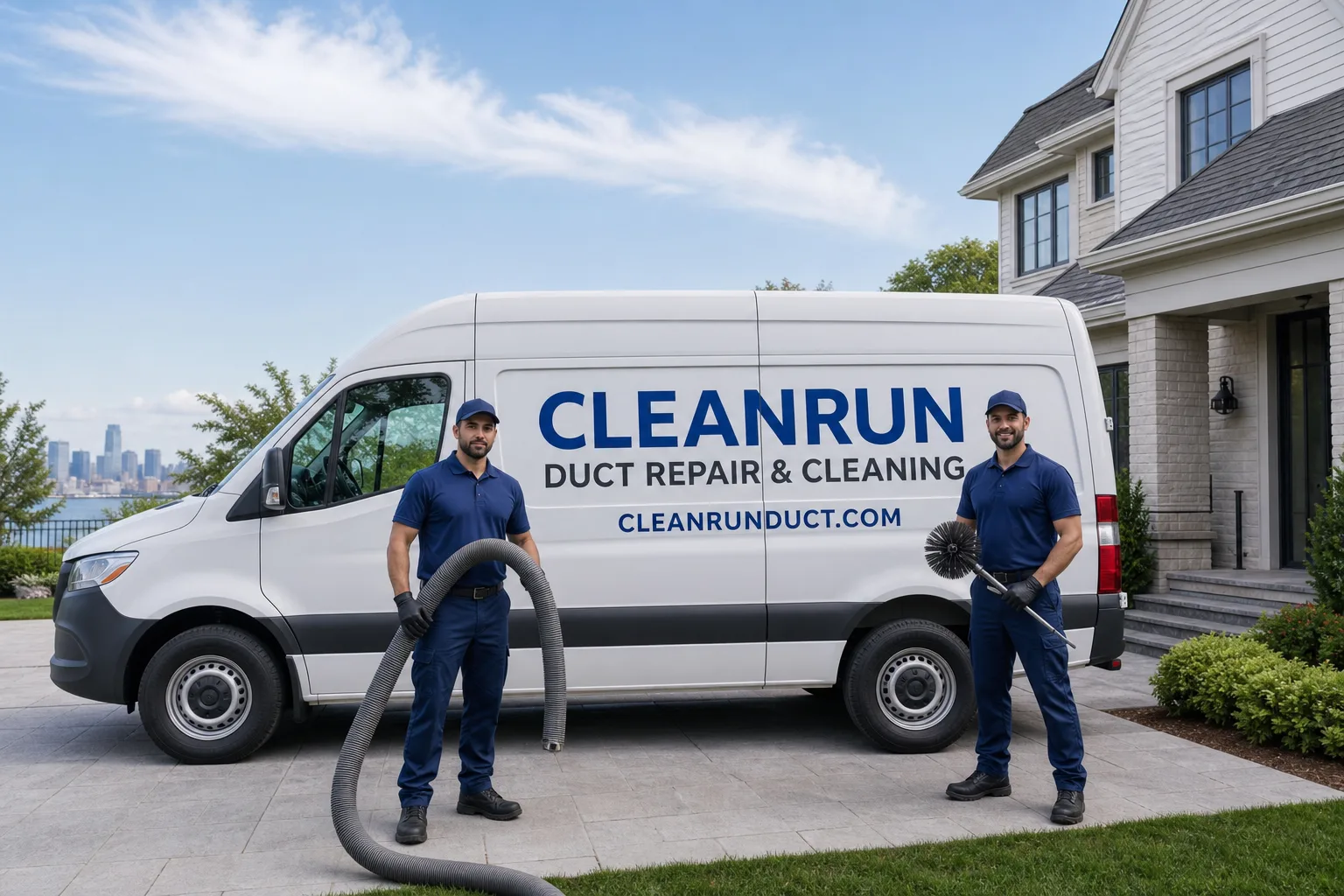
Whole-system duct and dryer vent check with before-and-after photos - you see exactly what came out of your vents
That "$99 whole-house special" is a bait ad - the real number appears once they are in your hallway, or the "clean" is a shop-vac at the register. We photograph the inside of your ducts before and after instead.
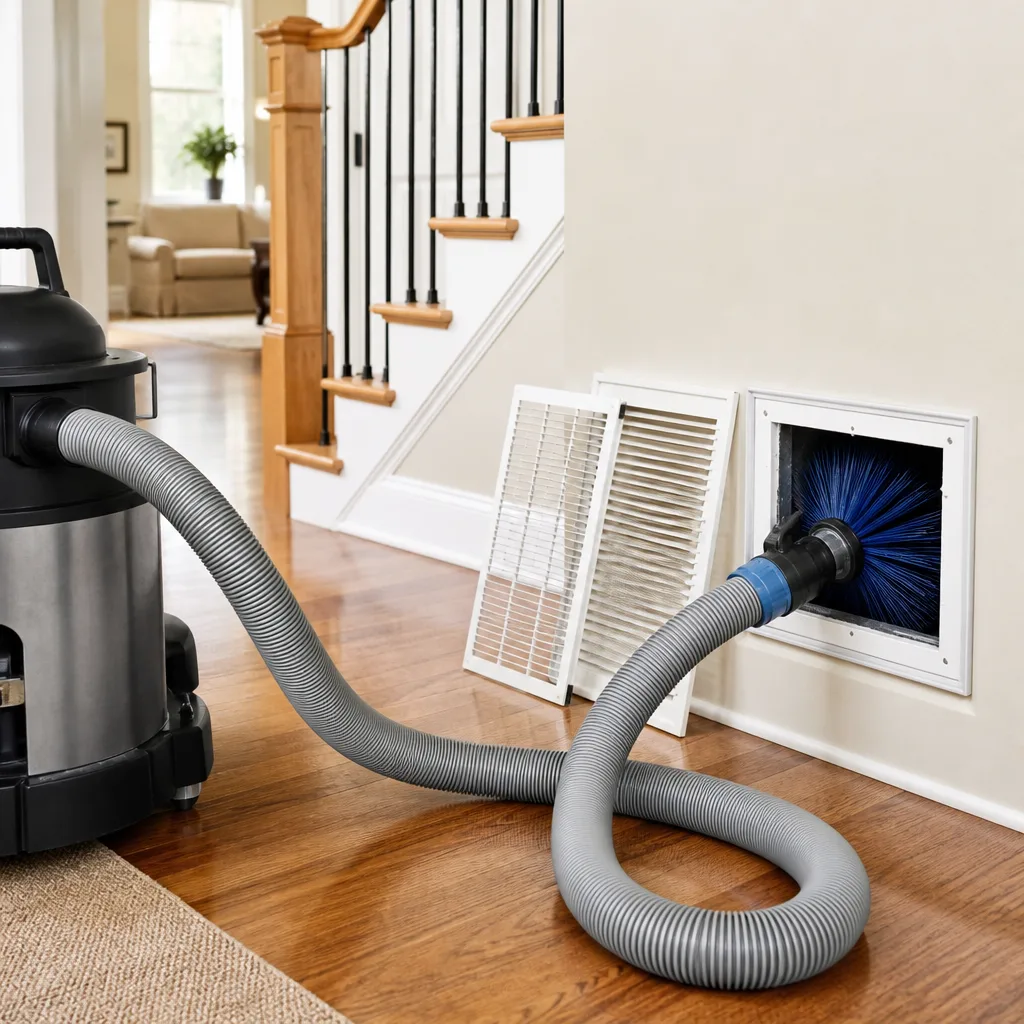
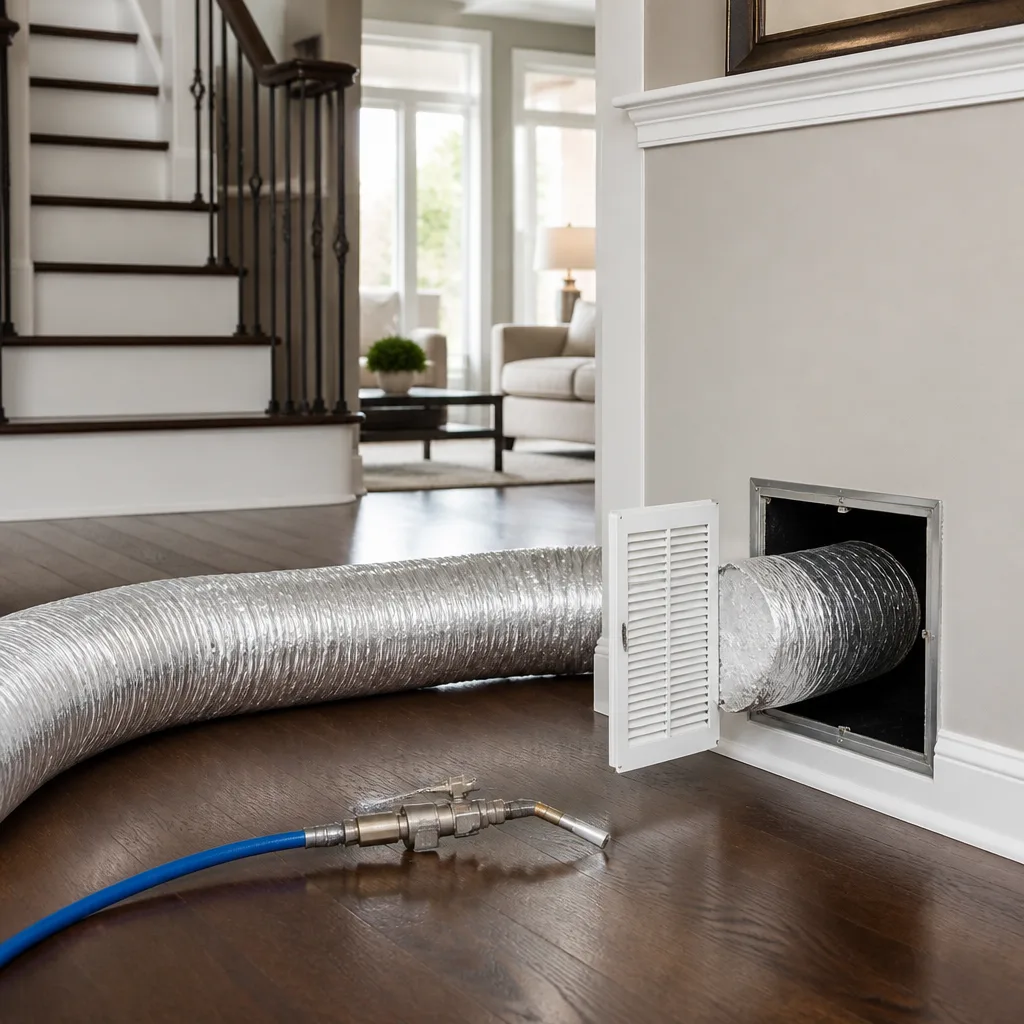
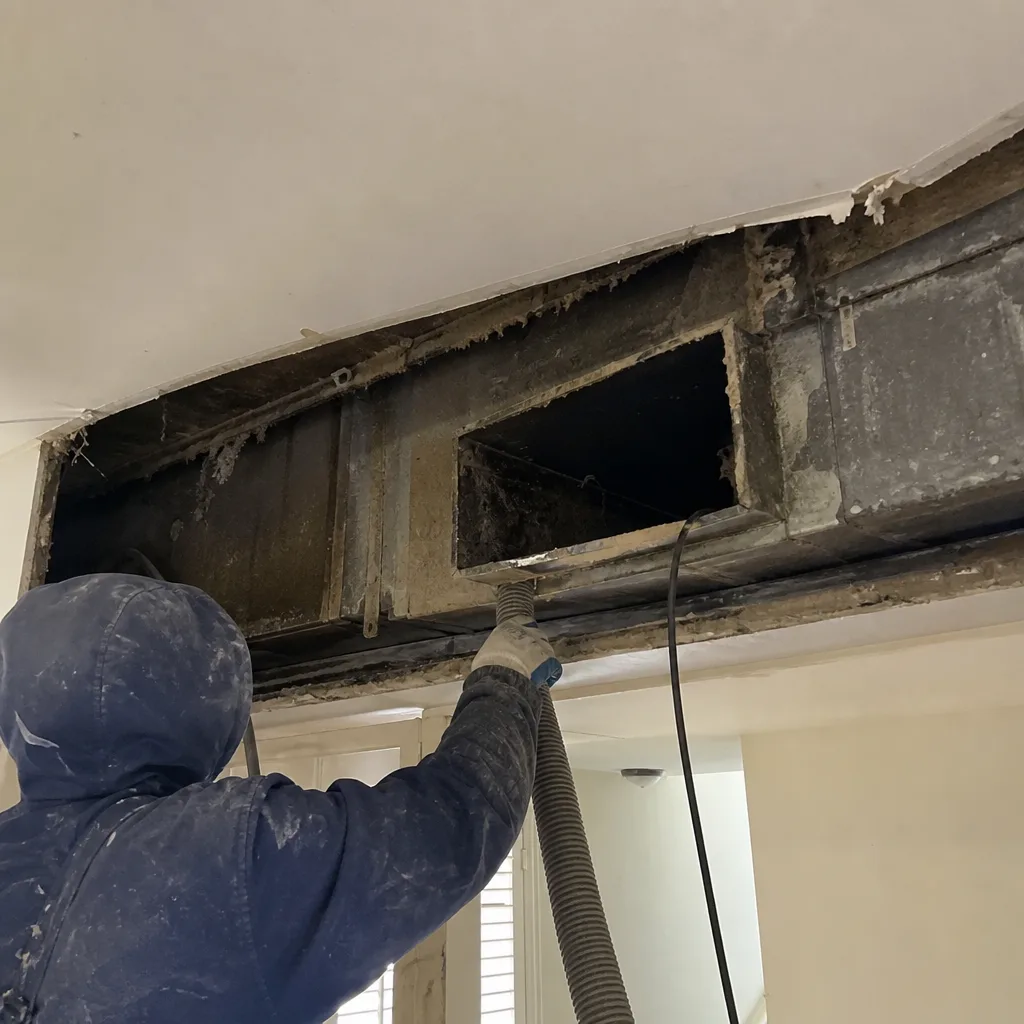 Before
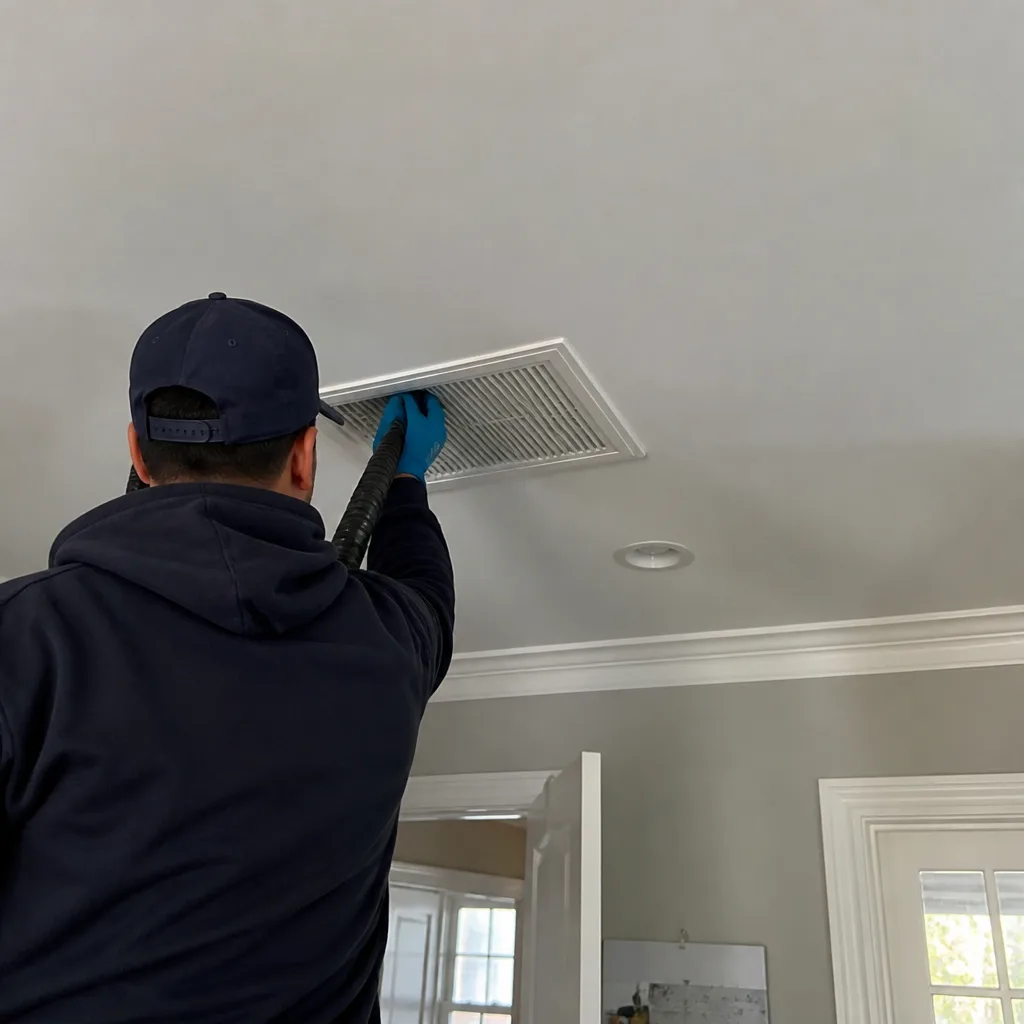 After
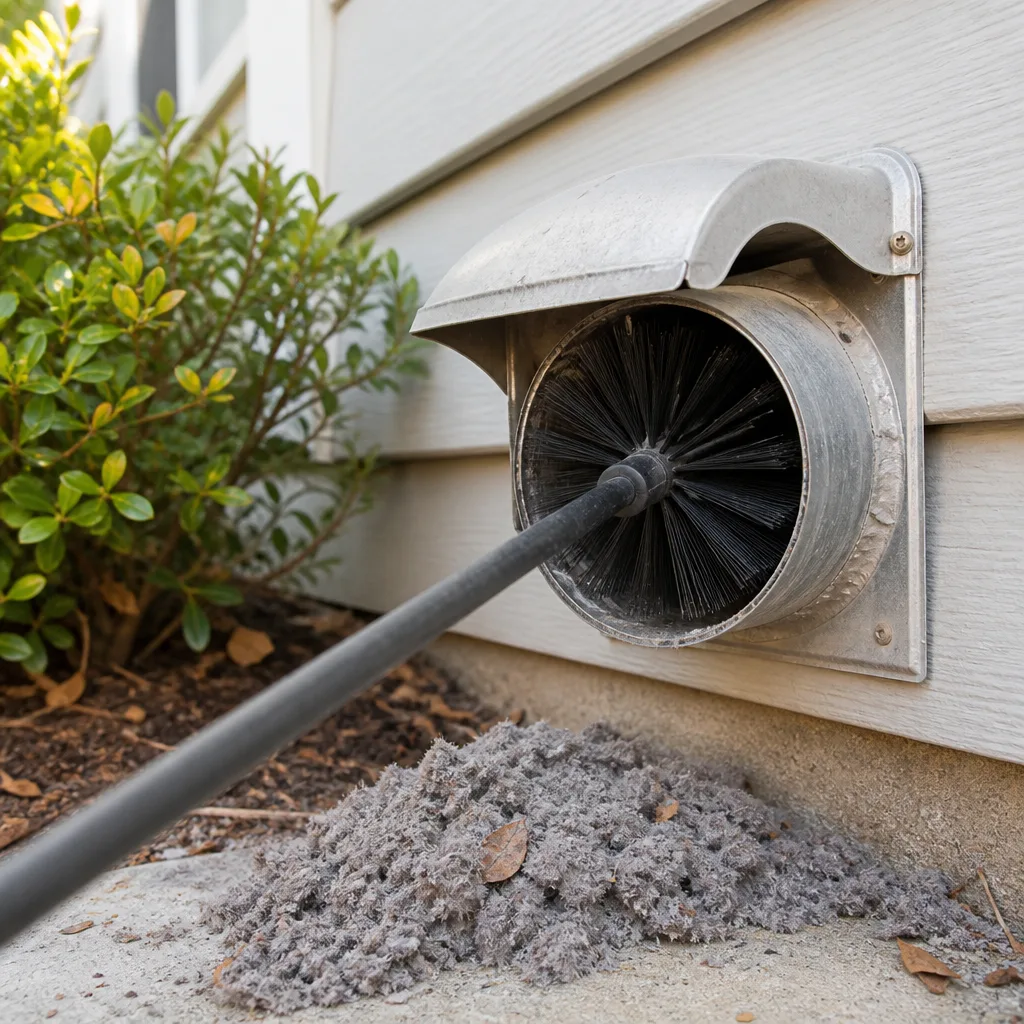
After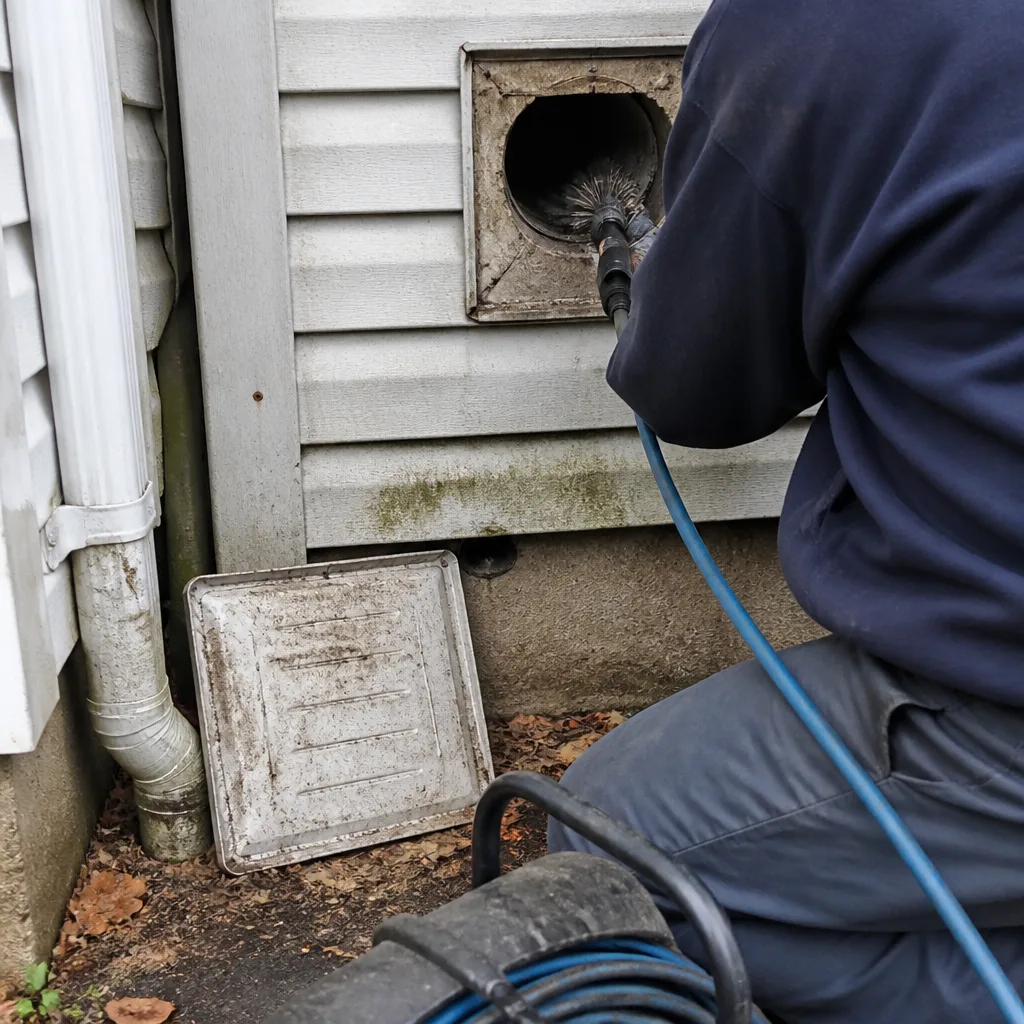 Before
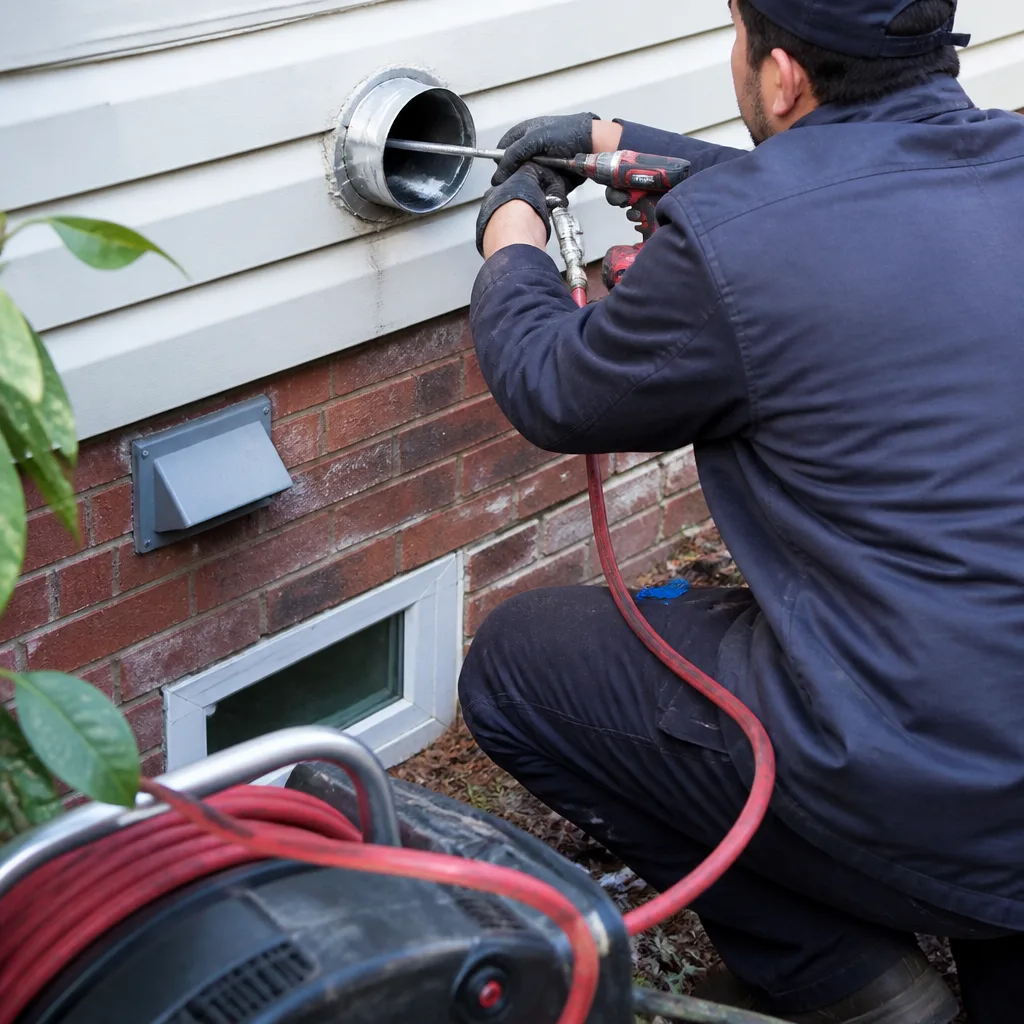 After
After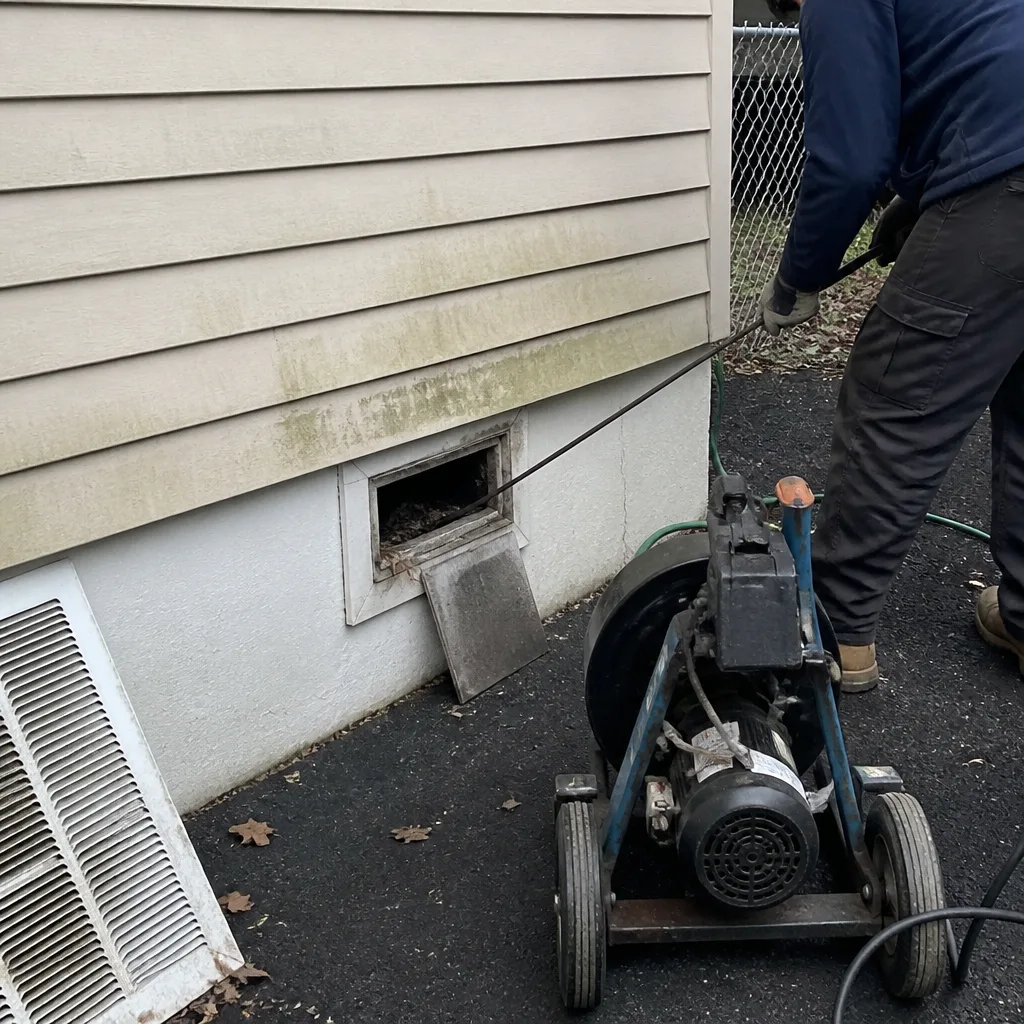 Before
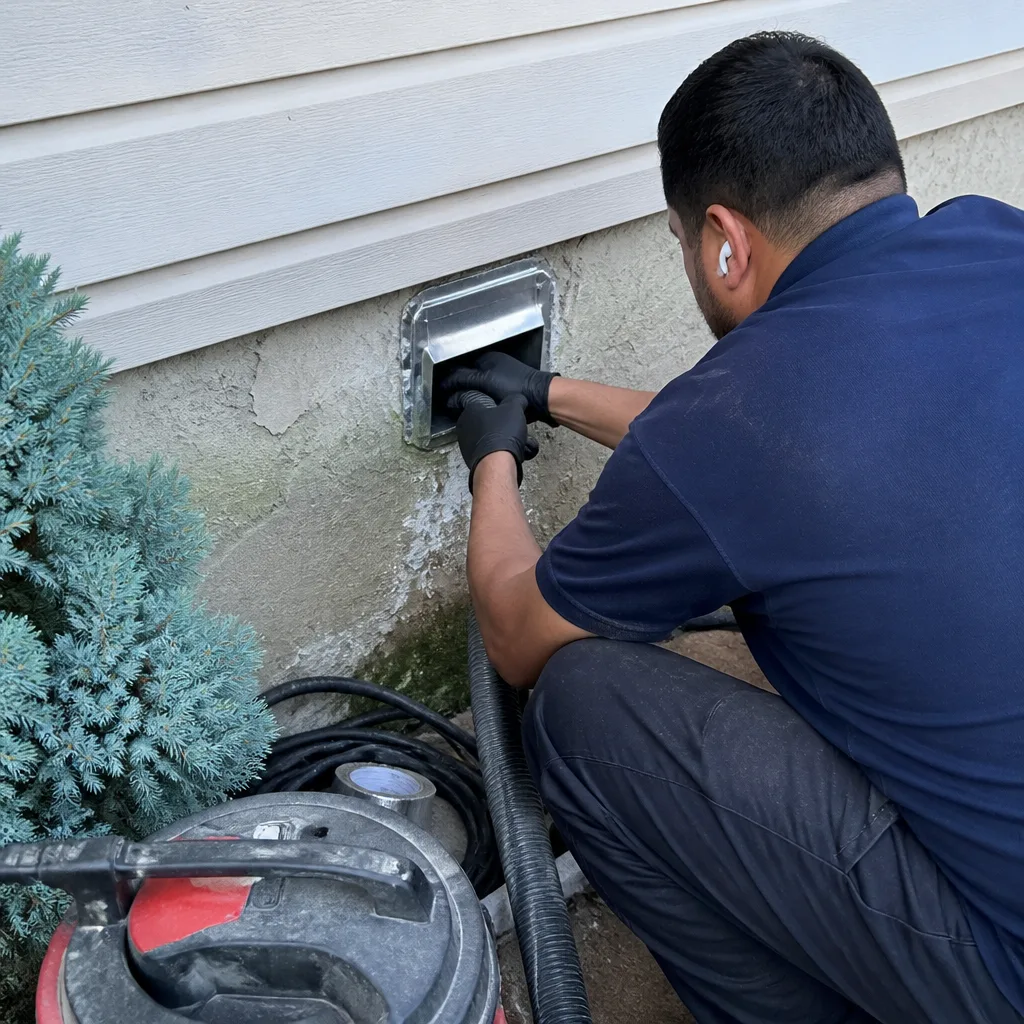 After
AfterAllergies Worse Indoors
If your allergy symptoms are noticeably worse inside your own home than they are outside, your duct system is the most likely cause. Over time, duct runs accumulate dust, dander, mold spores, and other particulates that your HVAC blower recirculates every time the system cycles. A thorough air duct cleaning removes that reservoir at the source.
Most people assume outdoor air is the problem. But the EPA has noted for years that indoor air can carry a higher concentration of common allergens than the air outside – because the inside of a forced-air system is a closed loop. Every time your furnace or air handler kicks on, whatever has been sitting in those ducts gets pushed into the room you’re standing in. Dust mite debris, pet dander, mold fragments, and construction dust from a remodel three years ago can all be living in your ductwork right now, cycling quietly every heating and cooling season. The fix is not a new air filter. The fix is cleaning what the filter never reached in the first place.
Why It Happens
Accumulated Dust and Debris Inside the Duct Runs
This is the most common cause, and it builds so gradually that most homeowners don’t notice until symptoms become hard to ignore. Every cubic foot of moving air carries fine particles, and over the years those particles settle on the interior walls of your duct runs. When airflow picks up, they get re-entrained. You can get a rough sense of your situation by pulling a floor or ceiling register off and shining a flashlight inside – if you see a visible layer of gray-brown material coating the sheet metal, you’re looking at what you’ve been breathing.
Mold Growth Inside the System
Any time condensation gets into a duct – often near the air handler, around a poorly sealed flex duct connection, or anywhere insulation has been compromised – you have a condition that supports mold growth. Mold spores are potent allergens at concentrations far too low to see with the naked eye. A musty smell when the system first kicks on is the most reliable sign. If you notice it and it clears within a few minutes, that pattern points directly at contamination inside the system itself.
Deteriorating Duct Liner or Insulation
Older fiberglass duct liner breaks down over time, releasing fine glass particles and fibrous material into the airstream. Flex duct that has been kinked, crushed, or is simply at the end of its service life can shed material as well. If your home was built before the mid-1990s or if the ductwork has never been inspected since installation, liner degradation is a real possibility. Symptoms tend to be worst shortly after the blower starts – that first burst of air carries the loosest particles.
A Dirty or Bypassed Air Handler and Coil
The evaporator coil and the air handler cabinet itself are surfaces where biological growth can take hold, particularly in humid climates. A coil that has never been cleaned accumulates a mat of dust and organic material that the blower then pulls air across on every cycle. If you’ve had your ducts cleaned before but symptoms returned quickly, the air handler may be the part that was missed. The cabinet is worth inspecting – a flashlight and an open access panel will show you whether the coil looks gray and matted or relatively clean.
What to Do Right Now
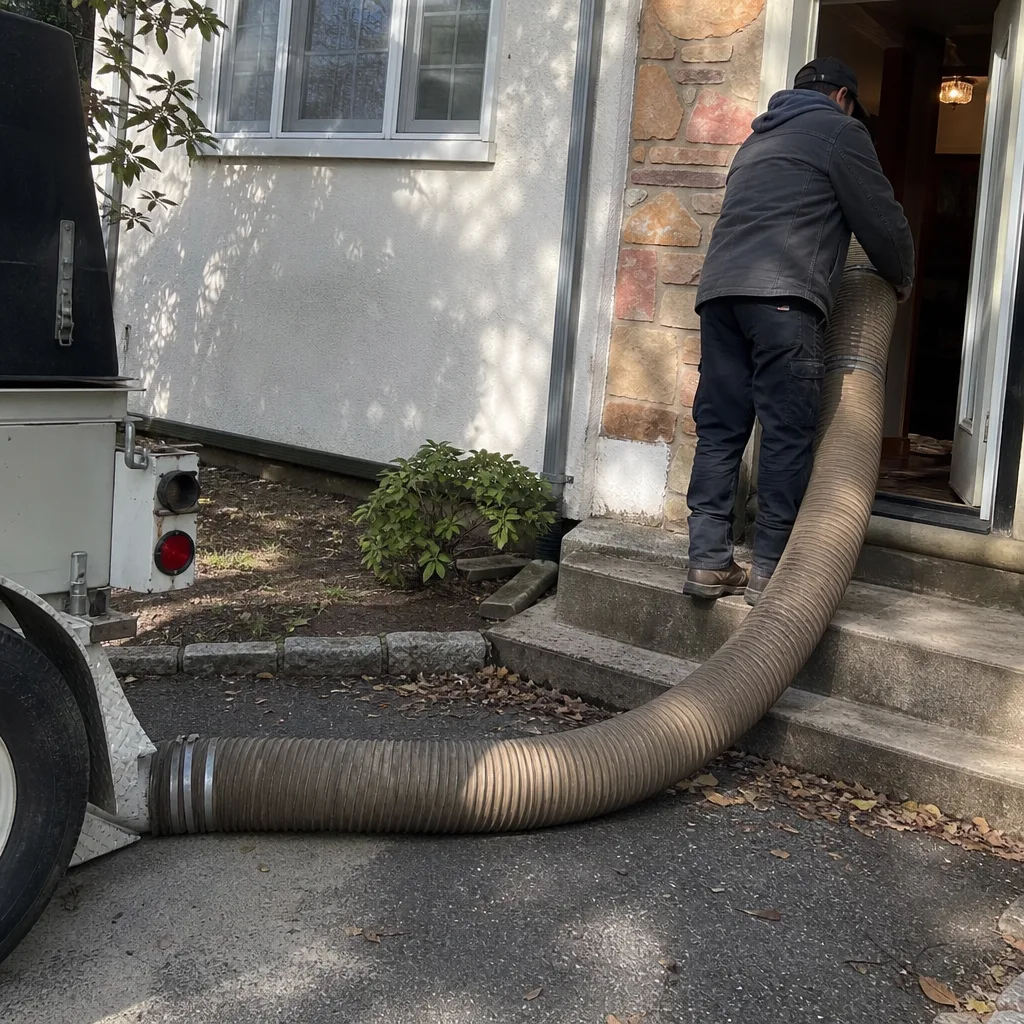
- Pull one or two registers and look inside with a flashlight. You don’t need to reach in or disturb anything. You’re just gathering evidence. Take a photo if you can – it becomes useful context when you call for a written estimate.
- Check your current air filter and note the date you last changed it. A collapsed or overloaded filter can bypass into the system. If it looks dark gray or worse, replace it now – but understand that a new filter does not clean what’s already downstream of it.
- If you smell something musty when the system runs, note when it happens. Write down whether it’s at startup, continuous, or only on the heating cycle. That detail helps a technician prioritize where to look first.
- Do not run the system more than necessary until it’s inspected. If contamination is present, running the blower continuously spreads it further. You’re not making it worse in a dramatic way, but you’re not helping it either.
- Leave the ductwork itself alone. Do not attempt to clean inside duct runs with a household vacuum, compressed air, or any improvised tool. You’ll dislodge settled material without capturing it, and the result is more particulate in the air, not less. Let the camera go in first.
BeforeAfterHow We Fix It
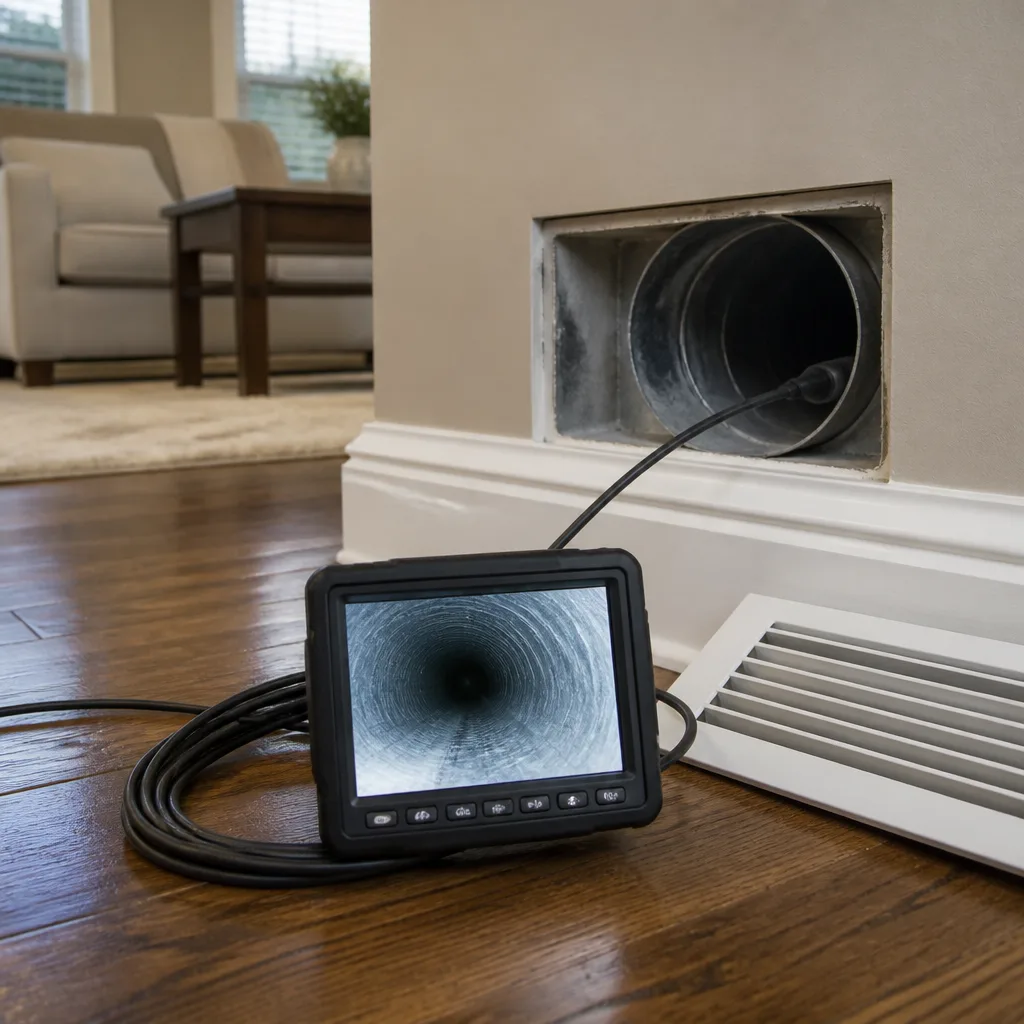
When your local CleanRun Air Duct Cleaning team arrives, the first thing a technician does is put a camera into the system – not to impress you, but because the debris composition tells us what we’re dealing with before we commit to a scope. What we find gets documented. What we quote gets written down before any panel comes off.
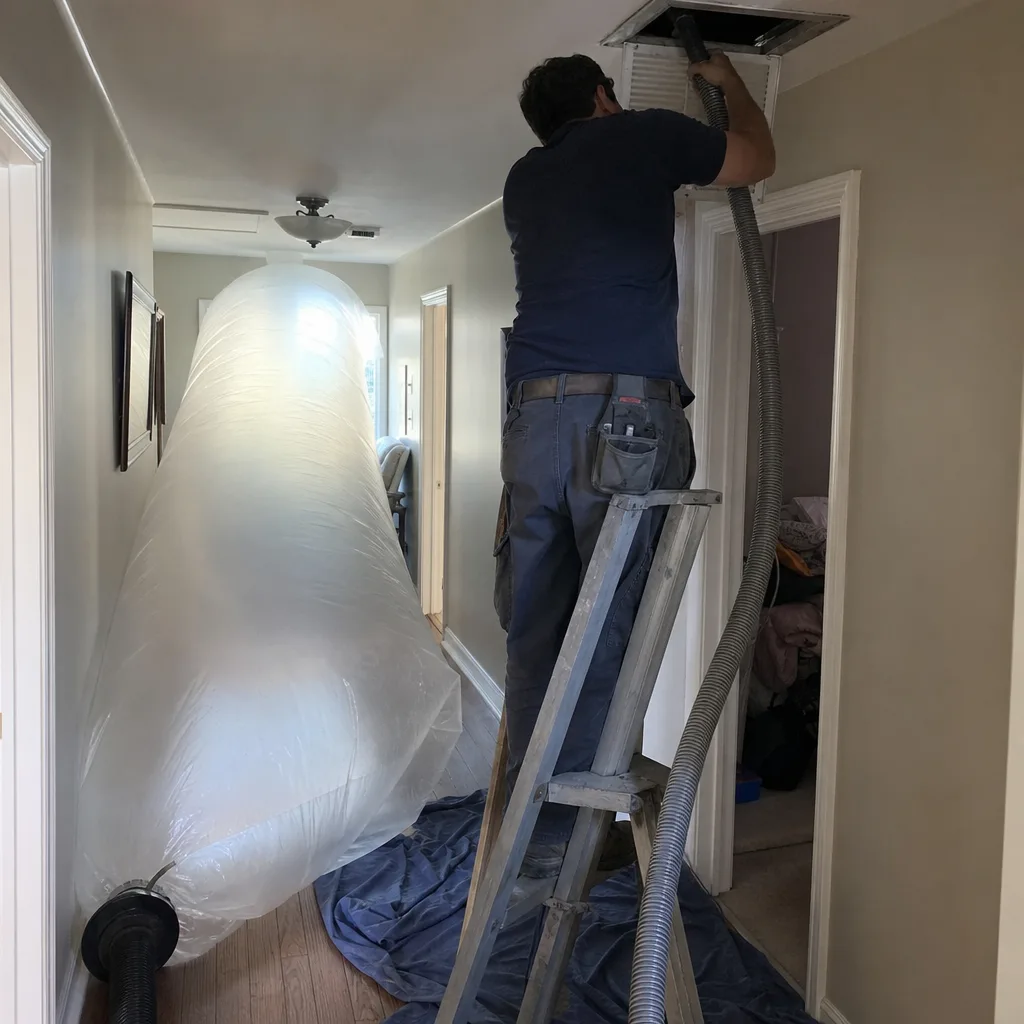
For allergen-related complaints, the primary service is air duct cleaning, which uses Rotobrush and Nikro equipment to agitate and extract debris from every run in the system. If mold or biological contamination is confirmed, air quality and sanitizing using Abatement Technologies and Guardsman products follows the mechanical cleaning. If the inspection finds damaged or disconnected duct sections that are introducing unconditioned air, duct repair and sealing gets added to the written scope at that point – not discovered “while we’re in there” and mentioned at the invoice stage.
A full duct cleaning on a typical single-family home takes three to four hours. Every run gets photographed before and after, and that photo record comes with you when we leave. The 365-Day Done Right Promise covers the work in writing. If it’s not right, we make it right – no manager approval required.
Frequently Asked Questions
The clearest indicator is that symptoms are noticeably worse indoors than outdoors, and that they worsen when the HVAC system is running. If pulling a register cover and looking inside shows visible dust accumulation on the duct walls, that’s physical evidence – not a guess. A pre-cleaning camera inspection, which CleanRun documents photographically, will tell you with certainty what’s in the system before any work begins.
Duct contamination is not an emergency in the way a gas leak or an electrical fault is, but it is a chronic health stressor for anyone with allergies or asthma, and it doesn’t improve on its own. Every cycle of the blower redistributes what’s in those runs. Waiting a few weeks is unlikely to cause acute harm, but it doesn’t give the situation time to resolve either – it just extends the exposure. If symptoms are affecting sleep or daily function, that’s a reasonable reason to prioritize it. Call (806) 606-6902 and your local team will get you a written estimate so you can make an informed decision without pressure.
CleanRun doesn’t post a single number because the right number depends on your home’s square footage, duct layout, the number of runs, and what the camera actually finds. What we do post is the commitment: a written price for your specific job, before anything starts, under Haven Standard Clause 1. There is no per-vent pricing, no teaser coupon that grows into something else once the truck is in your driveway. Call (806) 606-6902 and we’ll put your number in writing at no cost.
Air duct cleaning is a scheduled job – it takes three to four hours done properly, and rushing it is how real work turns into vacuum noise. Your local CleanRun team will tell you honestly what the next available window looks like when you call. What we can promise is a real appointment window, a named technician, and a text when they’re on the way – not a vague four-hour range and a hope. Call (806) 606-6902 to find out what’s available in your area.
Get It Fixed
If your allergies are worse indoors, your ducts are the first place to look. Your local CleanRun Air Duct Cleaning team will photograph what’s inside, give you a written price before any work starts, and back the job with the 365-Day Done Right Promise. Call (806) 606-6902 or book online – your local team takes it from there.
Written by Tomas Reyes, Owner & Lead Technician at CleanRun Air Duct Cleaning, serving homeowners since 2013.
What Our Customers Say
"The dryer vent was almost completely blocked with lint. They showed me the photograph and I understood immediately why the dryer had been running twice."
- Lucia M."They found a disconnected duct in the crawl space that had been dumping conditioned air under the house for years. Photographed it, quoted the repair, fixed it."
- Devon A."On time, professional, and explained what the readings meant without talking down to me."
- Warren E.