

Whole-system duct and dryer vent check with before-and-after photos - you see exactly what came out of your vents
That "$99 whole-house special" is a bait ad - the real number appears once they are in your hallway, or the "clean" is a shop-vac at the register. We photograph the inside of your ducts before and after instead.
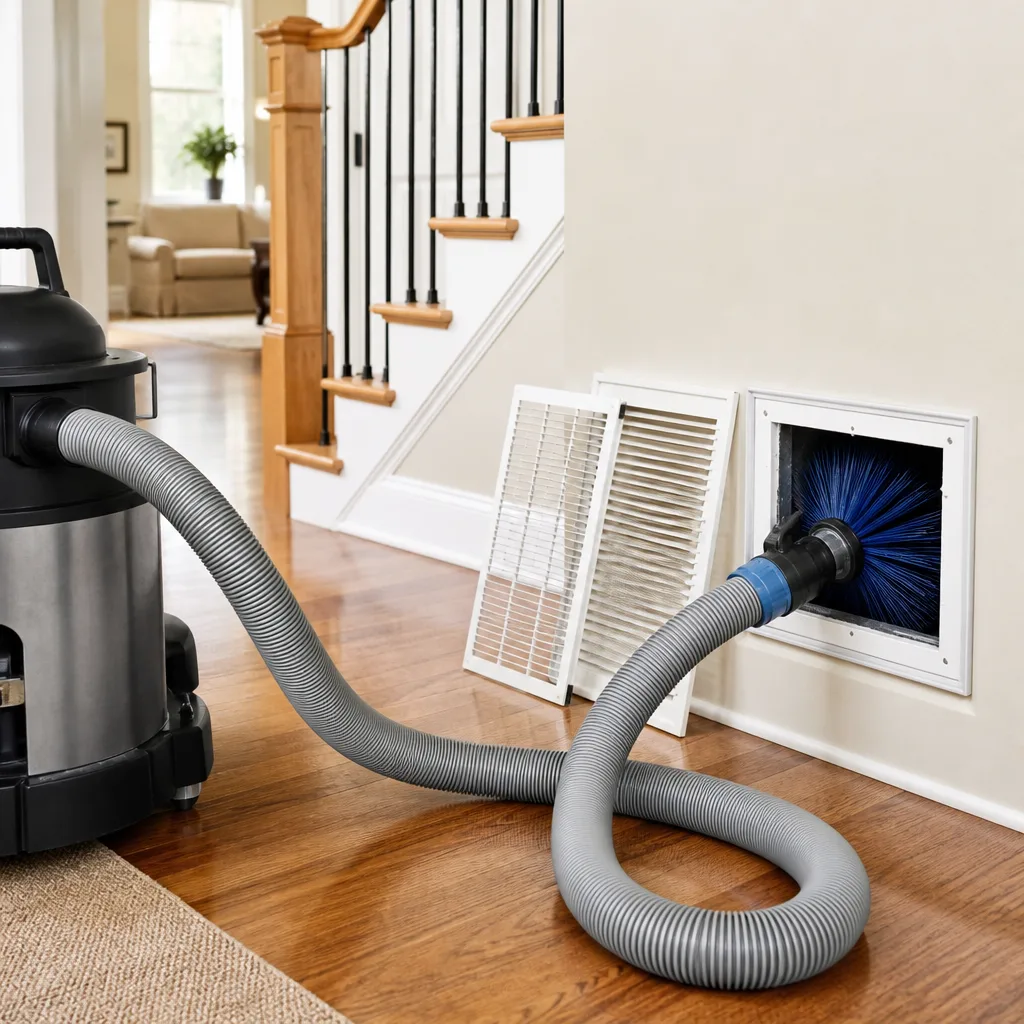
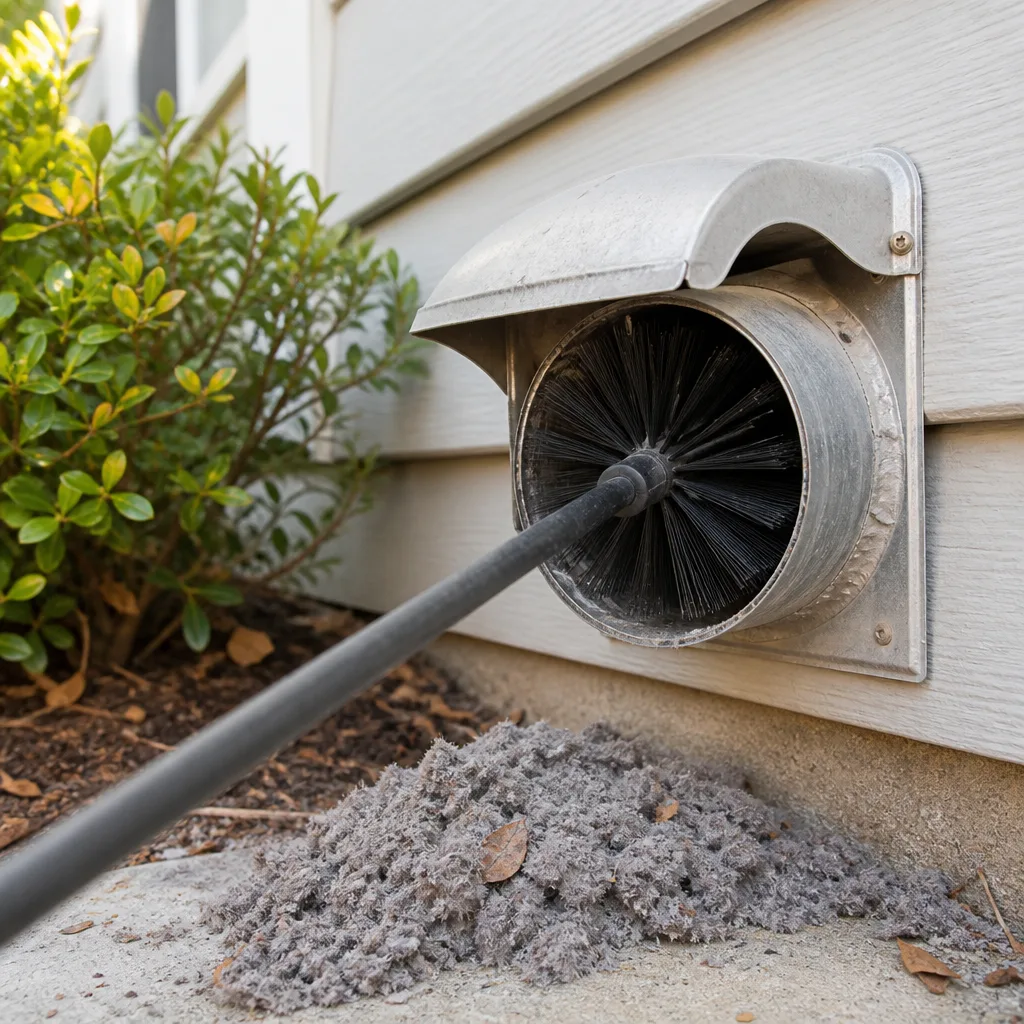
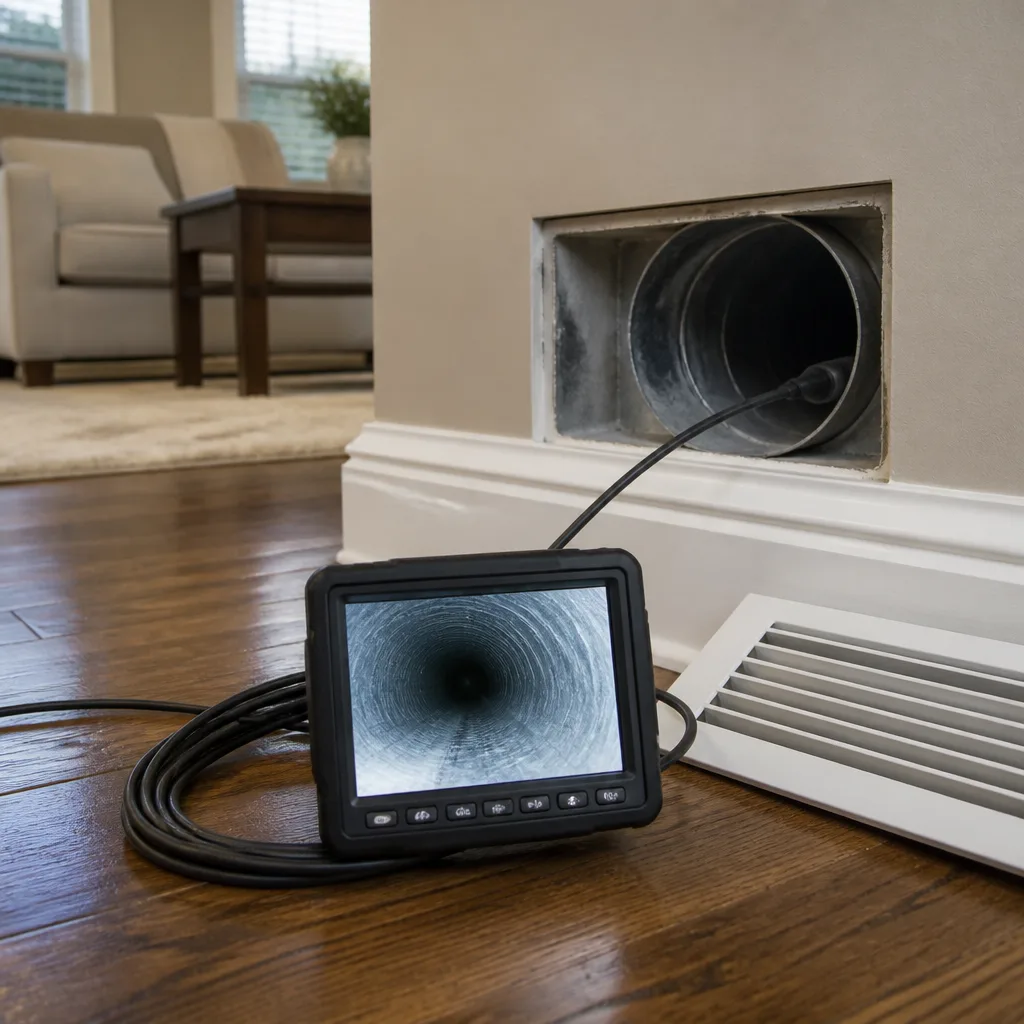
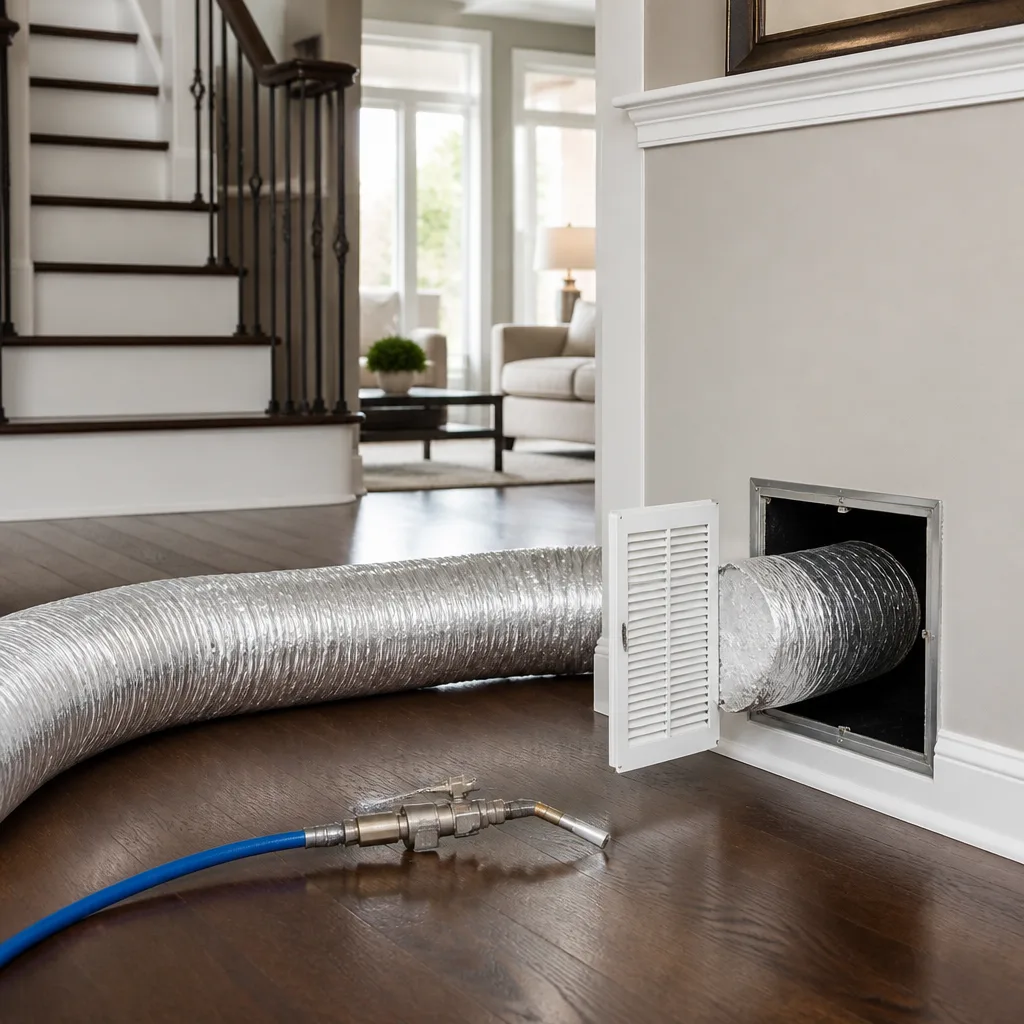
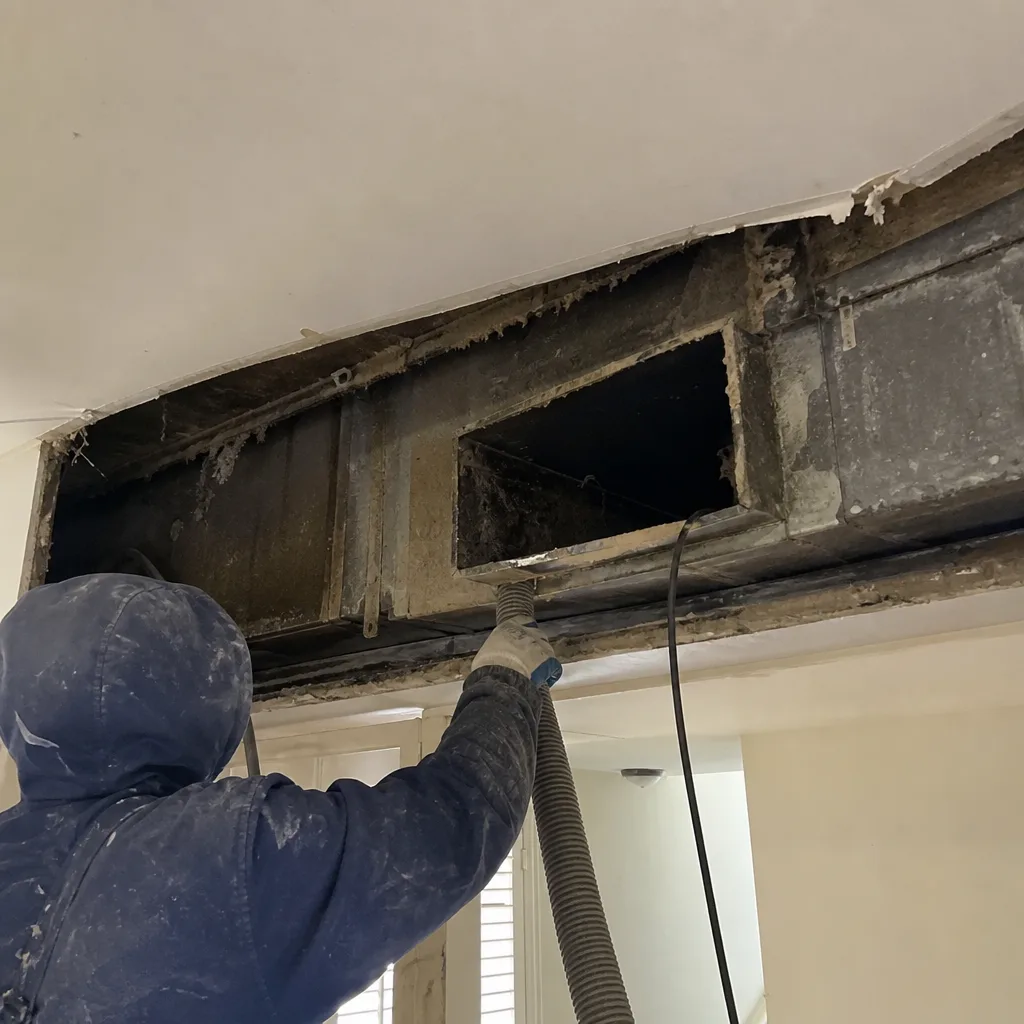 Before
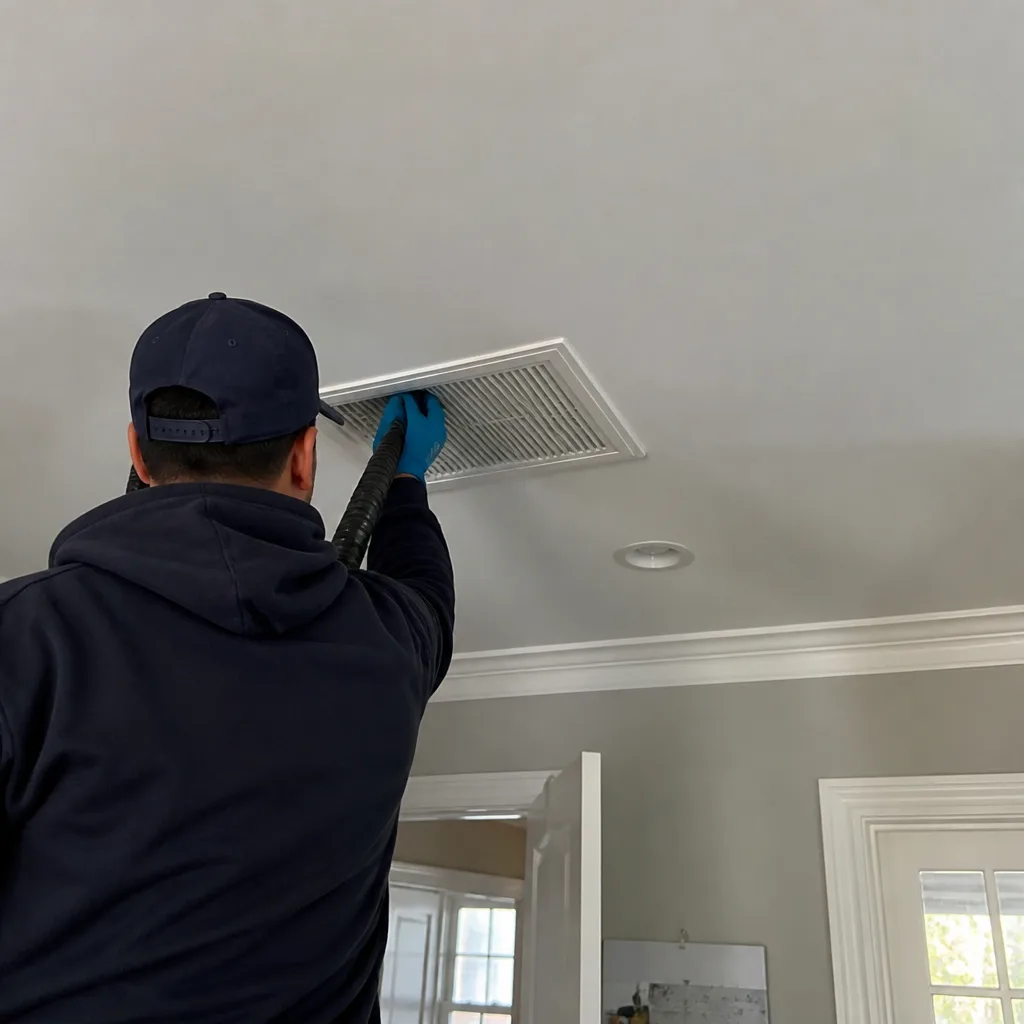 After
After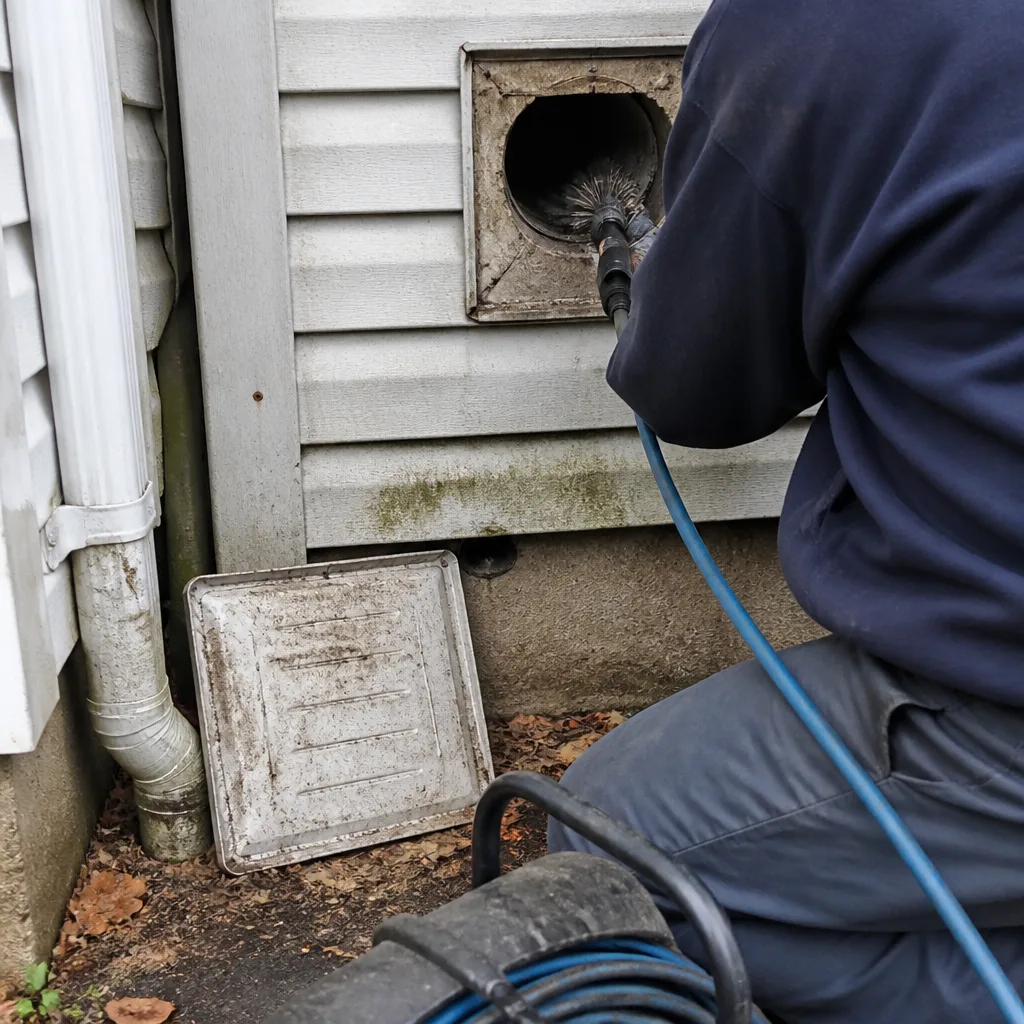 Before
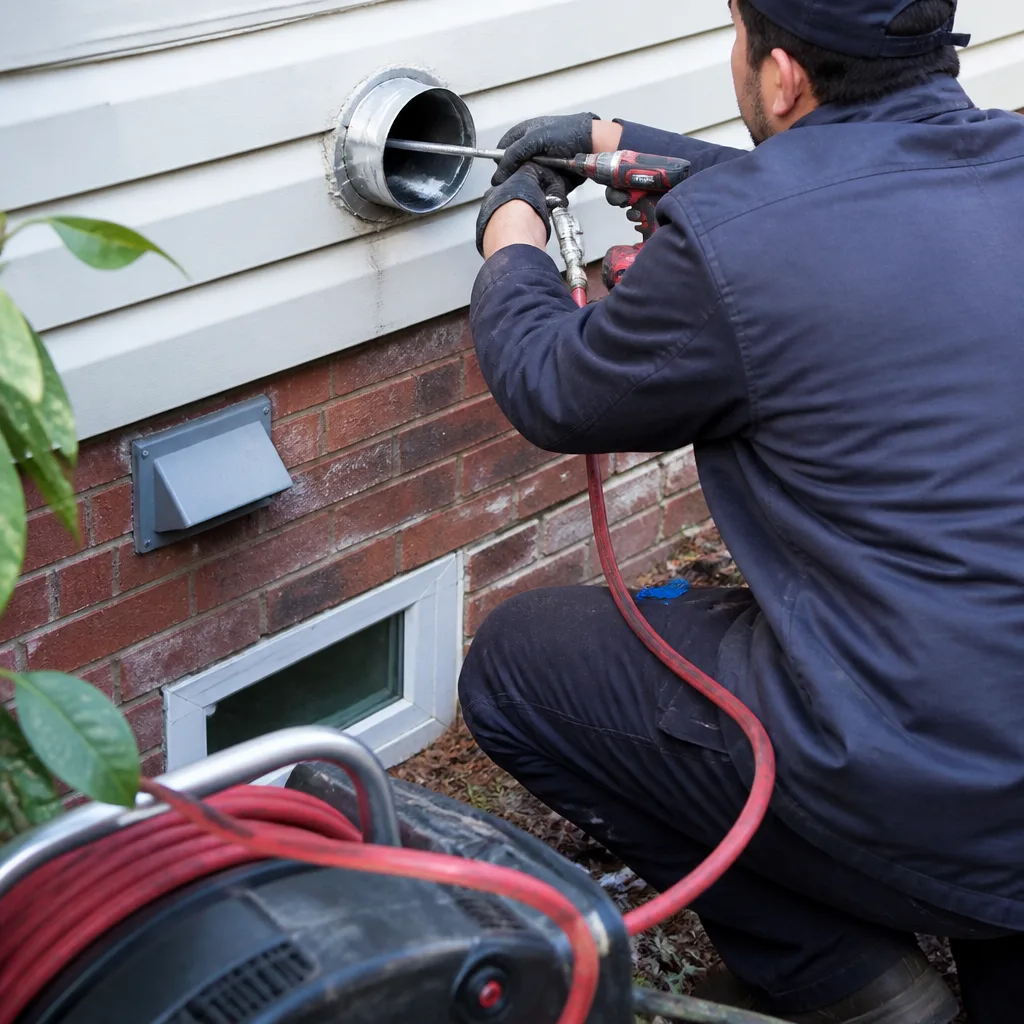 After
After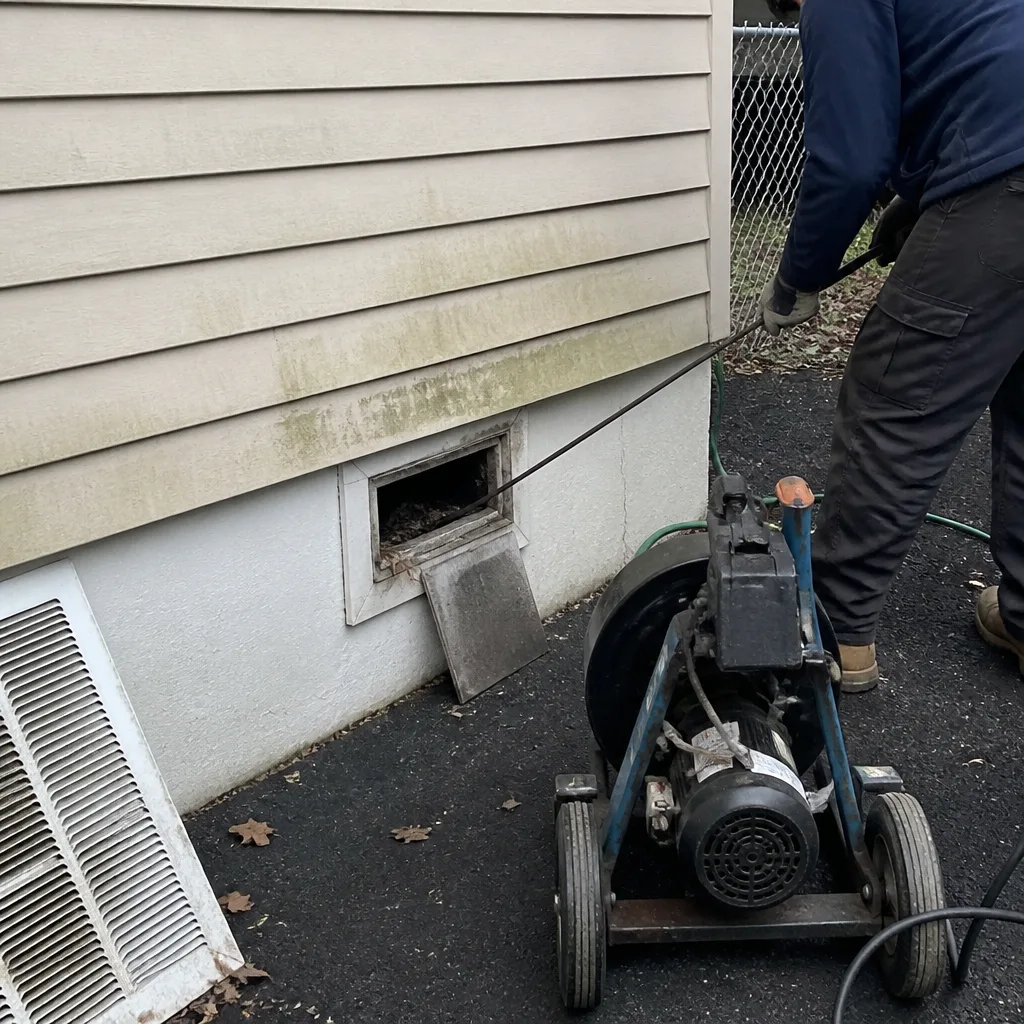 Before
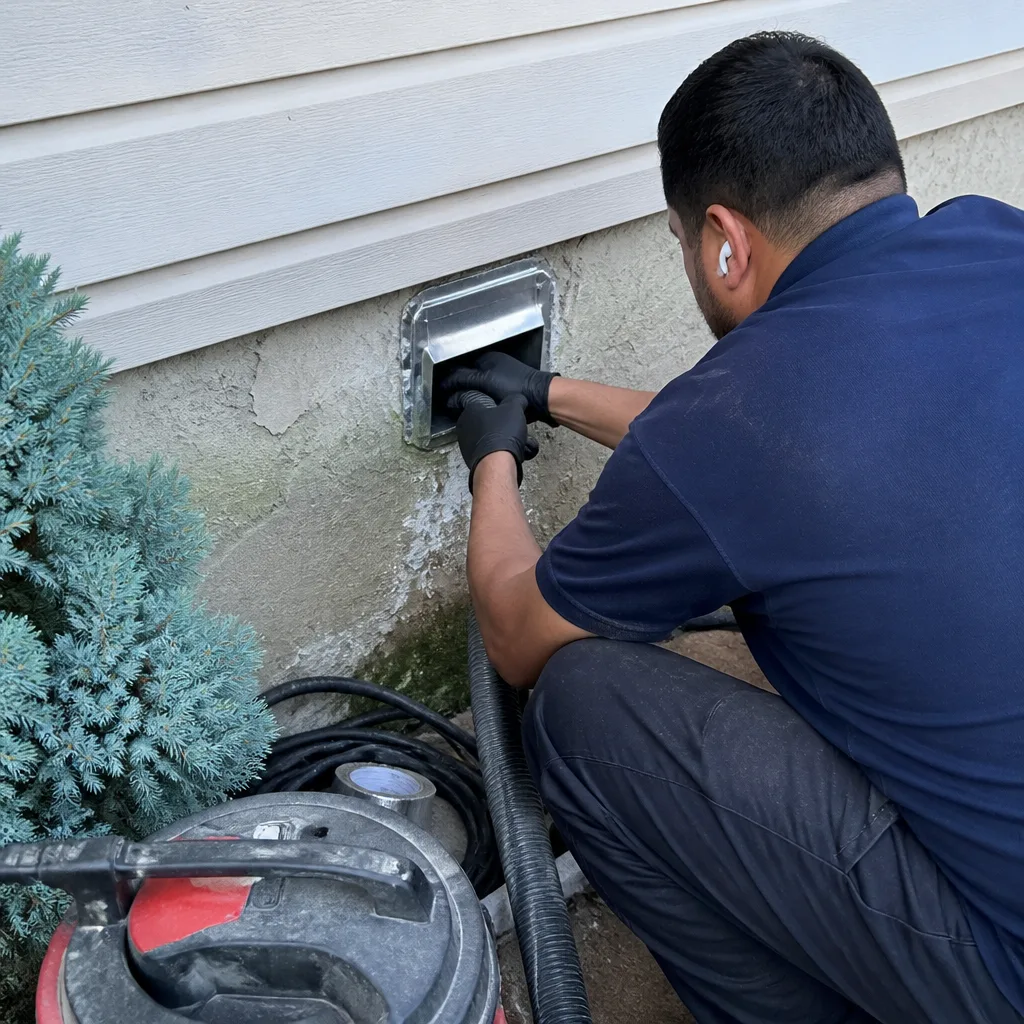 After
AfterClothes Take Two Cycles to Dry
If your dryer is running fine but your clothes are still damp after a full cycle, the dryer itself is almost never the problem. A blocked or partially blocked dryer vent is the most common cause – hot, moist air that should be exhausting outside is backing up inside the duct instead. This is a fix, not a replacement.
When the vent can’t move air out fast enough, the dryer’s moisture sensor sees humidity that won’t clear, so it runs its cycle and quits before the clothes are actually dry. Longer dry times mean higher energy bills, more wear on your drum and heating element, and – more urgently – a duct that is filling with the lint that causes most residential dryer fires. The machine isn’t broken. The path it exhausts through is.
Why It Happens
Lint Buildup in the Vent Line
Every load of laundry sheds fiber. Your lint screen catches some of it, but fine particles pass through and coat the inside of the vent duct over months and years. When enough accumulates, airflow drops and drying time climbs. If you hold your hand near the exterior vent hood while the dryer is running and feel only weak or warm-but-slow airflow, a clogged duct is almost certainly what you’re dealing with.
A Kinked, Crushed, or Too-Long Vent Run
Flexible foil or plastic duct – the accordion-style connector most dryers use between the machine and the wall – kinks easily, especially if the dryer has been pulled forward or pushed back against the wall. A kinked section cuts airflow as sharply as a blockage does. Pull your dryer out a few inches and look at the duct behind it. If it’s compressed, folded at a sharp angle, or pinched, that’s your problem.
A Vent Hood That’s Stuck Shut or Damaged Outside
The exterior vent hood has a damper flap that opens when the dryer runs and closes when it stops. Over time, that flap can jam with lint, get stuck by a bird nest, or freeze shut in cold weather. Go outside, find where your vent exhausts (usually a louvered cover low on an exterior wall), and watch it while someone runs the dryer. The flap should open noticeably. If it doesn’t move, or moves only slightly, the hood is the problem.
A Vent Run That’s Longer Than the Dryer Can Push
Dryers are designed to exhaust through a duct up to a manufacturer-specified maximum length – usually around 25 feet of straight duct, with each elbow counting as additional equivalent footage. Homes where the laundry room is far from an exterior wall, or where the duct runs up through a roof instead of out through a side wall, can exceed what the dryer can push air through. If your dryer is newer and you’ve had slow drying since installation, run length may be the root cause rather than blockage.
What to Do Right Now
- Stop using the dryer until the vent is clear. A blocked vent isn’t just an efficiency problem. Lint ignites at low temperatures and a restricted duct concentrates that risk. Don’t run another cycle until you know the vent is open.
- Check and clean the lint screen. Pull it out, hold it up to the light, and look for fine film coating the mesh even if visible lint was removed. Rinse it under water – if water doesn’t pass through freely, wash it with a soft brush and let it dry before replacing it.
- Look at the exterior vent hood. Walk outside to where the duct exits the house. If the cover is visibly clogged with lint, has a bird nest behind the flap, or the flap won’t open by hand, photograph it before anything else. That photo is useful when a technician arrives.
- Check the duct behind the dryer for kinks or damage – but do not pull the dryer away from the wall by the duct. Grip the dryer itself, slide it out, then look. If the flexible section is visibly crushed or bent sharply, note it. If the duct connector appears to be pulling away from the wall fitting or is torn, stop and call – reconnecting a dryer vent improperly means exhaust enters the living space instead of going outside.
- Do not attempt to clean deep into the vent line yourself without the right equipment. A standard household vacuum pushed into a duct run moves some loose lint and compacts the rest further in. Professional dryer vent cleaning uses rotary brush systems sized to the duct diameter – tools like the Rotobrush that are designed for this work. If the blockage is more than a few inches from the opening, call a technician rather than pushing it deeper.
BeforeAfterHow We Fix It
When your local CleanRun Air Duct Cleaning team arrives, the first thing they do is inspect the full vent run from the dryer connection to the exterior termination point. That means checking the flexible connector behind the machine, the rigid duct inside the wall, any elbows in the run, and the condition of the exterior hood and damper flap.
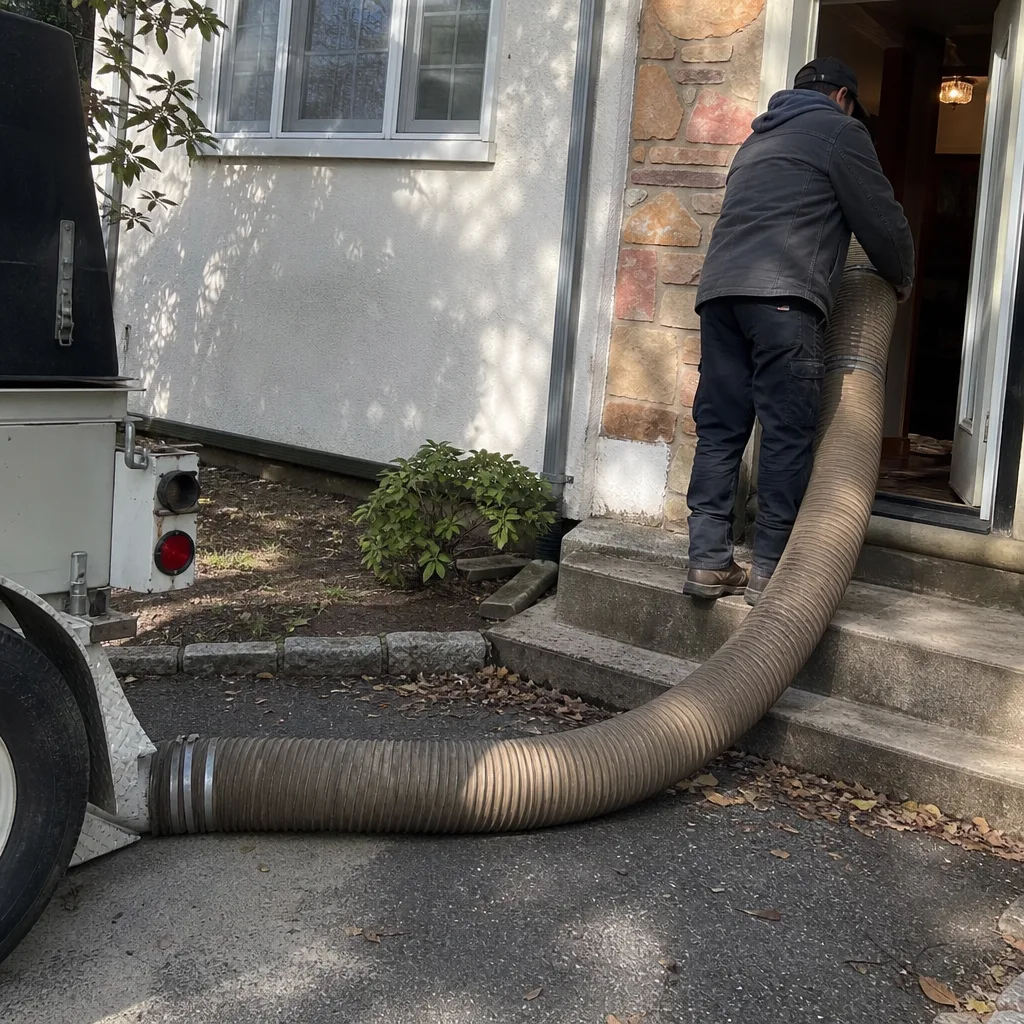
The actual cleaning uses rotary brush equipment – Rotobrush and Nikro systems, both trade-recognized tools customers can look up before agreeing to anything – run through the full length of the duct while a collection system captures what comes out. Before any work starts, you receive a written price under Haven Standard Clause 1. No guessing, no “we’ll see what we find.” If the duct itself is damaged or pulling apart at a joint, that falls under our Duct Repair & Sealing service, quoted separately and in writing before any additional work begins.
Most dryer vent cleanings take under an hour. The job ends with a documented photo record of the duct interior, before and after, delivered to you as part of the standard job record – not because we think you’ll doubt us, but because that’s how every CleanRun job has worked since 2013. The 365-Day Done Right Promise is in writing on your job record. If it’s not right, we make it right.
Frequently Asked Questions
It’s both, but the danger is real and specific: lint is one of the most flammable household materials there is, and a restricted dryer vent concentrates heat and lint together in a confined space. Slow drying is a warning that the vent system is compromised – running more cycles to compensate makes the situation worse, not better. Stop using the dryer until the vent is cleared, and call (806) 606-6902 to get a technician scheduled.
If the vent is partially blocked, a week of continued use degrades it further and raises the fire risk each cycle. We’re not trying to alarm you into a fast decision – we’re telling you what the accumulation pattern looks like when a crew arrives at a duct that’s been running restricted for weeks versus one that’s been caught early. The longer it runs blocked, the more compacted the debris becomes and the harder it is to move. Call (806) 606-6902 and get it on the schedule rather than letting it sit.
A dryer with a failing heating element or a worn motor presents differently – the drum usually runs but generates noticeably less heat, or makes sounds it didn’t before. A blocked vent typically produces a dryer that runs at full heat but takes twice the time, and the clothes may come out hot and damp rather than cool and dry. If your exhaust airflow at the exterior hood is weak or you can’t feel air moving when the dryer is running, the vent is the first thing to rule out – it’s the more common cause and the less expensive fix.
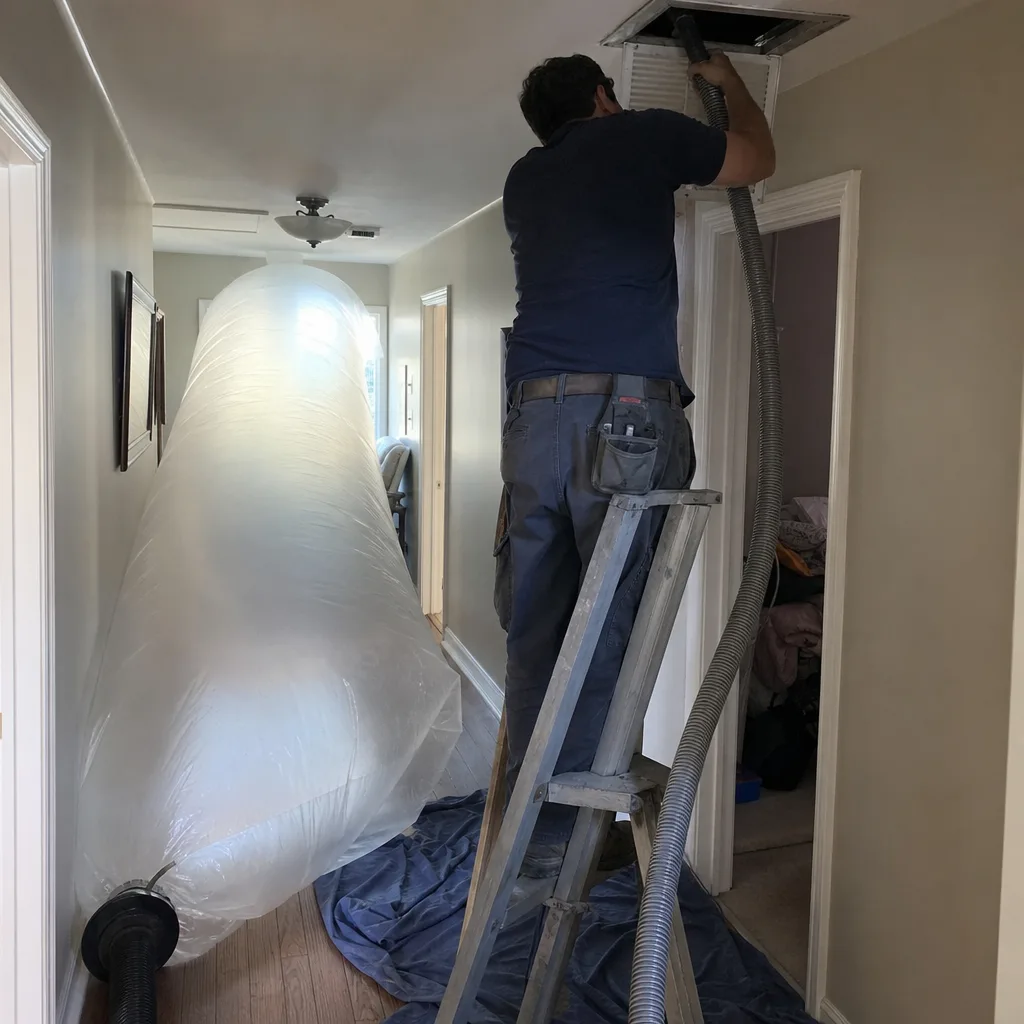
At CleanRun, it includes a full inspection of the vent run from connection to termination, rotary brush cleaning of the complete duct length, clearing of the exterior hood and damper, and a documented photo record of the interior before and after the work – delivered to you as a standard part of the job. The price is written before anything starts, under Haven Standard Clause 1, so you know what you’re agreeing to. Call (806) 606-6902 or book online and your local team will put the number in writing before they touch anything.
Get It Fixed
Call (806) 606-6902 or book online – your local CleanRun Air Duct Cleaning team will put a written price in front of you before any work starts, clean the full vent run with professional-grade equipment, and leave you a photo record of every inch they cleared.
Written by Tomas Reyes, Owner & Lead Technician at CleanRun Air Duct Cleaning, serving homeowners nationwide since 2013.
What Our Customers Say
"Flat price agreed up front, no per-vent add-ons at the end. That was the whole reason I did not call the coupon company."
- Suzanne B."The dryer vent was almost completely blocked with lint. They showed me the photograph and I understood immediately why the dryer had been running twice."
- Lucia M."They found a disconnected duct in the crawl space that had been dumping conditioned air under the house for years. Photographed it, quoted the repair, fixed it."
- Devon A.