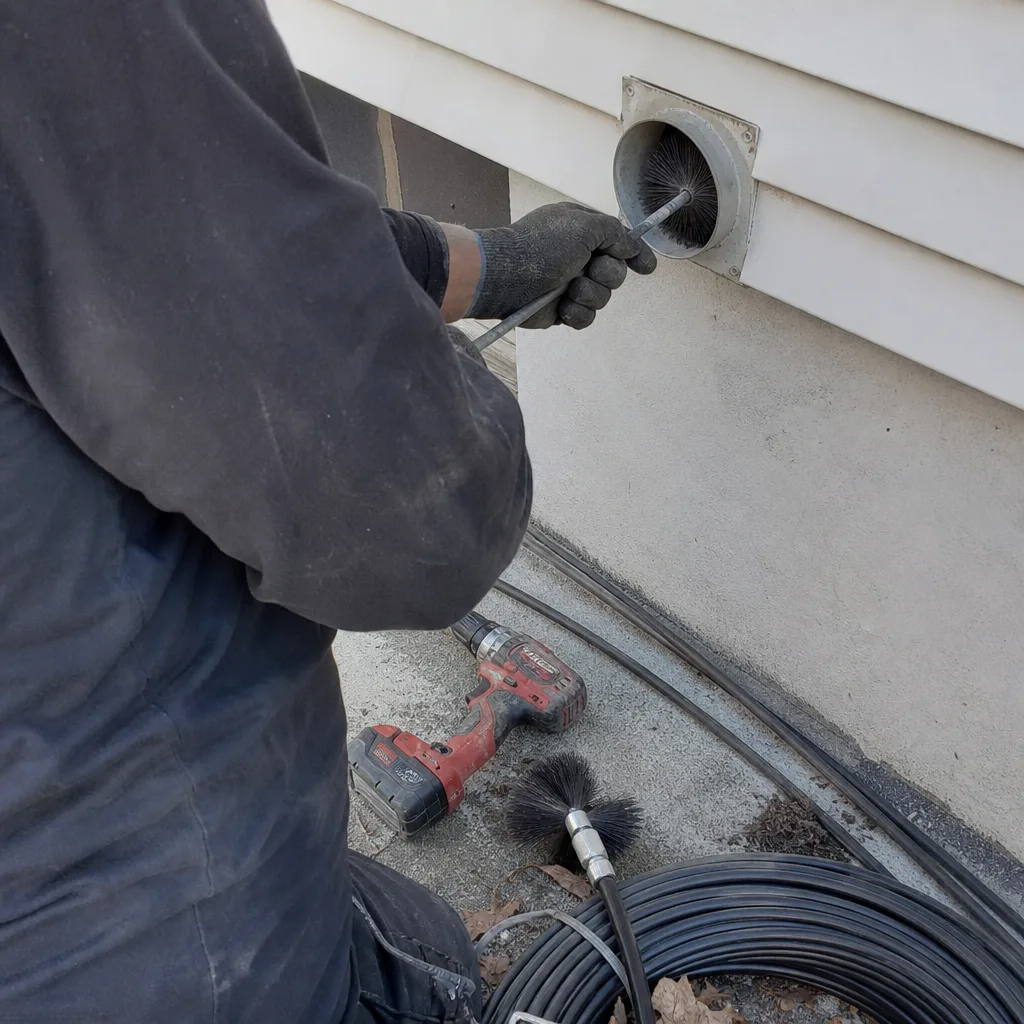
Whole-system duct and dryer vent check with before-and-after photos - you see exactly what came out of your vents
That "$99 whole-house special" is a bait ad - the real number appears once they are in your hallway, or the "clean" is a shop-vac at the register. We photograph the inside of your ducts before and after instead.
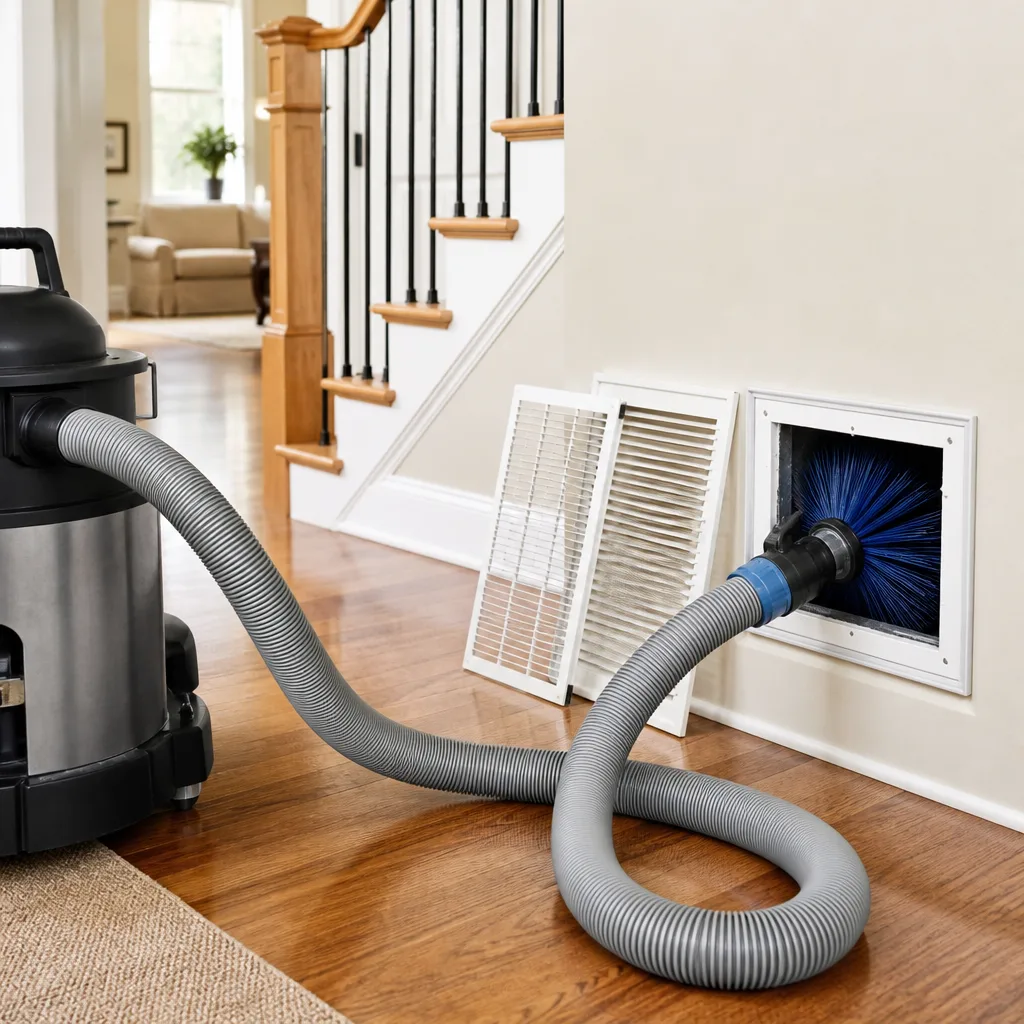
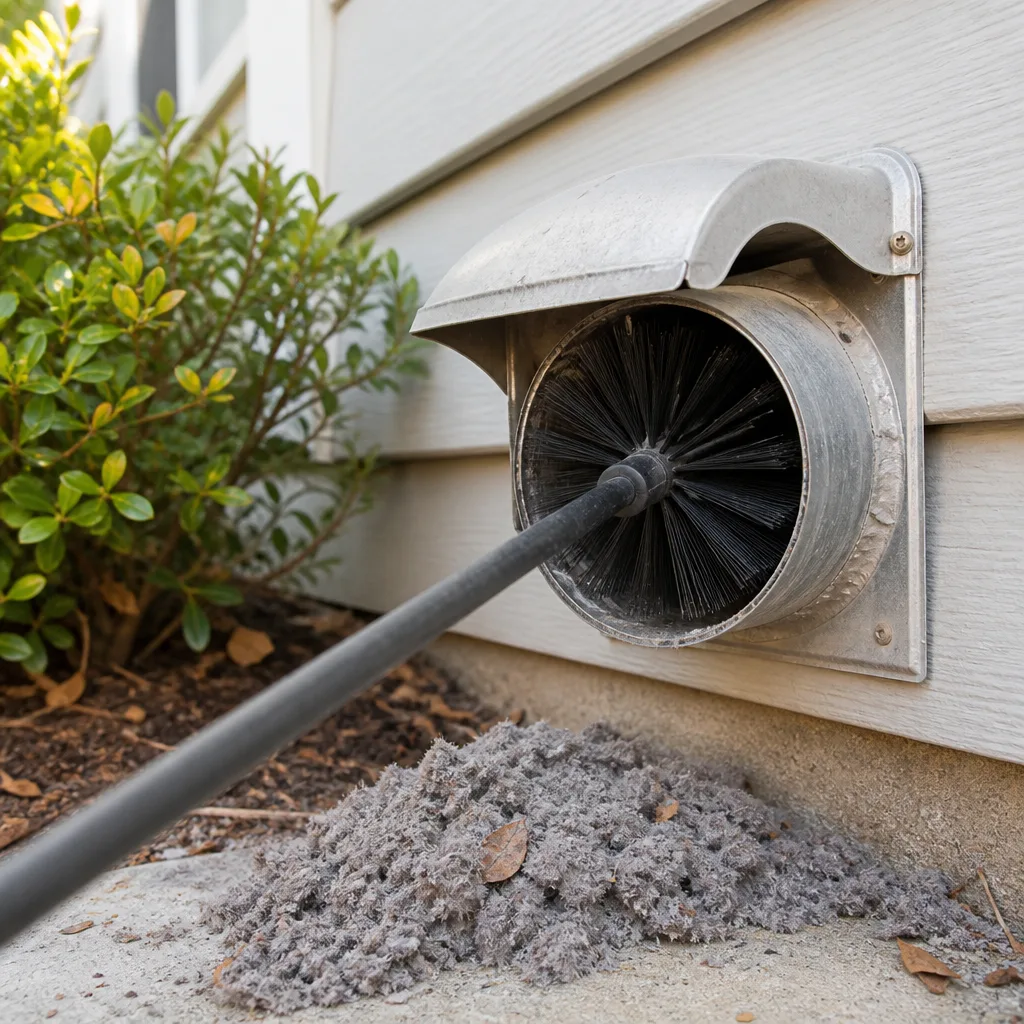
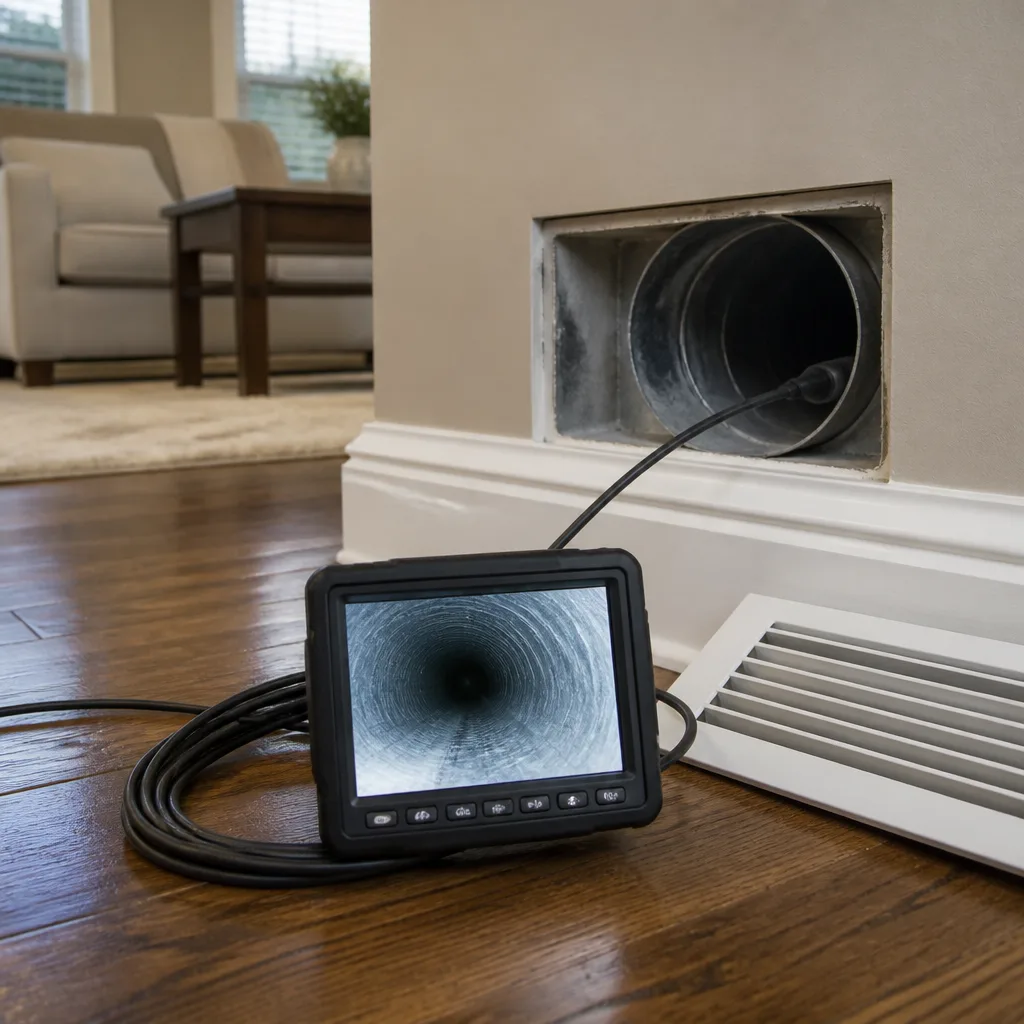
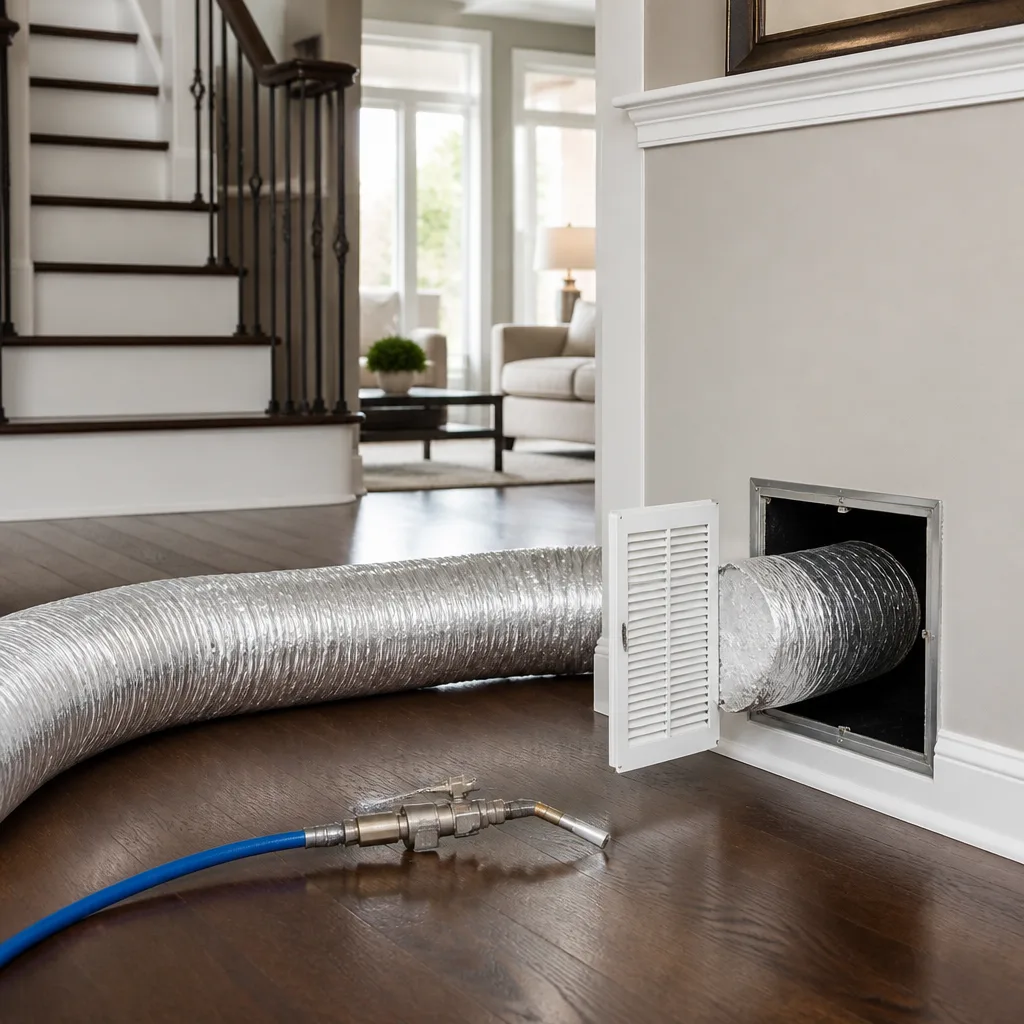
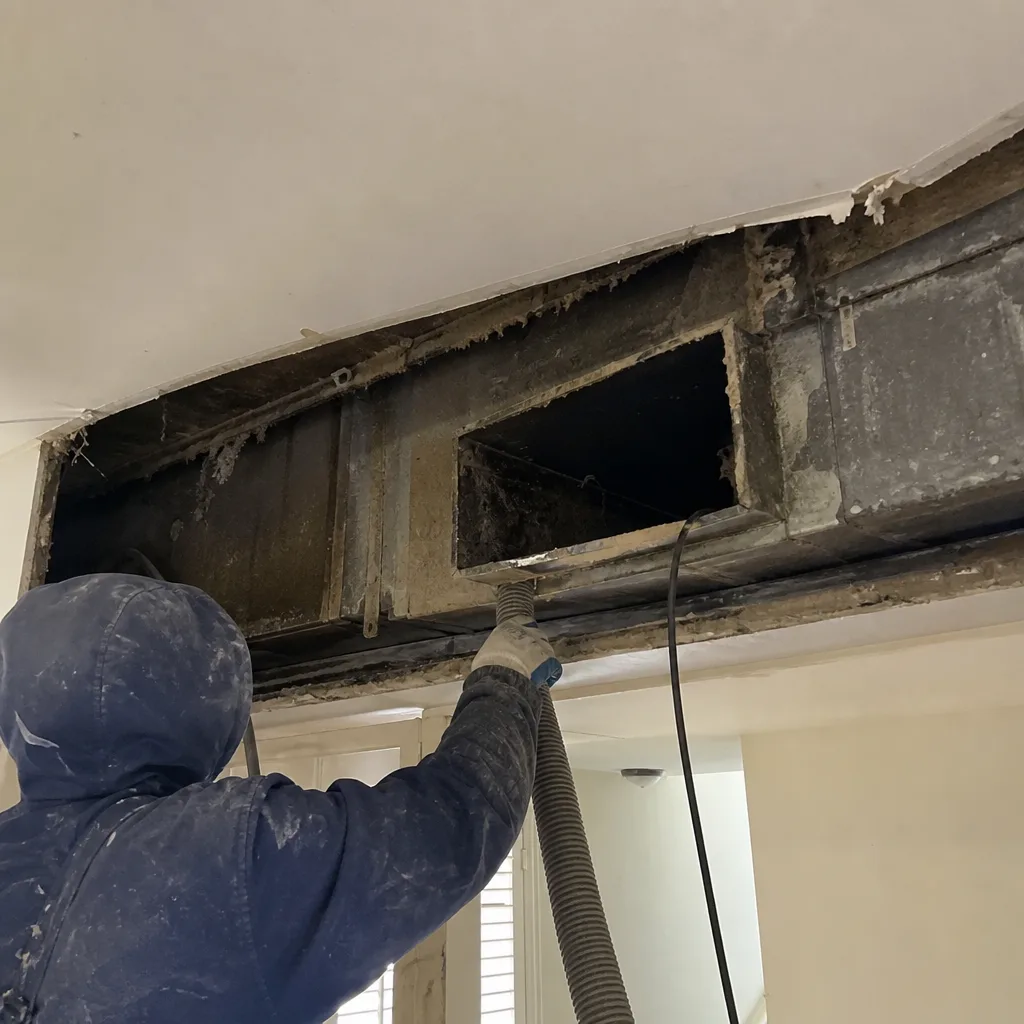 Before
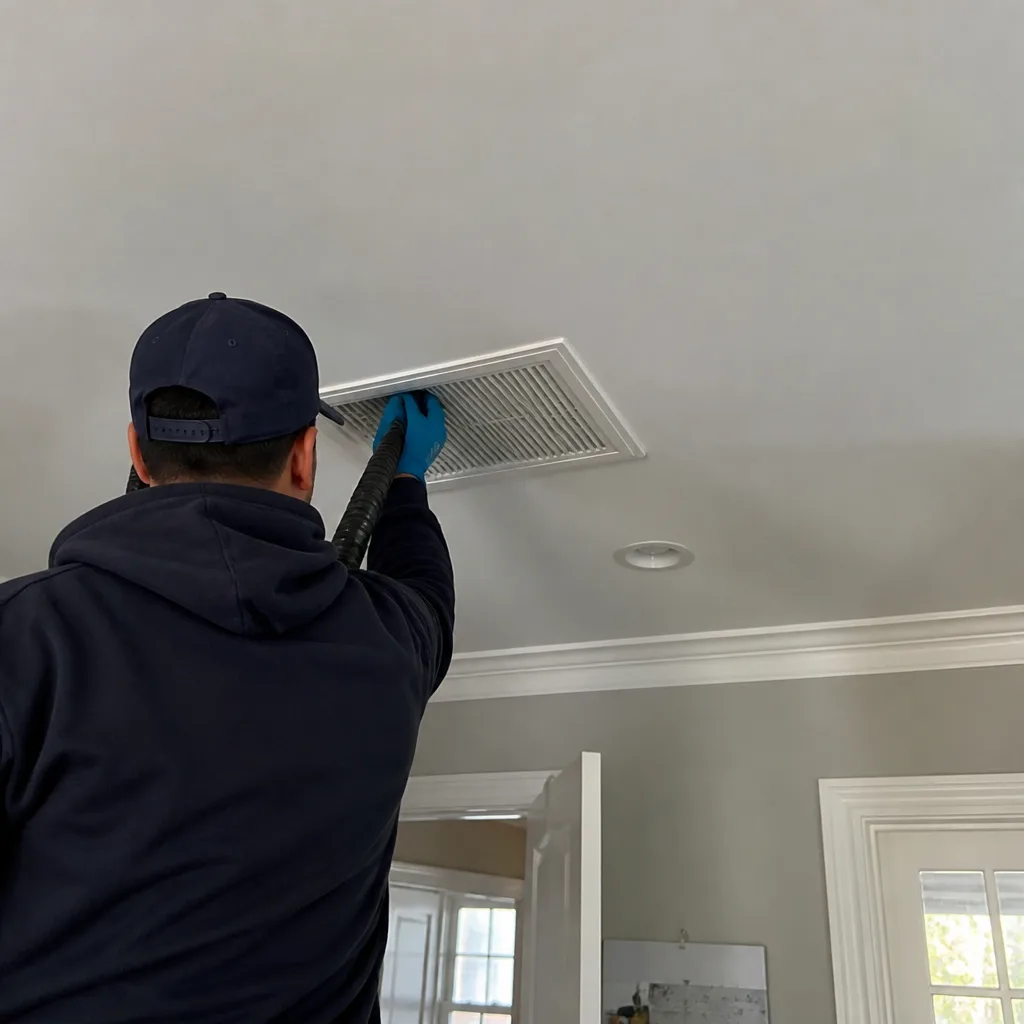 After
After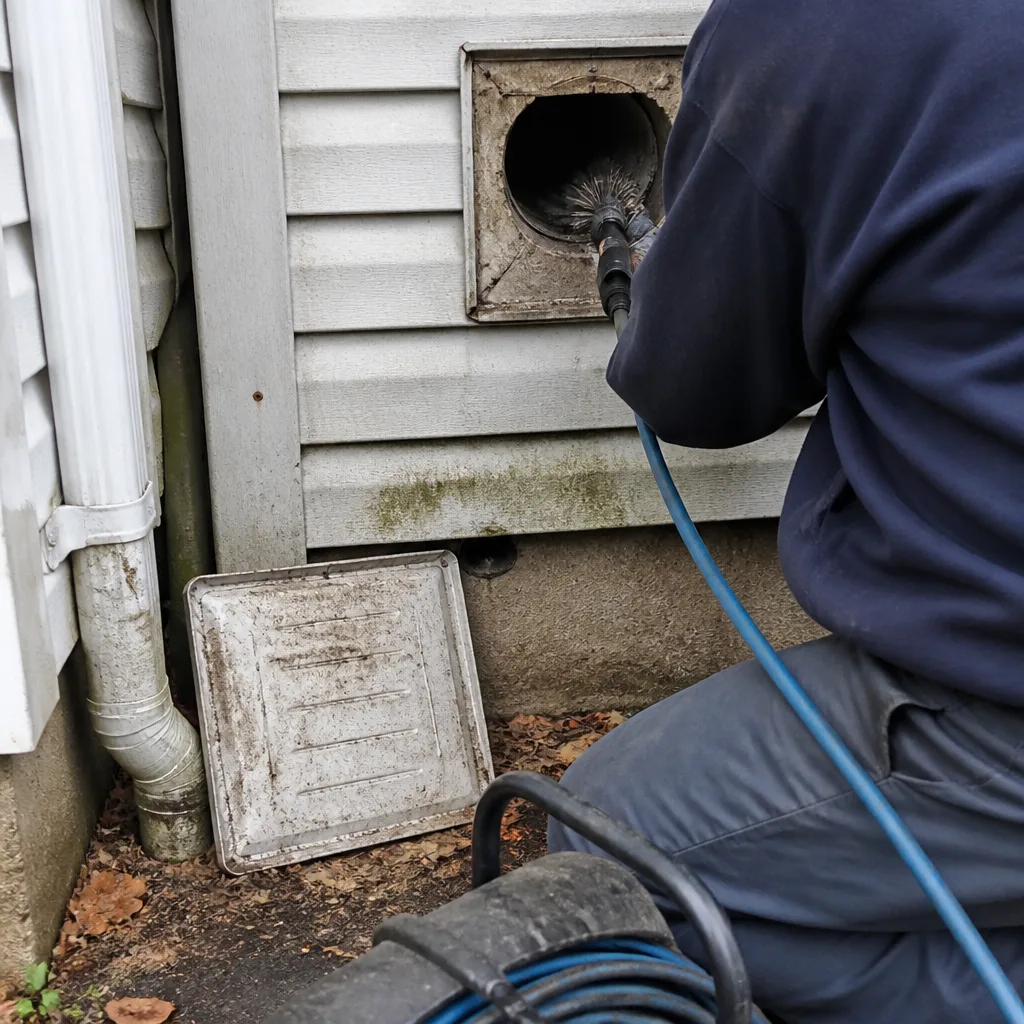 Before
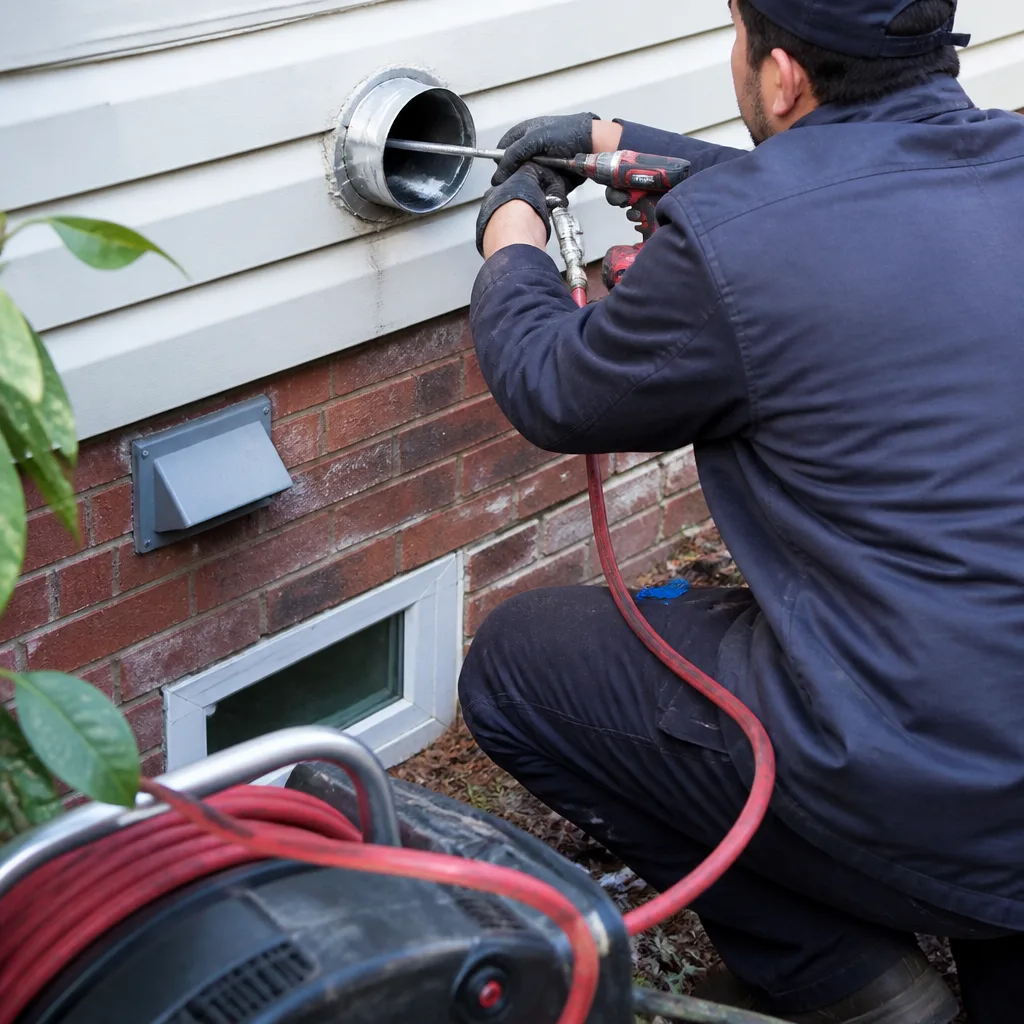 After
After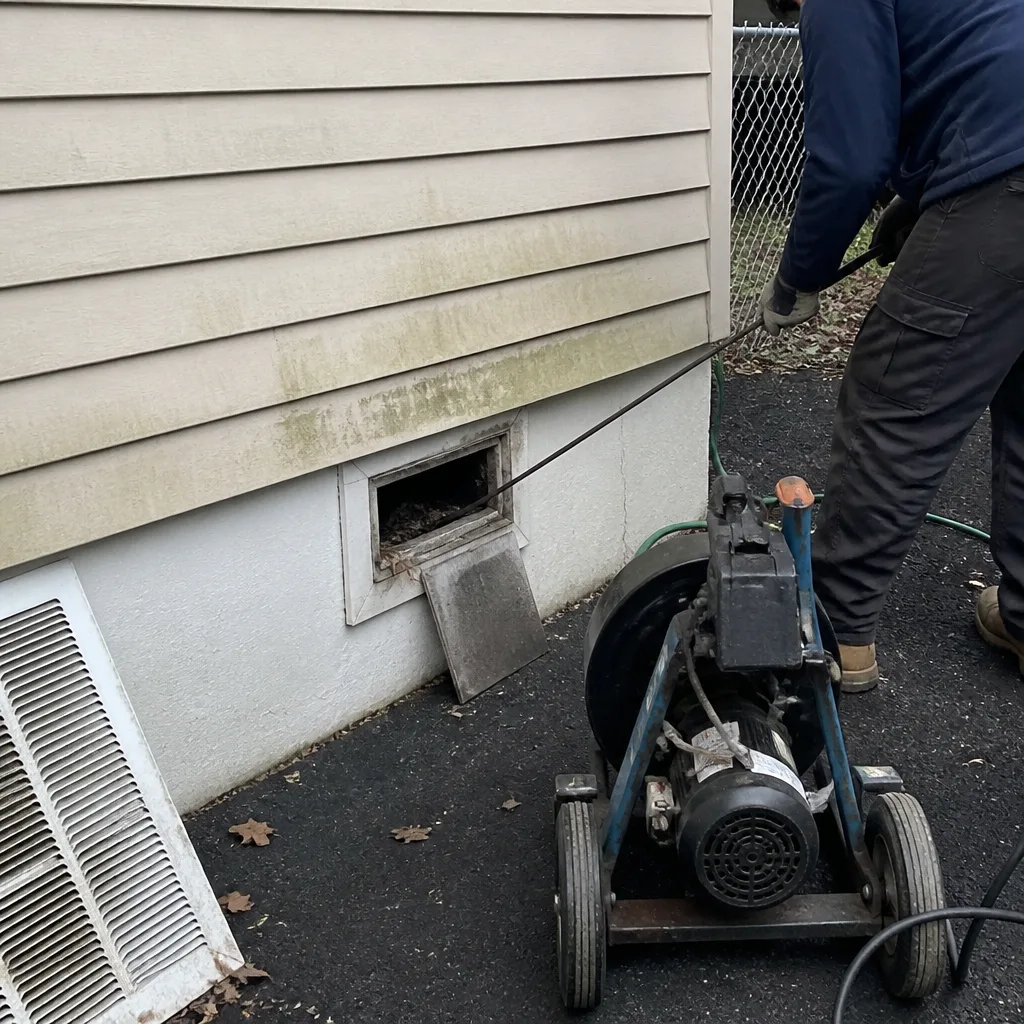 Before
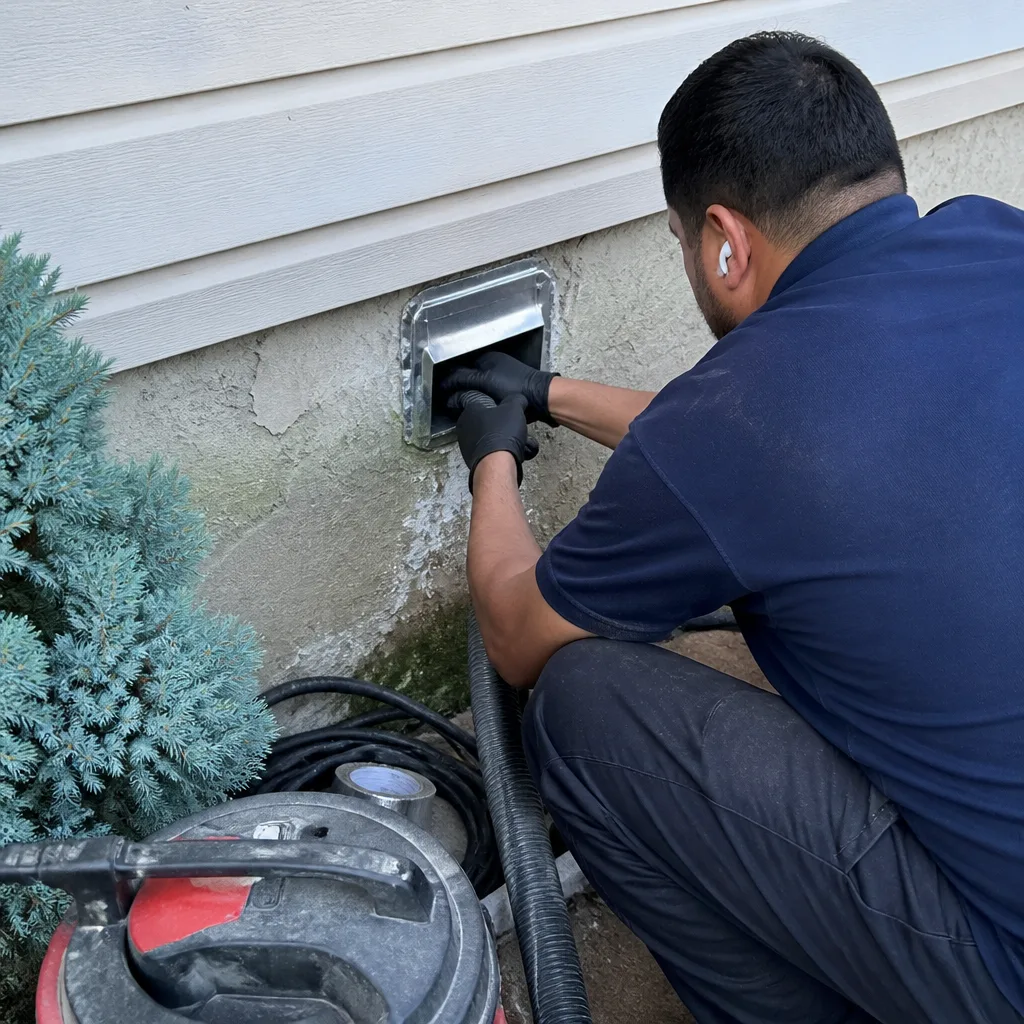 After
AfterFast, Reliable HVAC Cleaning Across Kearny
HVAC cleaning in Kearny costs $385-$720 for a full system on a typical two-family home, with evaporator coil cleaning running $190-$310 and blower cleaning $140-$240. Those are the written prices we hand you before a single panel comes off. If you live off Kearny Avenue, in the Manor section, or down near the marsh edge along Bergen Avenue, call (806) 606-6902 and we’ll walk through exactly what your system needs and what it will cost. No trip charge to assess, no surprise line items after the fact.
We know Kearny’s housing stock because we work in it every week. The 1920s two-families near Belgrove Drive, the postwar brick rows up by Schuyler Avenue, the split-levels tucked between Davis Avenue and the Kearny Marsh. These homes share something most HVAC companies never look for: ductwork that was retrofitted decades ago, often badly, and now runs through spaces nobody has inspected since the Nixon administration. That matters when you’re deciding whether to clean or replace. We’ll show you, with photos, which one you actually need.
Why CleanRun Air Duct Cleaning Is Kearny’s Preferred HVAC Cleaning Company
CleanRun Air Duct Cleaning has documented every job since our first one in 2013. That’s 52,000+ homes, each with a written price before work started and a photo record when the crew left. Kearny homeowners tend to research before they call. They want to see what they’re paying for. So we built the entire company around that instinct. Before we clean anything, you get a camera inspection of your supply and return ducts. You see what’s in there. Then you get a written scope with a fixed price. Then we clean. Then you get photos of the same duct runs, after. That’s Haven Standard Clause 1: Written Price Before Work Begins, and Clause 4: Documented Photo Record. Not marketing language. The way every job works.
Tomas Reyes runs our cleaning crews across Kearny. He’s the one who trains every technician on camera documentation standards and on reading older duct systems, the kind with galvanized trunk lines and deteriorating duct board that fill the 1910-1945 two-families around here. His crews are background-checked, uniformed, and identified by name before they walk up your steps. When you call (806) 606-6902, you’re talking to a live person who can schedule your assessment, not a call center reading a script.
We don’t sell urgency. We sell a written record. If a competitor gives you a quote, bring it to us. We’ll put our own number next to it, in writing, free. That’s our Free Second Opinion, and it’s how we’ve earned trust in a service category that’s earned very little.
Our HVAC Cleaning Services in Kearny
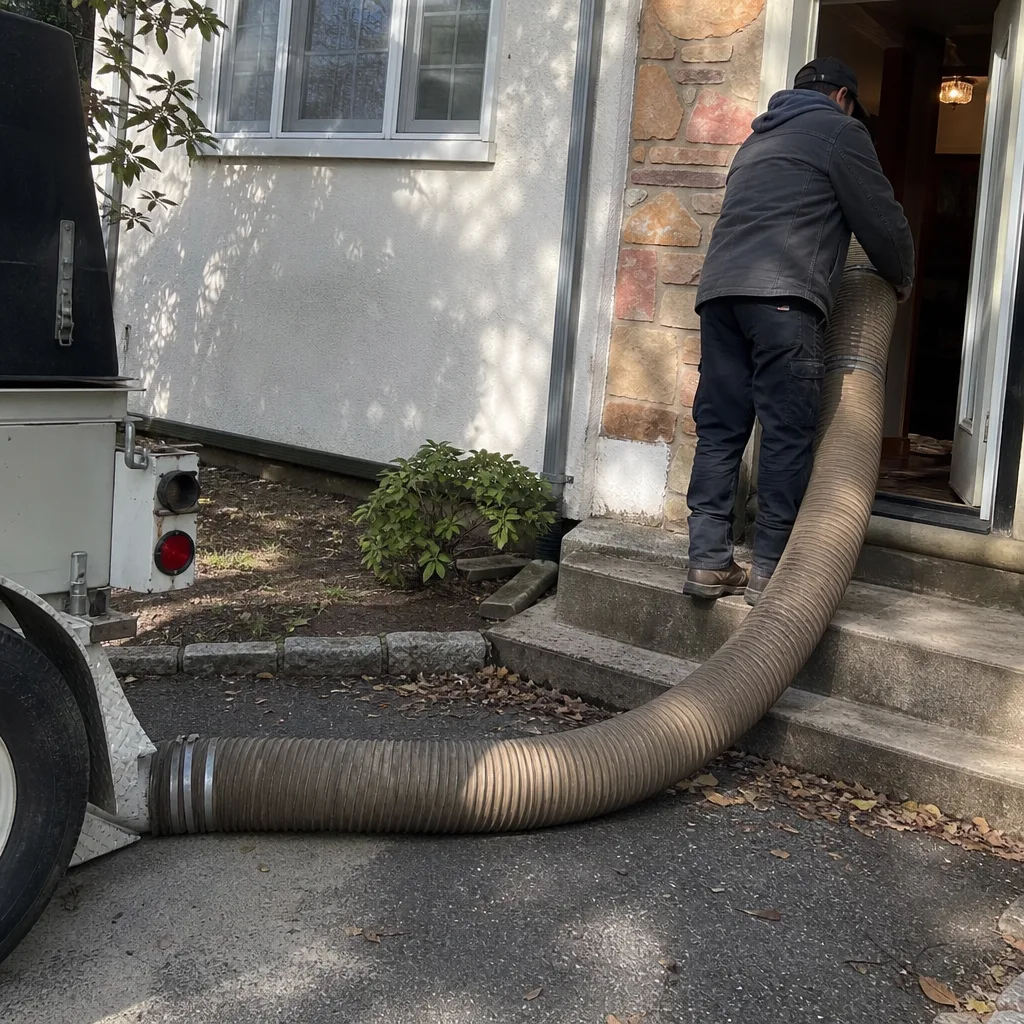
Evaporator Coil Cleaning
The evaporator coil sits inside your air handler and pulls moisture out of the air as it cools. In Kearny, that coil also pulls in marsh air through your return ducts. We regularly see coils in low-lying homes off Bergen Avenue and along the blocks feeding the marsh caked with a dark biofilm that cuts airflow and forces your system to run longer. Evaporator coil cleaning in Kearny runs $190-$310, and it’s the single highest-impact cleaning we do for cooling efficiency. We clean the coil, treat it against re-colonization, and photograph the before and after.
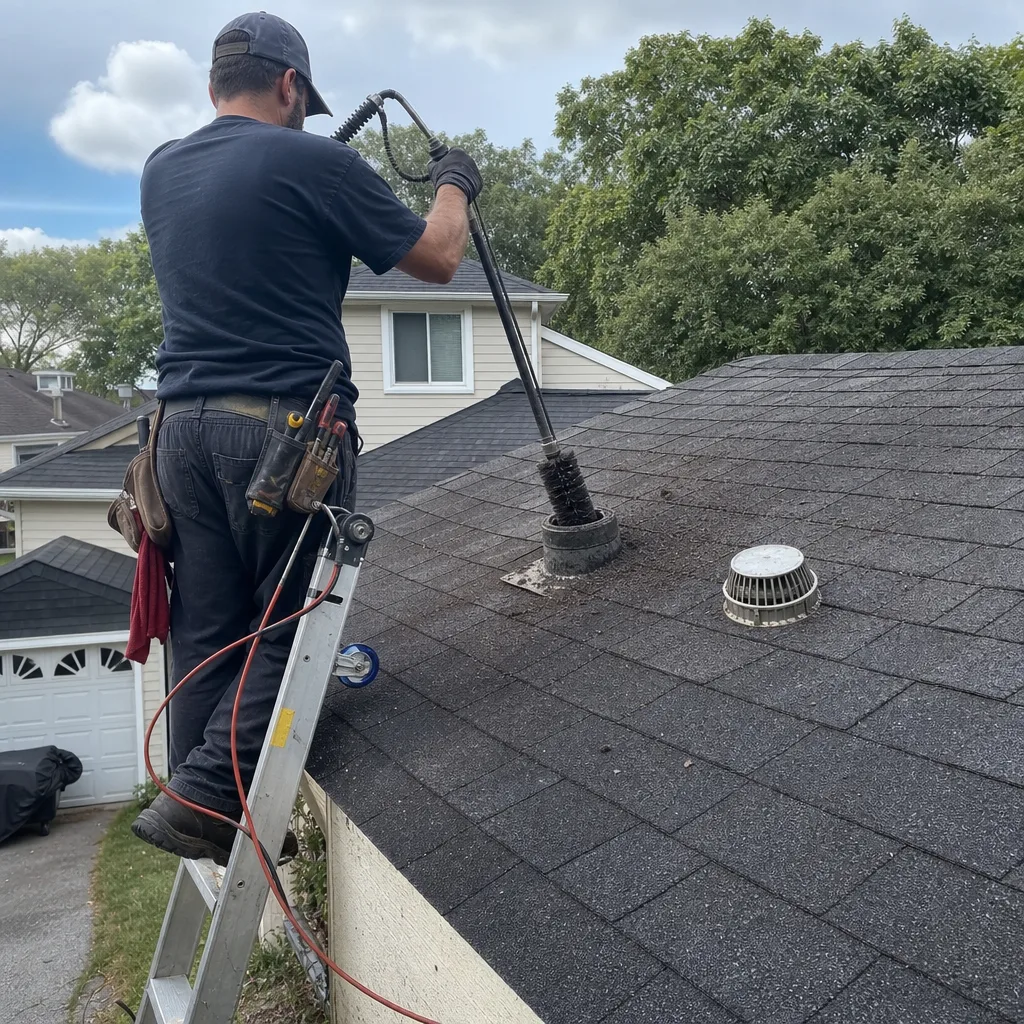
Air Handler Cleaning
Your air handler is the cabinet that houses the blower, coil, and often the filter. In older Kearny homes, these handlers were sometimes shoehorned into closets and crawl spaces during the coal-to-gas conversions of the 1950s and 60s. That means tight access, accumulated debris from decades of operation, and surfaces that hold moisture. Air handler cleaning runs $210-$385. It includes pulling the blower assembly, cleaning the housing interior, and documenting any corrosion or leaks we find. If we see a condition that will fail, we tell you before we quote the cleaning, not after.
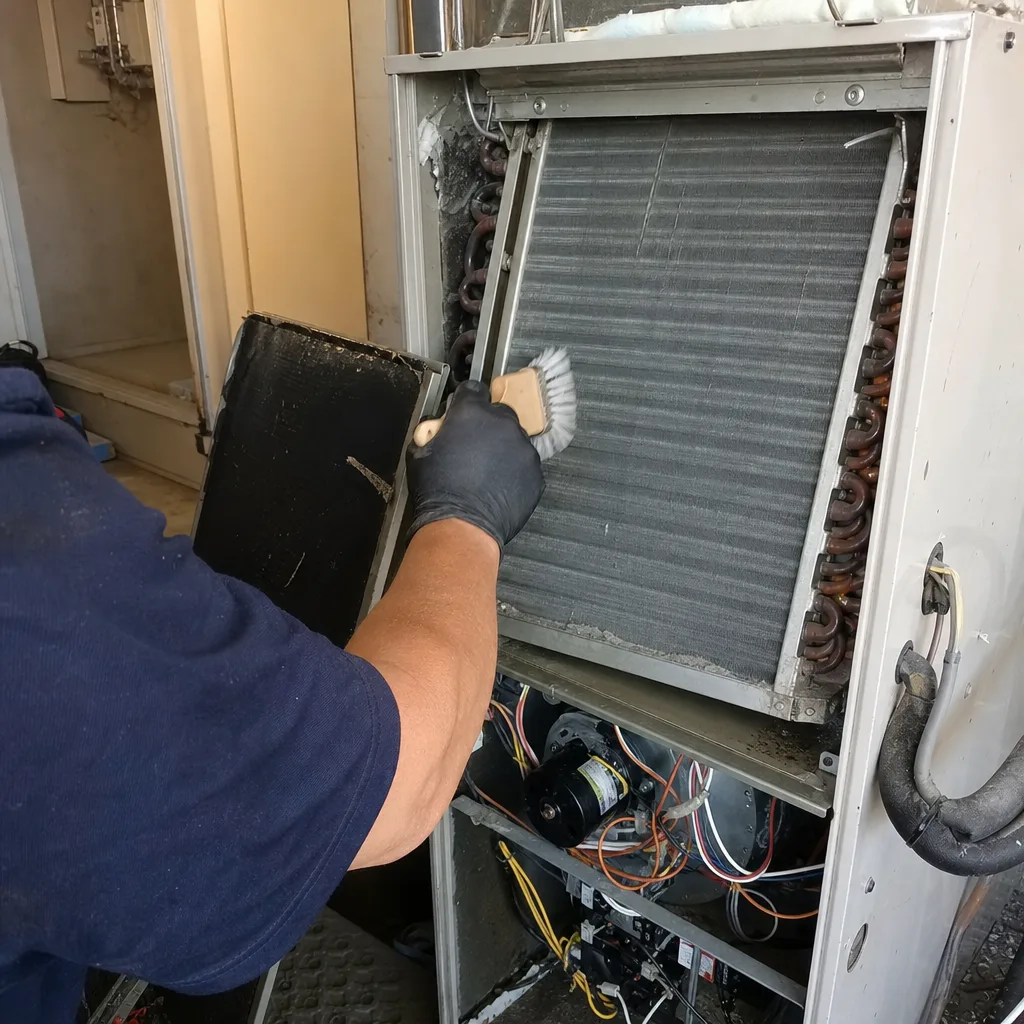
Blower Cleaning
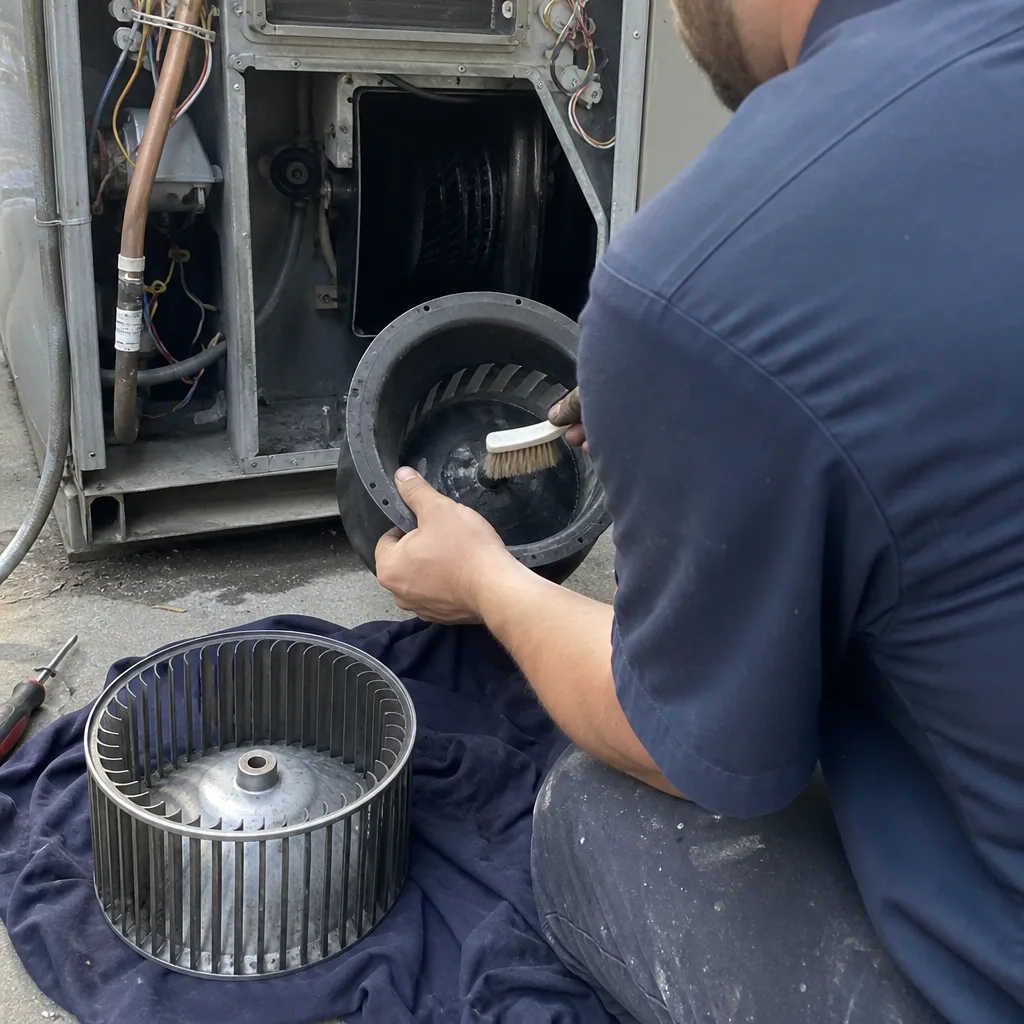
The blower wheel moves every cubic foot of air your family breathes. In Kearny homes near the marsh, blower wheels pick up a fine layer of organic sediment that reduces airflow and circulates what’s basically ground-up pollen and mold spores back through your registers. Blower cleaning runs $140-$240. We remove the wheel, clean it properly, and check the motor and capacitor while we’re in there. Half the “dead blower” calls we get are just clogged wheels that cooked a motor. Cleaning catches that before it costs $900.
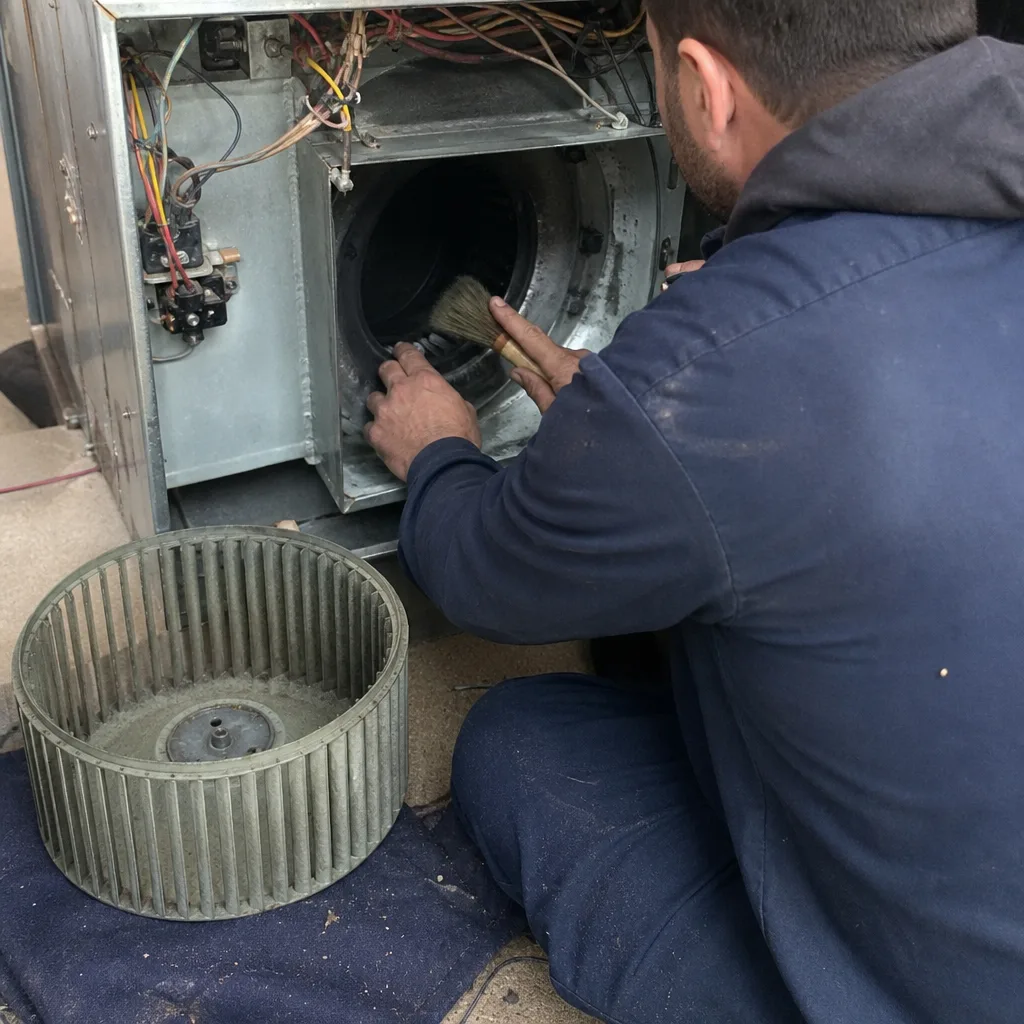
Condenser Cleaning
The condenser is the outdoor unit, the one sitting behind your house or on a side pad. In Kearny’s compact lots, condensers sit close to fences, shrubs, and neighbor’s exhaust vents. They collect cottonwood, leaf litter, and fine particulate from the industrial corridor off the Meadowlands. Condenser cleaning in Kearny runs $150-$250. We wash the coil, straighten bent fins, and check the refrigerant lines for wear. A clogged condenser raises head pressure, shortens compressor life, and makes every cooling dollar you spend do less work.
Heat Exchanger Cleaning
If your Kearny home still uses a furnace with a heat exchanger, cleaning it matters for efficiency and for safety. Soot and debris on the exchanger surface act as insulation, so less heat reaches your ducts. In older furnaces, a cracked exchanger can leak combustion gases. We clean accessible exchanger surfaces during furnace servicing and flag any cracks or rust-through we find. This runs $120-$190. We’re not going to tell you to ignore a cracked exchanger. We’re going to show you the photo.
Coil Treatment
After evaporator coil cleaning, we apply an EPA-registered coil treatment that inhibits biological re-growth. In Kearny’s humidity, this is not optional. A bare aluminum coil in a marsh-adjacent home can re-bloom within a single cooling season. Coil treatment is $45-$95 and we include it in our recommendation whenever the camera shows the green-black biofilm that says the coil has been wet and warm for too long.
What happens when you call
- 1
A real person answersNo phone trees - you reach a local pro.
- 2
You get an upfront price rangeHonest numbers before anyone is dispatched.
- 3
A background-checked tech heads outLicensed & insured, dispatched right away.
- 4
You approve before work beginsNothing starts until you say go.
BeforeAfterAfter a Flood in Kearny: Clean vs. Replace, Documented
Kearny sits low. The Passaic River is south, the Hackensack drainage is west, and the Kearny Marsh creeps up along the western edge of town. When a storm pushes water through the streets, or a sewer line backs up in a basement, the question is not just “is there water in the ducts?” The question is what that water did to the materials inside. That’s where most companies guess, and where insurers push back. We don’t guess. We document.
Here’s the decision path we follow on every post-flood HVAC call in Kearny:
- Camera every duct run. Supply and return. If the footage shows standing water, saturated duct board, or collapsed flex sections, cleaning alone won’t fix it. The material is compromised. This is a replacement situation, and the footage proves why.
- Assess the duct board and liner. Older Kearny homes converted from coal to oil to gas often used duct board as insulation. It absorbs water like a sponge and does not dry out in a closed wall cavity. If we see delamination or water staining, we document it and recommend replacement of those sections.
- Check the galvanized trunk lines for corrosion. Water accelerates rust. Pinholes in a 1950s trunk line that was already corroding before the flood means the metal is failing. Cleaning won’t restore structural integrity. We photograph every pinhole.
- Write a scope with two options when both apply. Clean-and-monitor versus replace. Each with a fixed price, each with a written rationale tied to the camera record. You take that document to your insurer. It says what we found, what we recommend, and what it costs. Insurers process claims faster when the documentation is visual and specific, not “ducts need cleaning.”
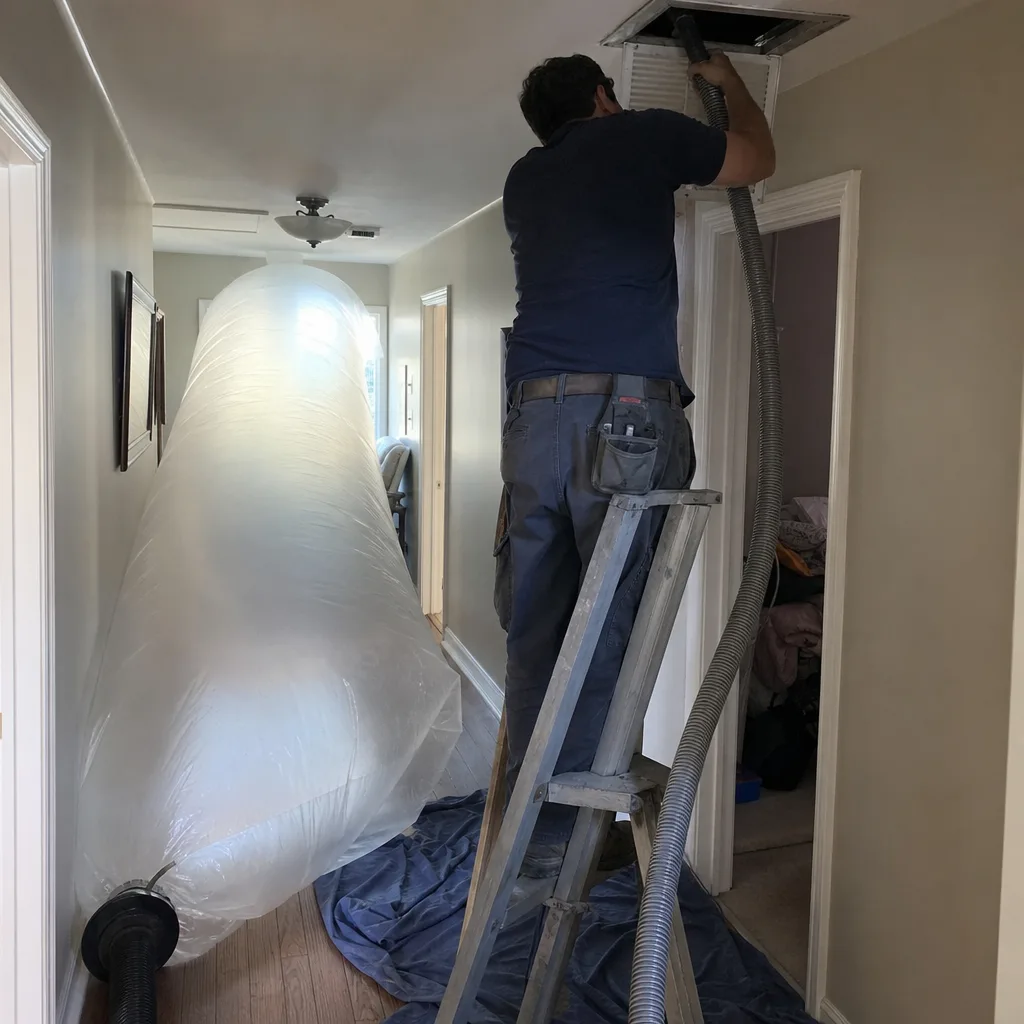
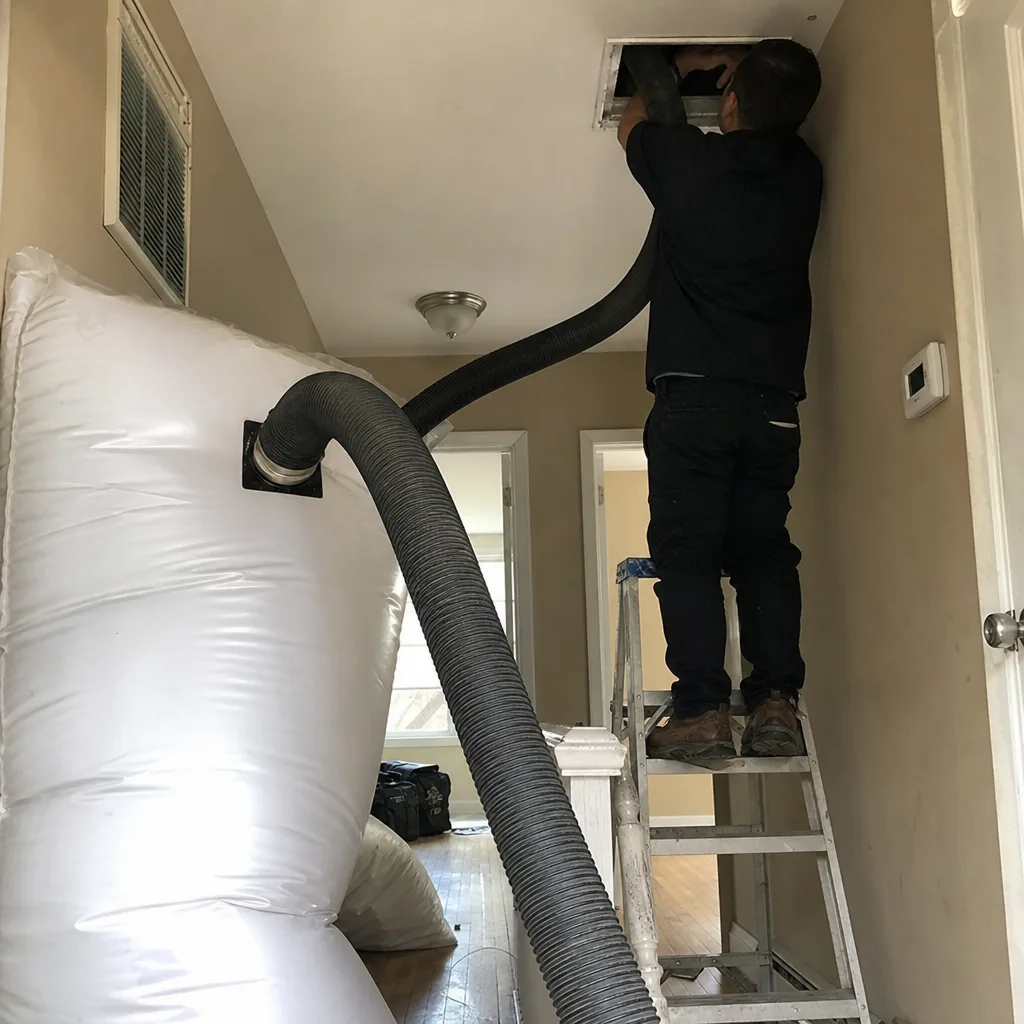
On a 1920s two-family off Kearny Avenue, our techs pulled the ground-floor return plenum and found the return side caked with dark organic biofilm from marsh-air intake. The galvanized trunk lines, installed during a 1950s coal-to-oil conversion, showed pinhole corrosion and compressed fibers from disintegrating duct board. We used Rotobrush agitation tools under negative pressure with HEPA filtration to source-remove the biological and fibrous debris, then camera-inspected the supply and return ducts and documented the remaining corrosion. The verdict: clean-and-monitor, not replacement. We showed the homeowners the before and after footage and wrote the scope so clearly their insurance adjuster approved the cleaning without a site visit. That’s what documentation does.
Common HVAC Cleaning Problems We See in Kearny Homes
- Biological growth in ground-floor return plenums. Homes near the Kearny Marsh pull spore-heavy, moisture-laden air into low return intakes. The return side of the system becomes a petri dish. Cleaning the supply ducts only leaves the biological reservoir intact, and the smell returns in weeks. We clean both sides and treat the plenum.
- Disintegrating duct board from the conversion era. The 1910-1945 housing stock was mostly heated by coal. When those systems became forced-air in the 1950s and 60s, installers used duct board as insulation. Seventy years later, that board is breaking down and blowing fibrous material through the registers. Camera inspection confirms it. Source removal fixes it.
- Pinhole corrosion in galvanized trunk lines. The same conversion-era trunk lines that carry your air are now developing rust-through in Kearny’s humic environment. Corrosion accelerates when cleaning is skipped and moisture sits on metal surfaces. We flag it during cleaning and document it for future reference.
- Sweating uninsulated trunks. Older Kearny homes often have bare galvanized trunk lines running through unconditioned spaces. When humid summer air hits cold metal, condensation forms. That moisture drips, breeds mold, and accelerates corrosion. We identify uninsulated runs and recommend insulation as part of the cleaning scope.
Trusted Brands We Service in Kearny
Our crews work on every major HVAC brand common in Kearny homes: Carrier, Trane, Rheem, Lennox, Goodman, and the older York and American Standard units still running in some of the 1950s and 60s installations. For cleaning equipment, we run Rotobrush agitation systems, Nikro negative-air machines, and Abatement Technologies HEPA units. We name the equipment because you should be able to look up exactly what’s being used in your home before you agree to a price. If you have a manufacturer-specific maintenance schedule or a warranty requirement, bring it up when you call. We’ll tell you in writing whether our cleaning meets it.
Pricing for HVAC Cleaning in Kearny, NJ
Whole-system HVAC cleaning in Kearny typically runs $385-$720, depending on the number of systems, the duct layout, and whether we’re addressing post-flood contamination. That price includes the camera inspection, the cleaning, and the documented photo record of every run. Evaporator coil cleaning is $190-$310 as a standalone service. Blower cleaning is $140-$240. Air handler cleaning is $210-$385. Post-flood assessments that require extensive documentation for insurance claims are quoted separately based on scope, and the assessment report is included.
What affects price: the age and accessibility of your ductwork, whether you have one system or two, and whether there’s biological contamination requiring source removal. Older two-families with tight crawl spaces and conversion-era duct runs take longer. That’s honest. What doesn’t affect price: how much we think you’ll spend. There’s no per-vent pricing, no bait coupon, no surprise add-on. One written price per system, agreed before work starts. Call (806) 606-6902 for a written estimate. Every quote is free, and every quote is in writing.
We Also Serve Cities Near Kearny
CleanRun serves HVAC Cleaning in Kearny and the surrounding Hudson and Essex County communities. If you’re in Belleville, East Orange, Bloomfield, or Nutley, the same crew, the same written pricing, and the same photo documentation standard apply. Our HVAC Cleaning services follow the Haven Standard everywhere we work. Call (806) 606-6902 and tell us which town you’re in.
Serving Kearny, NJ - Our Local Coverage Area
We’re based in the Kearny area and know this community well. Use the map below to see our service coverage - if you’re nearby, we can almost certainly help.
FAQs - HVAC Cleaning in Kearny
We camera-inspect every supply and return run, then look specifically at three things: whether water saturated the duct board or liner, whether galvanized trunk lines show fresh corrosion or pinholes, and whether any flex sections collapsed. If the materials are intact and dry enough to clean, we clean and document. If the duct board is waterlogged or the metal is failing, we document that and recommend replacement of those sections. You get the camera footage and a written scope either way. Call (806) 606-6902 and we’ll set up the assessment.
Because Kearny sits at low elevation between two river drainages and directly against the Kearny Marsh. The marsh pushes organic-laden, moisture-heavy air into residential blocks, and ground-floor return intakes pull that air in during summer cooling season. Harrison and East Orange sit higher and drier. The duct interiors stay wetter longer here, and biological growth colonizes in a single season where it might take three or four elsewhere. That’s not a guess. It’s what the camera footage shows, home after home.
The marsh air means we treat every Kearny job as a source-removal job, not a surface-vacuum job. We use HEPA-filtered negative pressure so what we dislodge doesn’t re-enter the house, and we apply coil treatment after coil cleaning to slow re-colonization. In homes close to the marsh edge, we also check for standing moisture in the return plenum and recommend humidity control where the camera shows chronic wetness. The marsh is a fact of life here. The cleaning process has to acknowledge it.
Usually, yes, if the metal is structurally sound. The concern is not the age of the metal. It’s the condition. We camera-inspect before we clean, and if the trunk lines show deep corrosion, pinholes, or collapsed sections, cleaning could do more harm than good. In that case, we tell you, show you the footage, and quote the replacement. If the ducts are sound, we clean them gently with agitation tools sized for older, narrower runs. We don’t use high-pressure methods that could damage compromised metal.
If the smell is coming from biological growth in the ducts, the evaporator coil, or the condensate pan, yes. Cleaning removes the source, coil treatment slows re-growth, and the photo record shows you what was actually in there. If the smell persists after cleaning, the issue is usually moisture from another source: a wet basement, a leaking condensate line, or missing insulation on the trunk. We’ll document what we found, what we cleaned, and what else might need attention. Call (806) 606-6902 and we’ll start with the camera.
Written by Tomas Reyes, Owner at CleanRun Air Duct Cleaning, serving Kearny since 2013.
HVAC Cleaning in Nearby Areas