
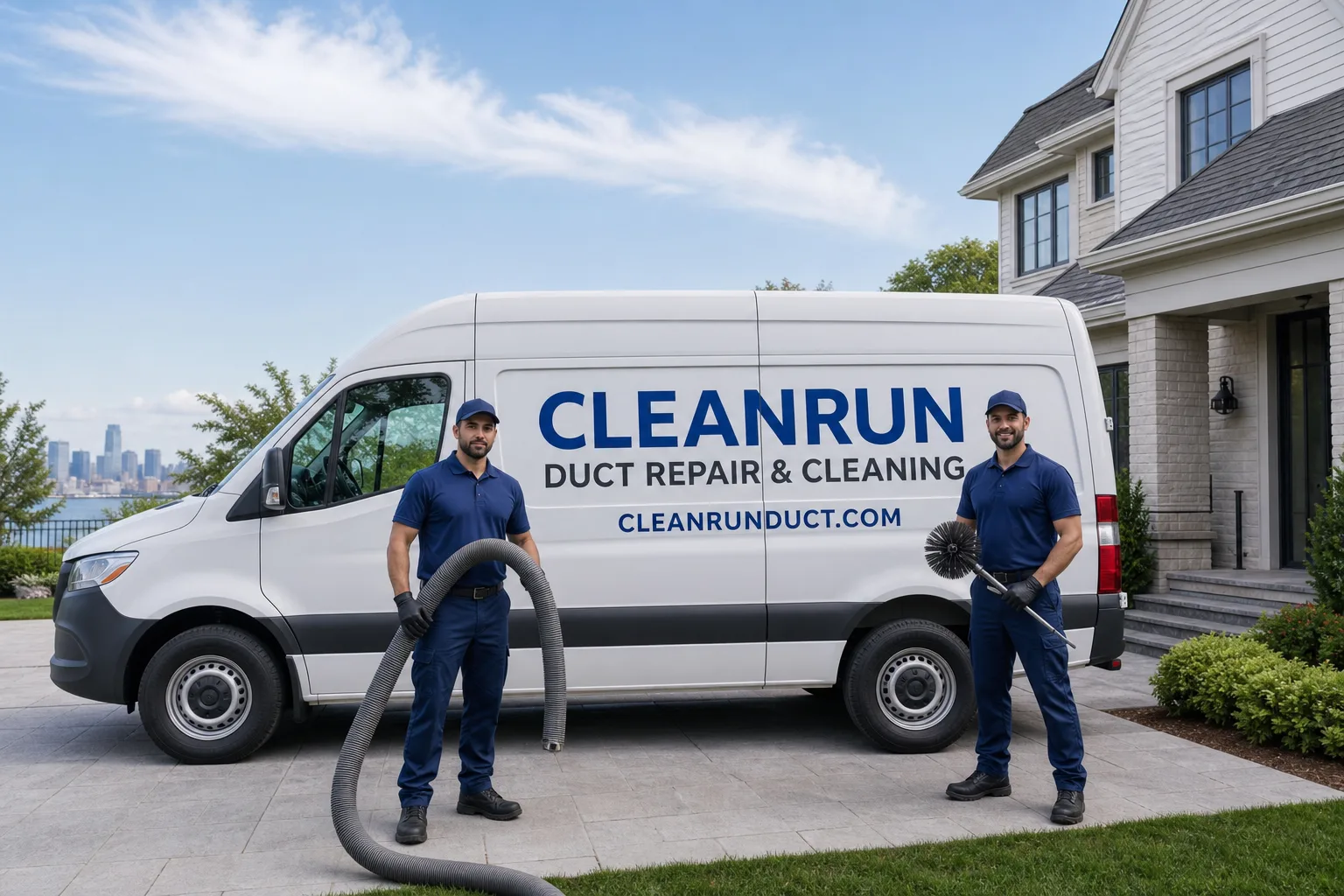
Whole-system duct and dryer vent check with before-and-after photos - you see exactly what came out of your vents
That "$99 whole-house special" is a bait ad - the real number appears once they are in your hallway, or the "clean" is a shop-vac at the register. We photograph the inside of your ducts before and after instead.
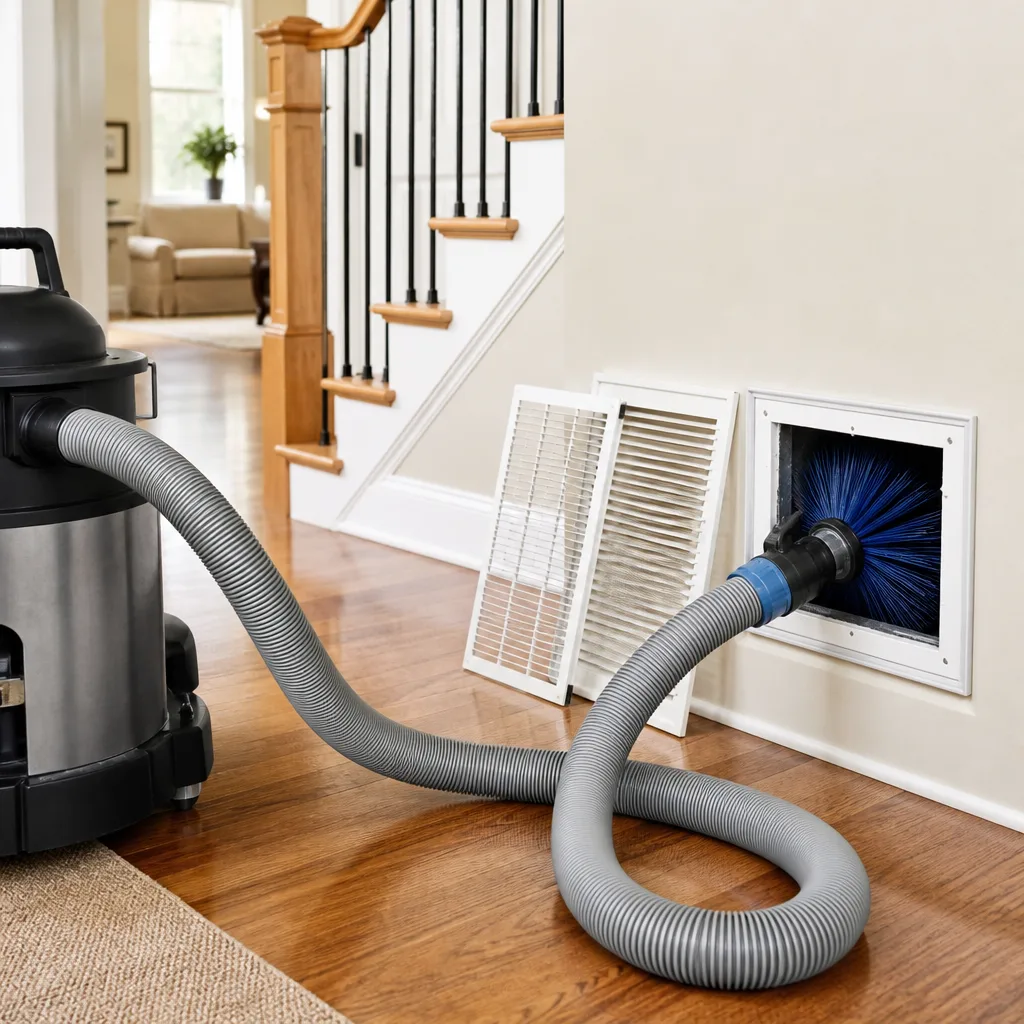
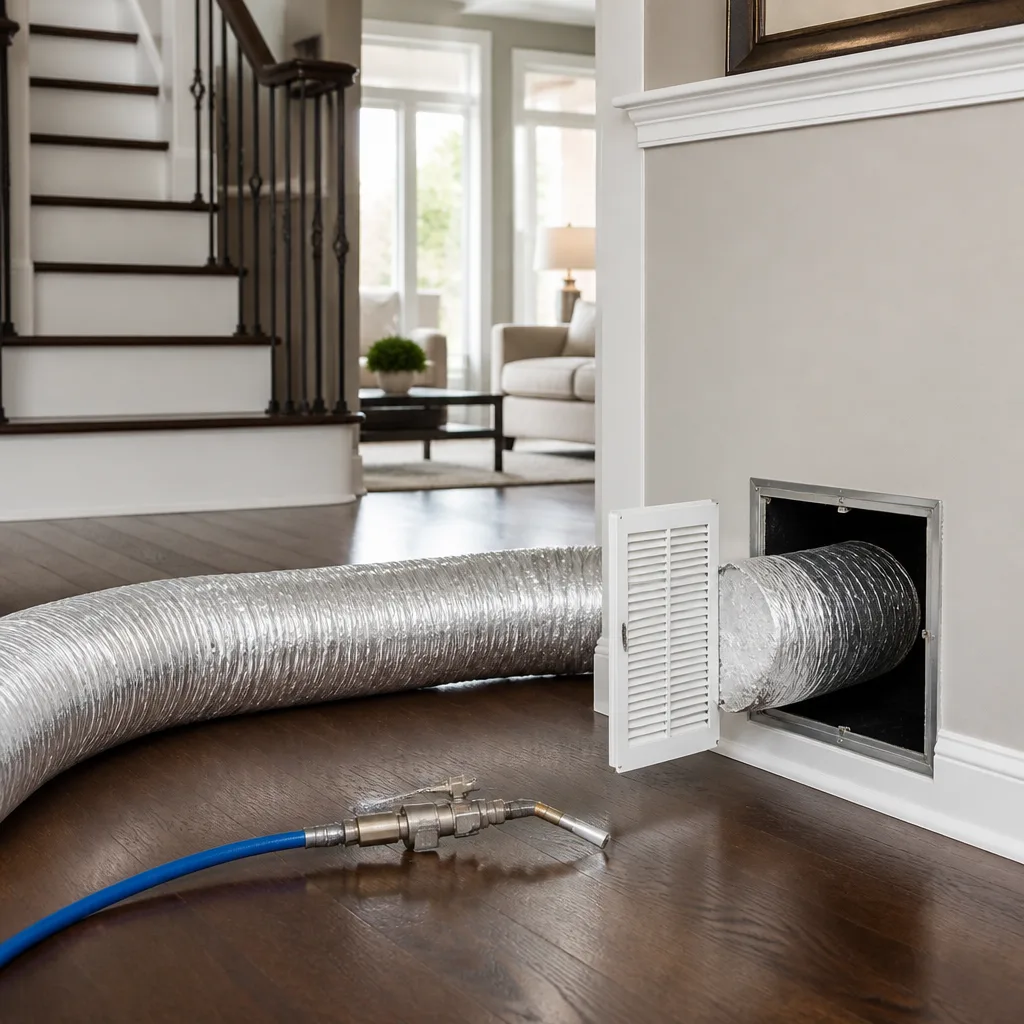
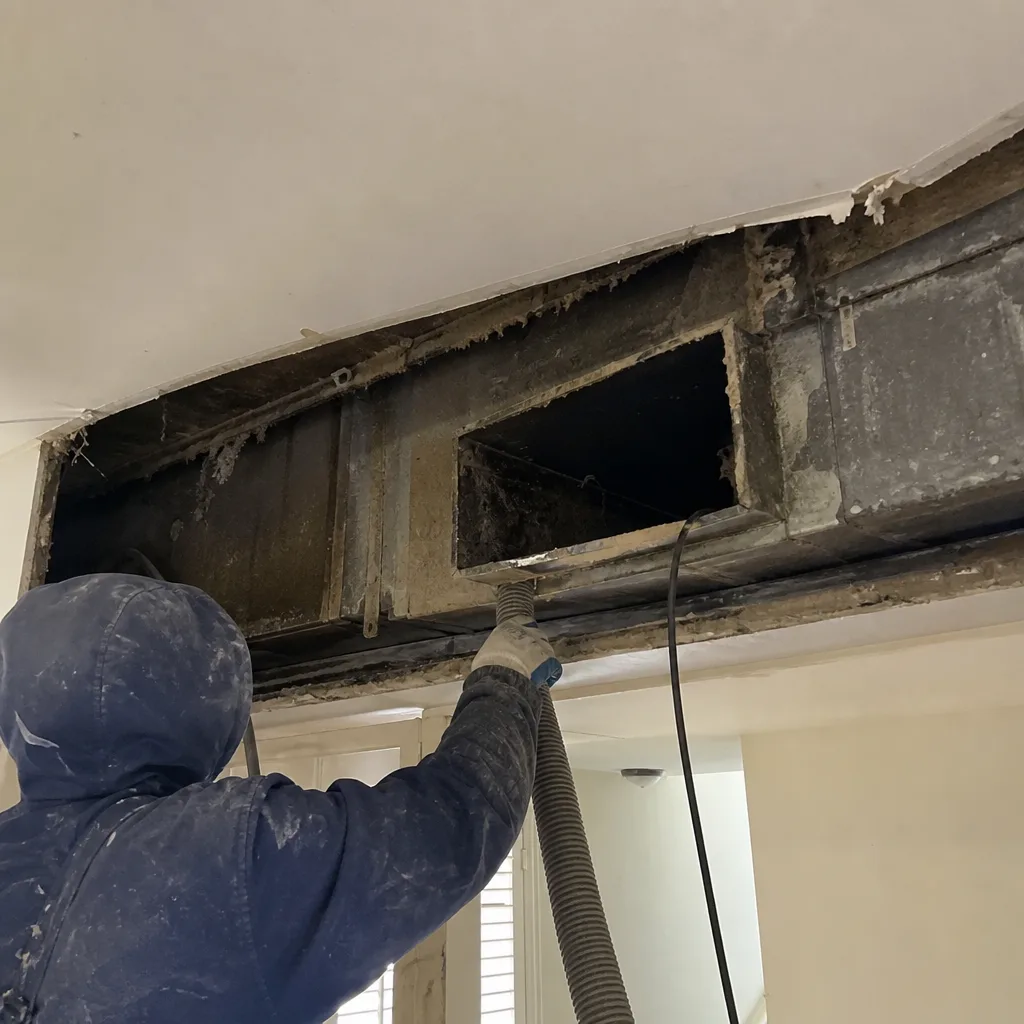 Before
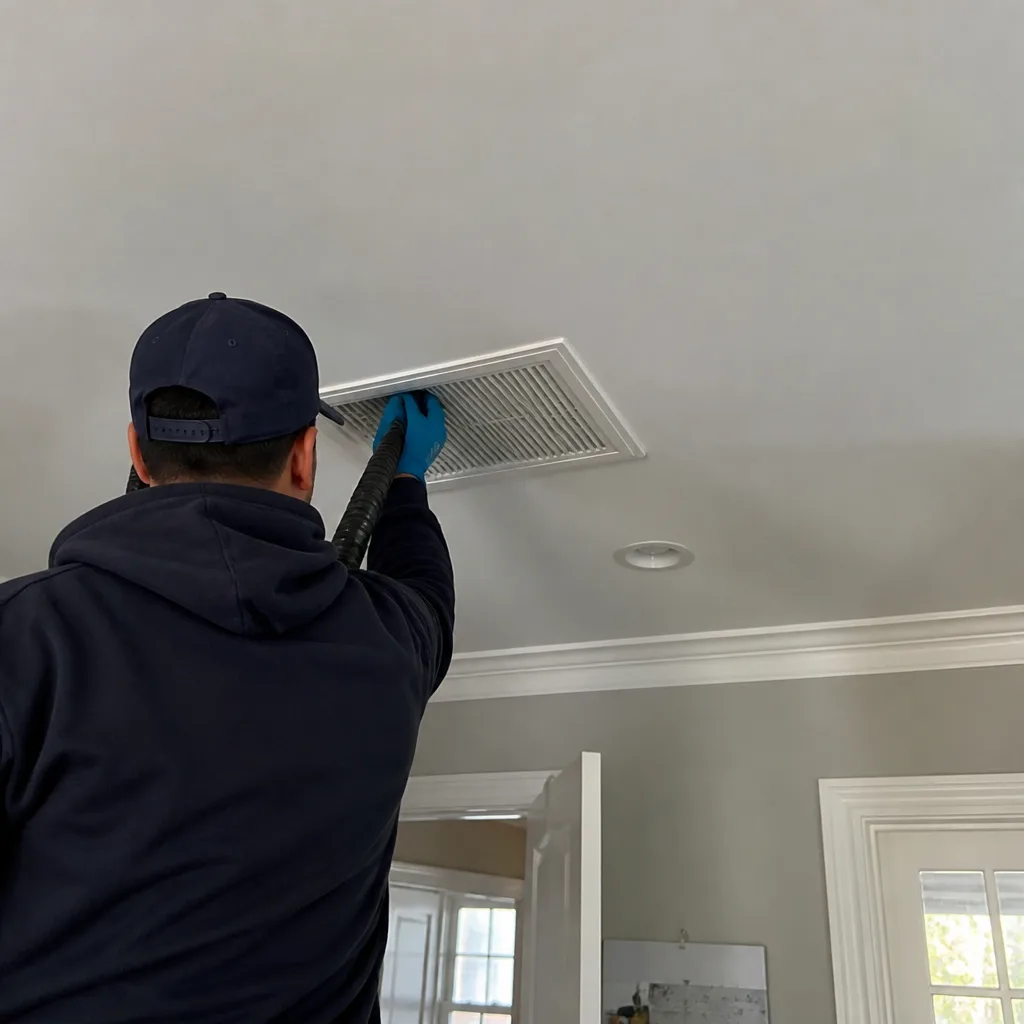 After
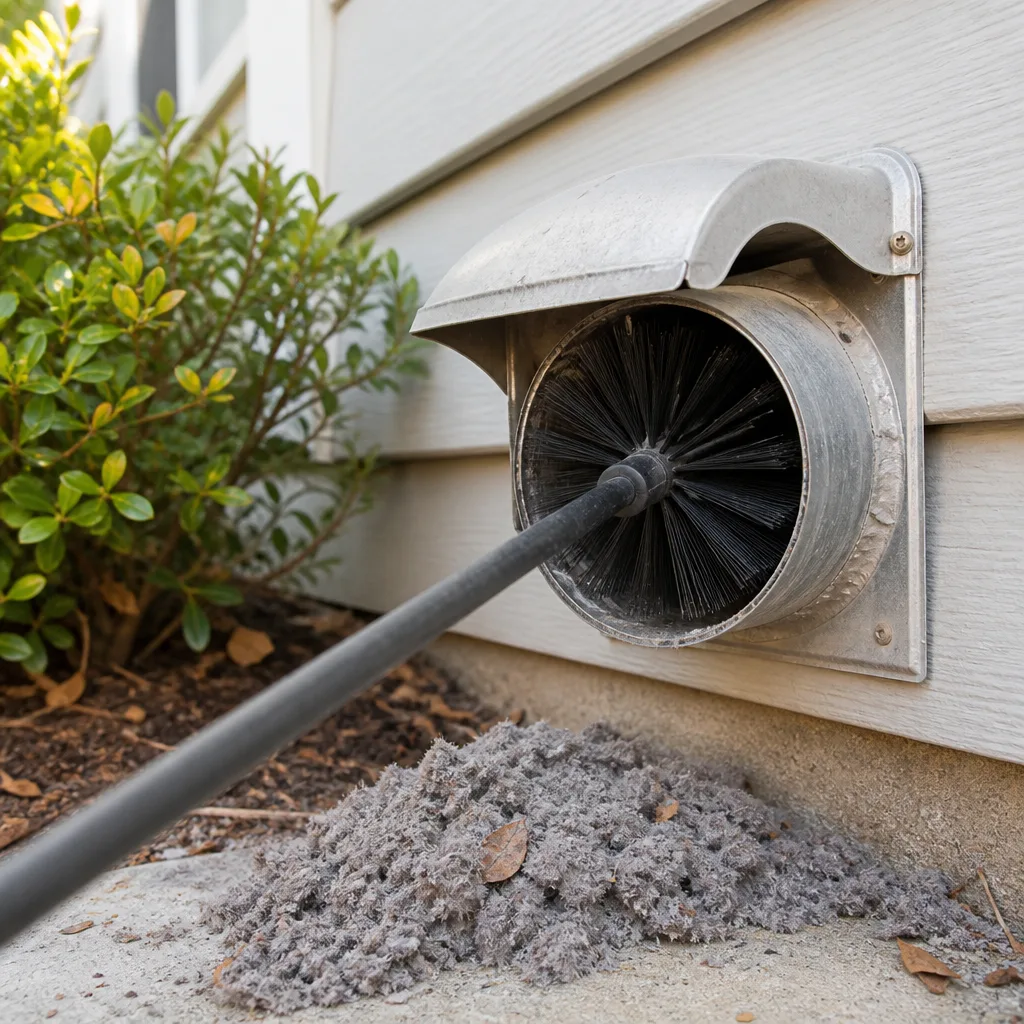
After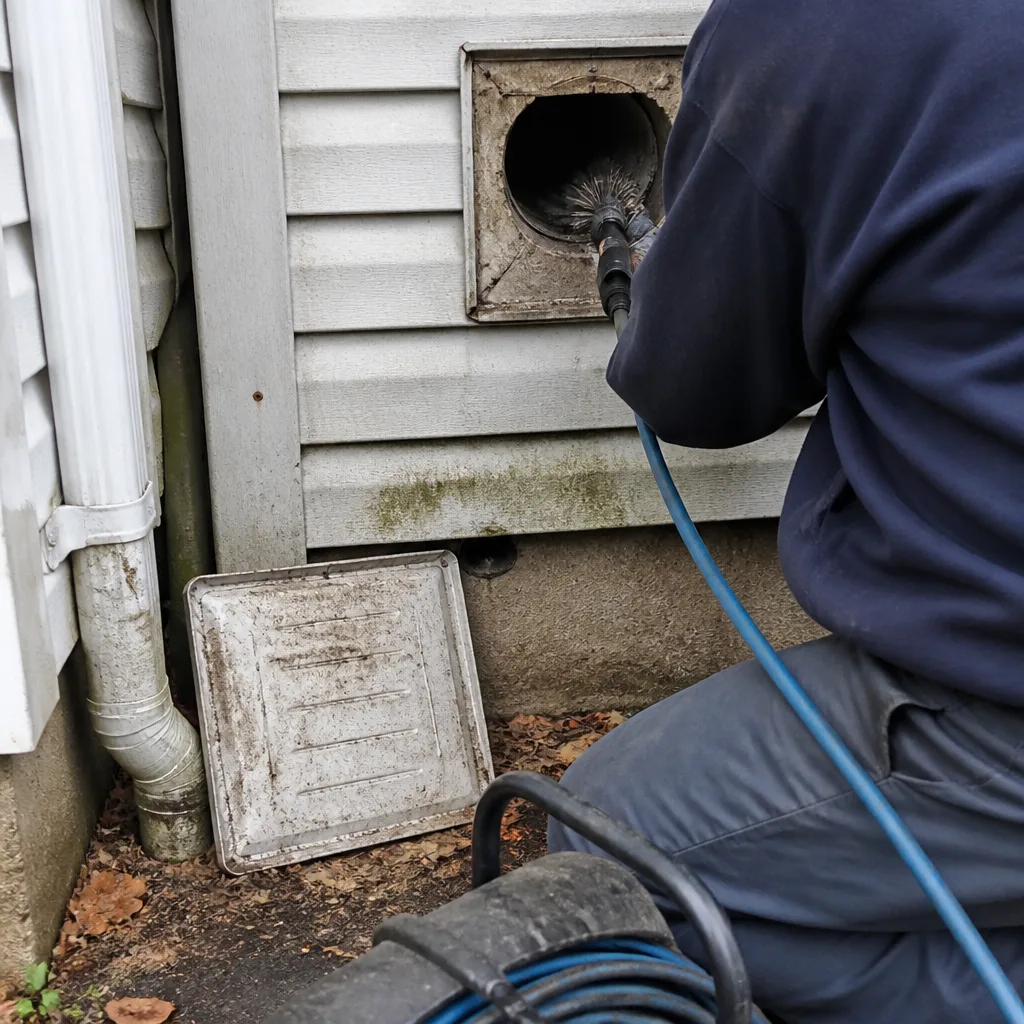 Before
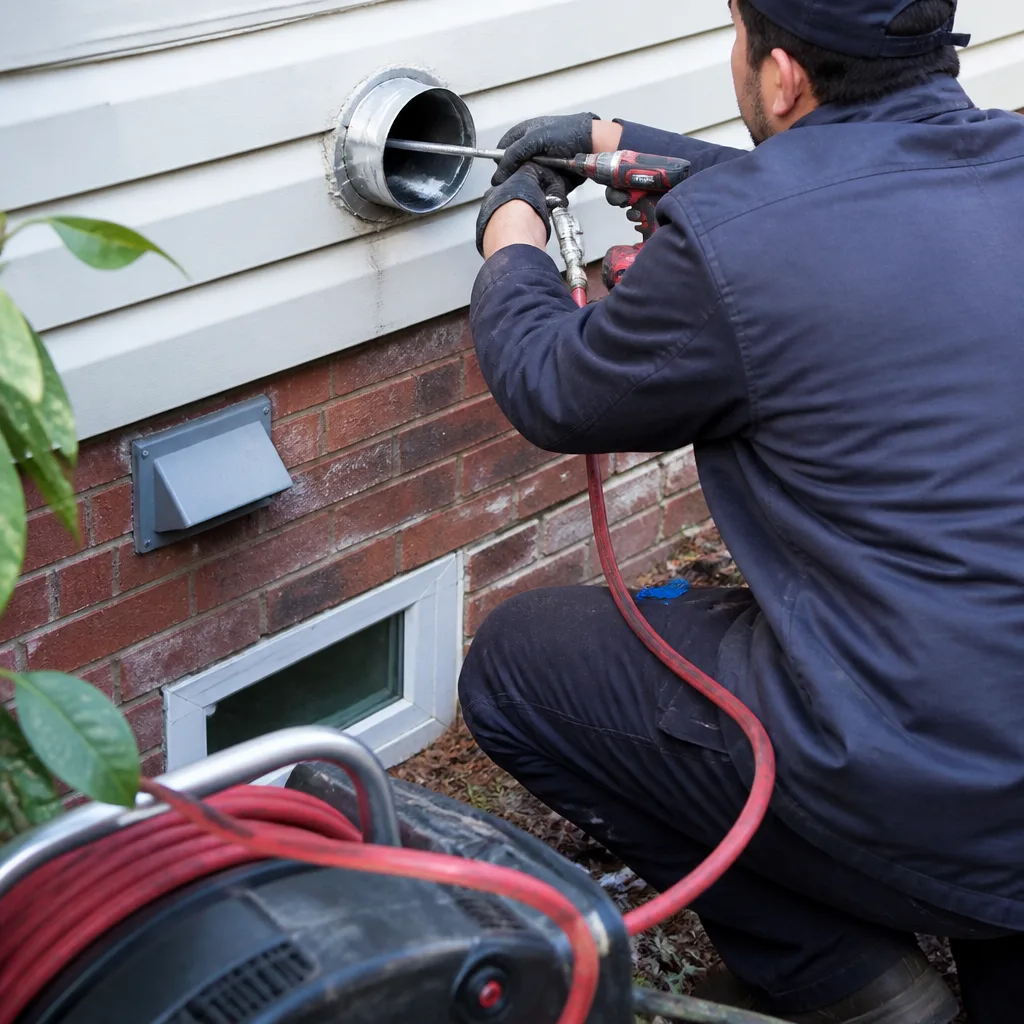 After
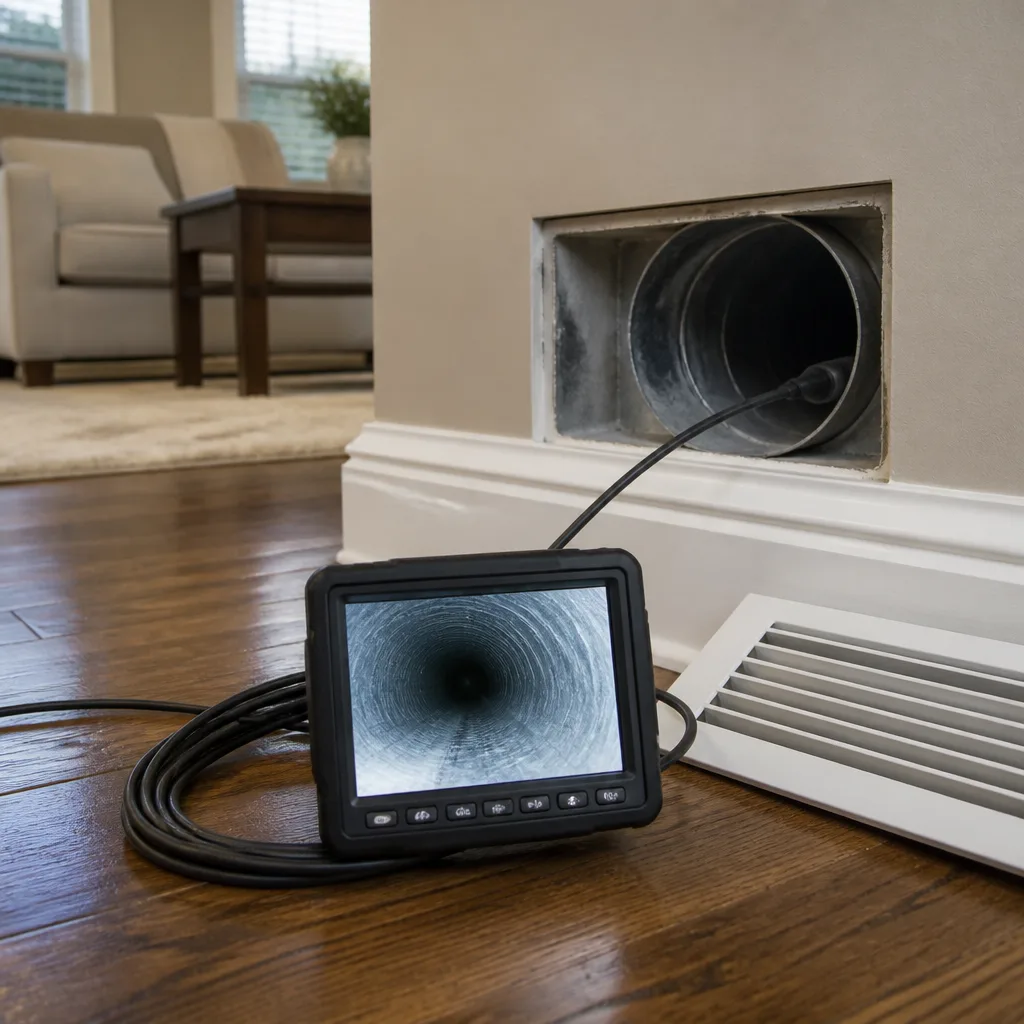
After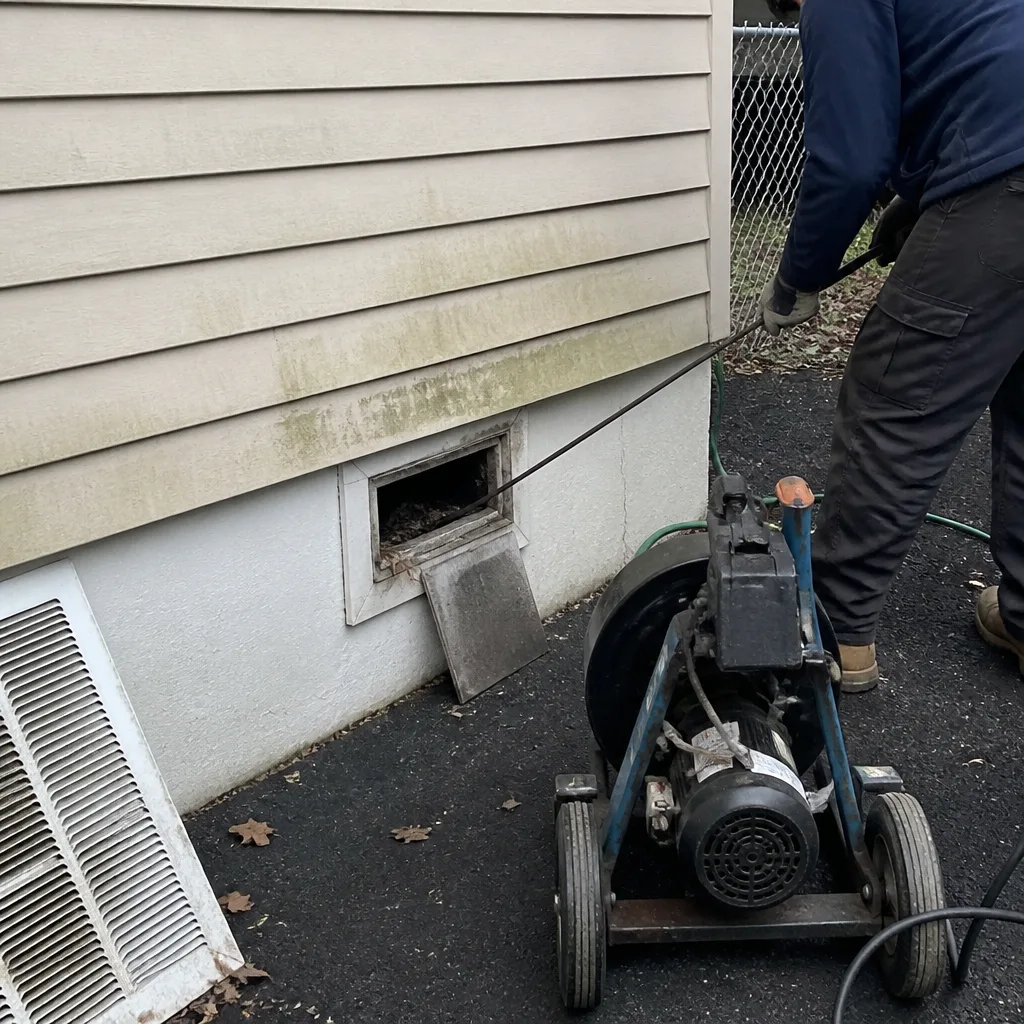 Before
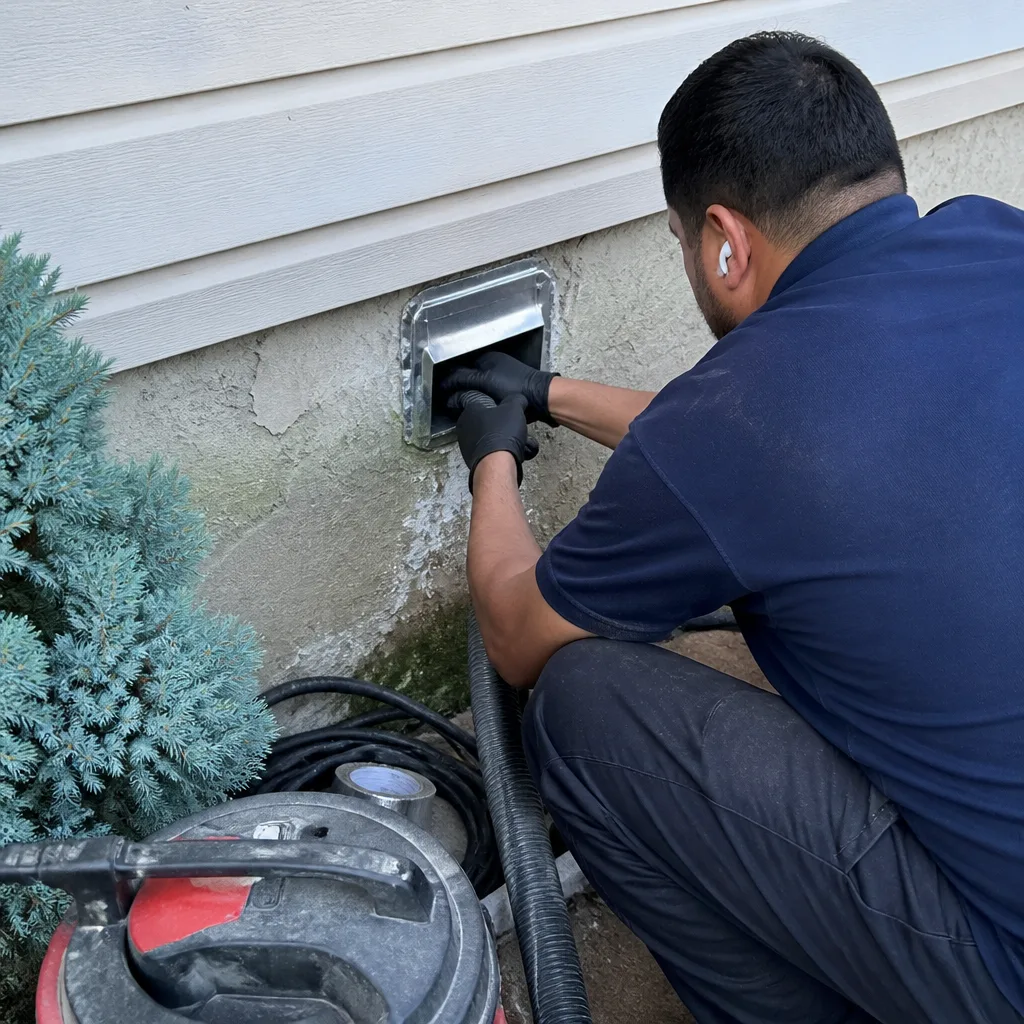 After
AfterMusty Smell from the Vents
A musty smell coming from your vents is almost always a sign of mold or mildew growing inside your duct system, on the evaporator coil, or in the air handler itself. The odor travels every time your HVAC system runs, which is why it hits every room at once. Left alone, it does not go away on its own – the source keeps spreading as long as air moves through it.
Moisture is the cause, and duct systems are full of places where moisture can hide: condensation on a cold coil, a slow drip from a cracked drain pan, humidity pulled in through a gap in a return run. Any one of those conditions gives mold exactly what it needs. The smell is the system’s way of telling you the biology is already in motion, not that it might start soon.
Why It Happens
Mold or Mildew Growing Inside the Ducts
This is the most common source. Over time, airborne moisture settles on the interior walls of duct runs and combines with the dust and debris already there to create the conditions mold needs to establish itself. You can often confirm this as the culprit if the smell is strongest the moment the system first kicks on, then fades slightly once the air is moving – that initial blast is carrying the highest concentration straight from the source.
A Dirty or Wet Evaporator Coil
The evaporator coil sits inside your air handler and is responsible for pulling heat – and humidity – out of the air. When it gets coated in dust and biofilm, it stops draining properly and stays wet between cycles. A musty smell that appears only when the air conditioning is running, not when the heat is on, points strongly to the coil as the origin.
Standing Water in the Drain Pan
Every air handler has a condensate drain pan that collects the water the coil pulls from your air. If the drain line clogs – and it does, regularly – that pan fills with standing water. Standing water grows algae and bacteria fast, and your blower fan sends that smell straight through every register in the house. Check the area around your air handler for any sign of water on the floor or cabinet base; that visible moisture usually confirms the drain pan is involved.
Gaps or Disconnected Sections Pulling in Unconditioned Air
Ducts develop gaps at joints and connections over time, especially in attics, crawlspaces, and basements where they move through temperature extremes. A gap in a return duct can pull in humid, unconditioned air – or in a crawlspace, air that smells of earth and biological activity – and push it through the whole system. If the smell has a distinctly earthy or basement-like quality, a duct inspection focused on the return side is the right first step.
What to Do Right Now
- Turn the fan to “on” instead of “auto” and stand at a register. Try to identify which room or which register the smell is strongest at. Note it – that information tells a technician where to focus the camera first.
- Check the area around your air handler for standing water. Look at the floor underneath the unit and at the drain pan if it’s visible through an access panel. A wet floor or visible water in the pan is useful diagnostic information to have before anyone arrives.
- Check your air filter. Pull the filter and look at it. A filter that’s dense with dark, moist-looking debris is itself a mold growth medium and confirms the problem has been building for a while. Replace it if it looks saturated, but know that a fresh filter alone will not eliminate the source.
- Do not apply spray disinfectants or “duct deodorizers” into the registers. These products mask the smell briefly and can leave chemical residue on duct walls that interferes with accurate inspection and photography. They don’t reach the source.
- If you suspect the smell is combustion-related – sharp, sulfurous, or like burning – stop the system immediately and call your gas utility or fire department before calling anyone else. A musty, earthy smell is biological. A sharp chemical or burning smell is a different category of problem entirely, and it’s not safe to diagnose yourself.
BeforeAfterHow We Fix It
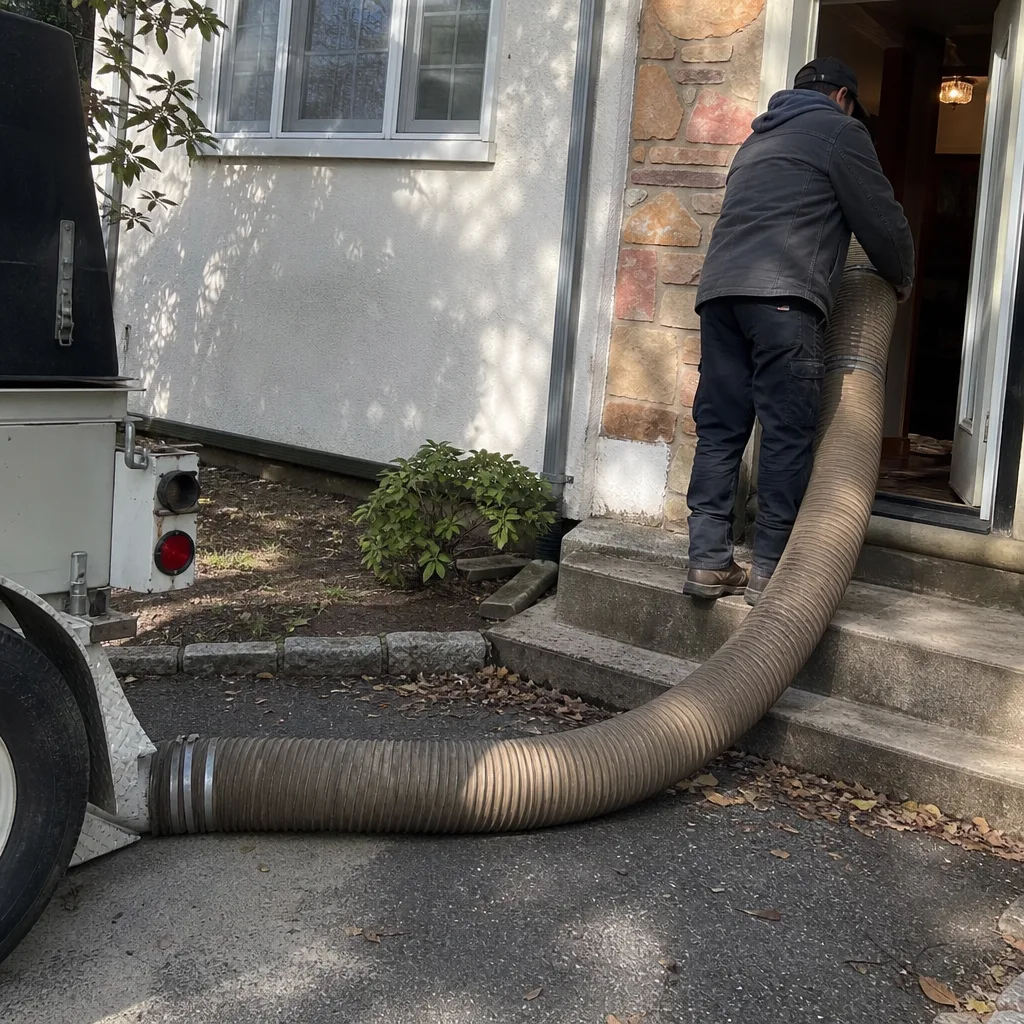
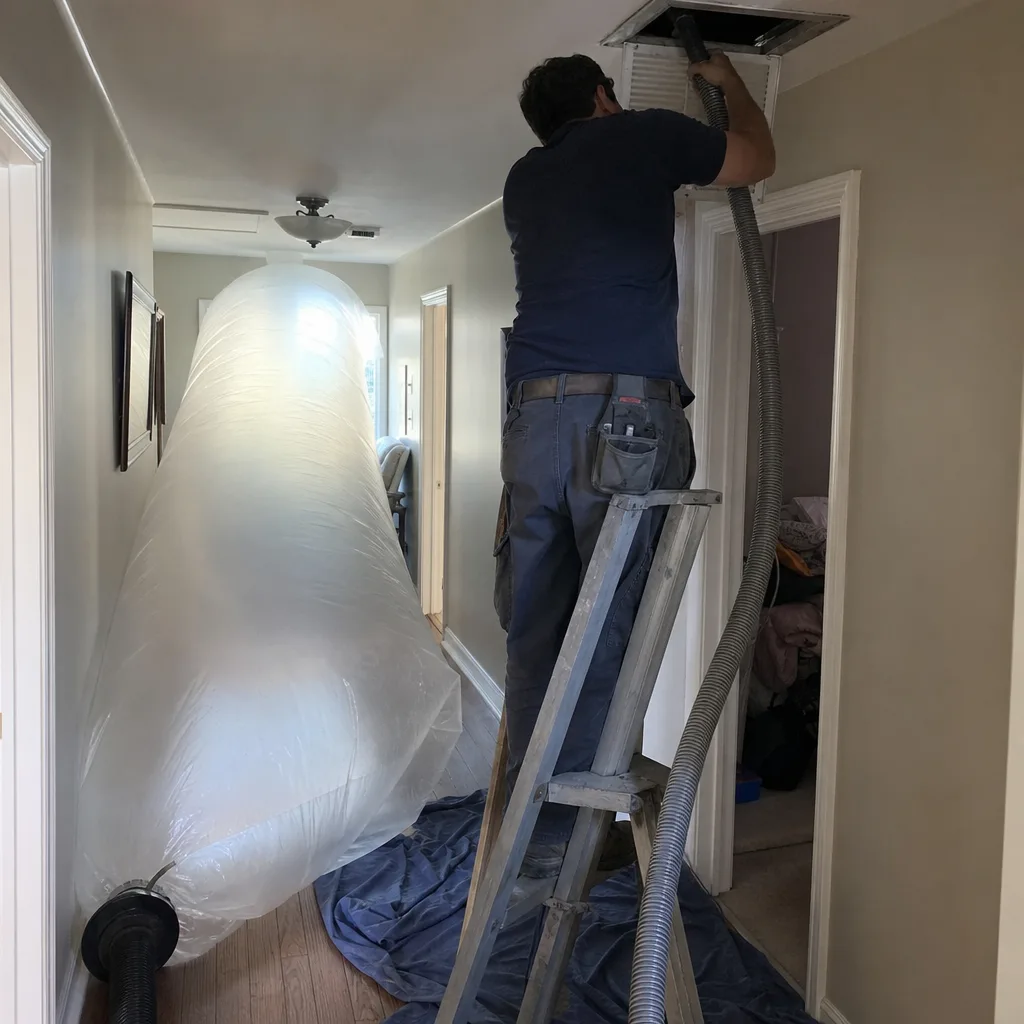
When your local CleanRun Air Duct Cleaning team arrives, the first thing the technician does is put a camera inside the system before anything else. What the camera finds determines what the job actually is – not what the invoice defaulted to. If the source is debris and biofilm inside the runs, the job is a full air duct cleaning using Rotobrush and Nikro equipment that agitates and extracts from every run, not just the ones nearest the unit. If the coil or drain pan are involved, HVAC cleaning addresses those components directly. Where mold contamination is confirmed, air quality and sanitizing treatment follows the mechanical cleaning.
The written price for your specific job is in your hands before a single panel comes off – that’s Haven Standard Clause 1, and it applies to every job, every time. Most musty-smell jobs resolve in a half-day visit. When we leave, you get a documented photo record of the inside of every run, before and after. Every job is backed by the 365-Day Done Right Promise: if it’s not done right, we make it right, in writing.
Frequently Asked Questions
It shouldn’t wait. Active mold growth inside a duct system means your HVAC is distributing spores through every room every time it runs. For most healthy adults this means persistent odor and irritation; for anyone with asthma, allergies, or a compromised immune system, the exposure is a real health concern, not a theoretical one. The longer the system runs, the more established the growth becomes and the more surfaces it reaches. Call (806) 606-6902 to get a written assessment scheduled.
The honest answer is that the price depends on what the camera finds: the number of runs, whether the coil and drain pan need cleaning, and whether sanitizing treatment is required after the mechanical work. CleanRun doesn’t quote this kind of job with a coupon number because a low-entry price that grows once the technician is in your house is the oldest problem in this industry. What we do is put the full written price in front of you before any work starts – no surprises, no door upsells, no scope creep. Call (806) 606-6902 and your local team will give you a real number, in writing, before anything else happens.
The low-price model in this industry typically works like this: a teaser price gets the van on your driveway, and then the actual scope of work gets added line by line once the technician is already inside. Per-vent pricing, “contamination surcharges,” and add-on fees are how a $79 coupon becomes a $400 invoice the homeowner didn’t agree to. CleanRun operates differently – one written price for the whole system, agreed before work starts, under Haven Standard Clause 1. Bring any written estimate you’ve received and your local team will put its own number next to it, in writing, at no cost to you.
Your local CleanRun team works on a real scheduled window – you’ll know the technician’s name and get a heads-up text before they arrive. Call (806) 606-6902 and whoever answers can tell you exactly what availability looks like in your area. Air duct cleaning is a scheduled job done right, not a rushed one done fast.
Get It Fixed
Call (806) 606-6902 or book online. Your local CleanRun Air Duct Cleaning team will put a written price in front of you before any work starts and leave you with a documented photo record of every run when the job is done.
Written by Tomas Reyes, Owner & Lead Technician at CleanRun Air Duct Cleaning, serving homeowners nationwide since 2013.
What Our Customers Say
"On time, professional, and explained what the readings meant without talking down to me."
- Warren E."The before and after photographs of each run are the reason I used them. You cannot argue with what came out of the return."
- Marguerite O."Flat price agreed up front, no per-vent add-ons at the end. That was the whole reason I did not call the coupon company."
- Suzanne B.